Methylene blue IV therapy: the complete guide
Everything you need to know about methylene blue IV therapy: how it works, what the research shows, what to expect, costs, and how to find a provider near you.

You've probably seen the blue-tinted IV bags popping up at wellness clinics, biohacking centers, and longevity-focused practices. Methylene blue IV therapy is moving fast from fringe experiment to mainstream offering, with major IV therapy chains like REVIV rolling it out across 100+ locations globally as of 2025.
But what is it actually doing in your body? Is the science real? And if you want to try it, how do you find a reputable provider near you?
This guide covers everything. The mechanism, the research, the dosing protocols, what a session actually looks and feels like, the risks worth knowing, and the practical details of finding and affording it. If you've been curious about methylene blue in any form, IV is the most direct delivery method available and deserves a thorough look.
WinAging has covered the methylene blue landscape extensively, from tablets to powder to troches. IV therapy is a different category entirely. It's not a supplement you order online. It's a clinical procedure. And that distinction matters a lot.
What is methylene blue IV therapy?
Methylene blue itself is a synthetic compound with a history stretching back to 1876, when it was first synthesized by Heinrich Caro as a textile dye. It became one of the first pharmaceutical drugs, was used to treat malaria, and eventually earned FDA approval in 2016 under the brand name ProvayBlue for treating methemoglobinemia, a condition where the blood can't carry oxygen properly.
So it's not new. What's new is the wellness application.
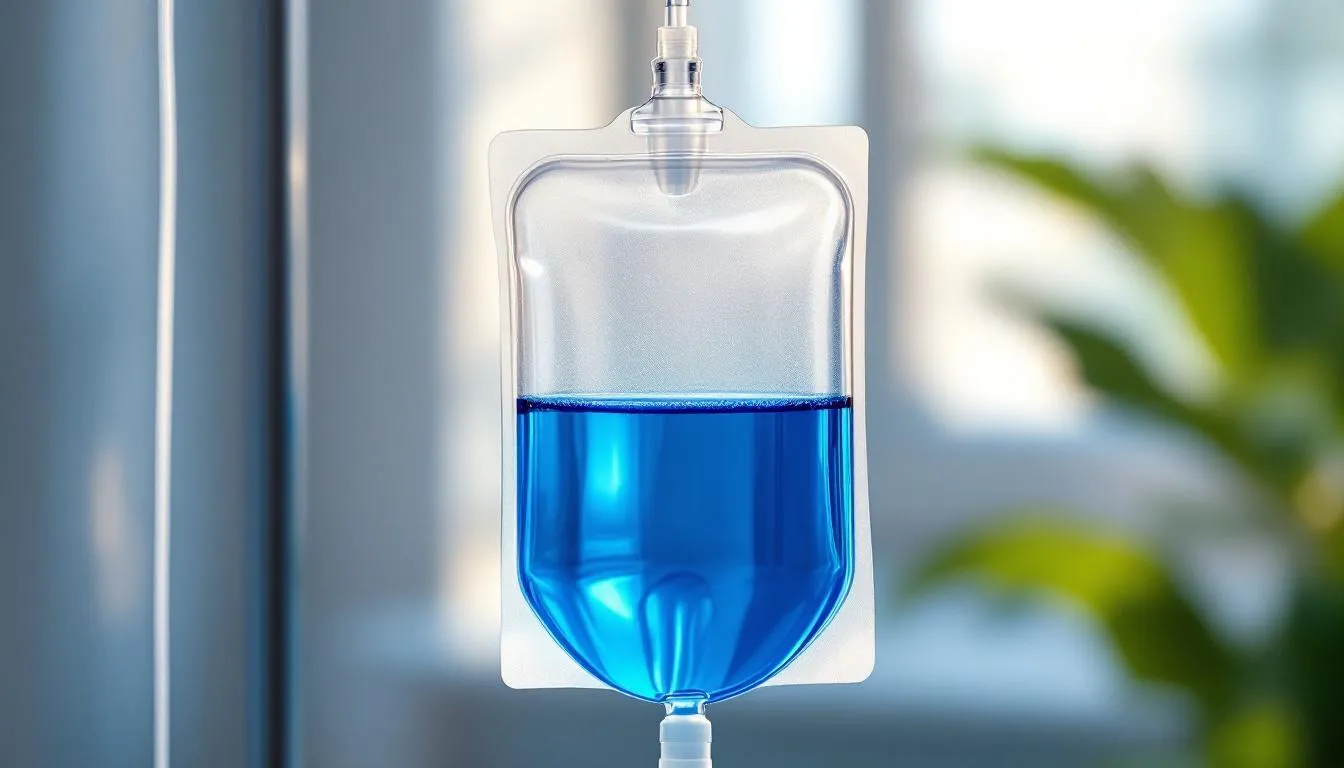
Methylene blue IV therapy delivers the compound directly into the bloodstream via intravenous infusion. You sit in a chair, an IV catheter goes into your arm, and a bag of saline or dextrose solution containing methylene blue drips in over 30 to 60 minutes. The compound bypasses digestion entirely and reaches peak blood concentration within minutes.

Compare that to oral forms. Capsules, tablets, and powders are absorbed through the gut, which takes one to two hours and involves first-pass metabolism through the liver. The IV route is more direct and, crucially, reaches the brain faster and in higher concentrations.
Brain tissue concentration after IV administration can reach up to 10 times serum levels within the first hour. If cognitive enhancement and neuroprotection are your goals, that pharmacokinetic detail is significant.
The compound in IV bags must come from a compounding pharmacy or be the branded ProvayBlue formulation. Understanding what pharmaceutical grade means and USP grade standards matters even for IV preparations. Quality varies between providers.
How methylene blue works in the body
Understanding the mechanism helps you evaluate whether IV therapy makes sense for your goals. Methylene blue isn't doing one simple thing. It's operating at the intersection of mitochondrial bioenergetics, redox chemistry, and neurotransmitter regulation.
The electron transport chain bypass
Your mitochondria produce ATP through the electron transport chain, a series of protein complexes (I through IV) where electrons flow from NADH and FADH2 down to oxygen. It's the core process keeping you alive and energized.
Methylene blue acts as an alternative electron carrier. When Complexes I or III are impaired or stressed, MB can accept electrons from NADH and shuttle them directly to cytochrome c, skipping the damaged sections. This keeps ATP production going even under conditions of mitochondrial dysfunction.
Studies suggest this can boost ATP synthesis by 30 to 40% when mitochondrial function is compromised. For healthy people, the effect is more modest, but it still shifts the mitochondrial environment toward higher efficiency.
The redox cycle
Here's what makes methylene blue different from a standard antioxidant. It cycles between two states: its oxidized form (the blue color) and its reduced form (colorless leuco-methylene blue). This cycling means it functions as a catalytic electron carrier rather than a one-time antioxidant. One molecule can shuttle electrons repeatedly.
This also explains why urine turns blue or green after a session. The compound is being excreted in its oxidized form. It's harmless. It passes within 24 to 48 hours.
Nitric oxide inhibition
Methylene blue inhibits nitric oxide synthase (iNOS) and a downstream enzyme called soluble guanylate cyclase. This is why it's effective in septic shock, where excessive vasodilation from nitric oxide causes blood pressure to collapse. IV methylene blue helps restore vascular tone when conventional vasopressors aren't working.
For wellness applications, this same mechanism may contribute to improved vascular regulation under stress.
MAO-A inhibition and neurotransmission
This one cuts both ways. Methylene blue inhibits monoamine oxidase A (MAO-A), the enzyme that breaks down serotonin, dopamine, and norepinephrine. That inhibition increases neurotransmitter availability in the brain, which is likely part of why people report improved mood and focus after a session.
But it's also why serotonin syndrome is the most serious risk associated with IV methylene blue. More on that in the safety section. For now: if you take antidepressants, this information is critical.
Nrf2 pathway activation
Methylene blue activates the Nrf2/ARE antioxidant defense pathway, which upregulates your body's own antioxidant enzyme systems. This is distinct from simply acting as an antioxidant itself. It's signaling your cells to produce more of their own defenses. That has potential implications for aging, where Nrf2 activity naturally declines.
What the research shows
The science on IV methylene blue spans from FDA-approved emergency medicine to promising but early-stage wellness research. Let's separate what's well-established from what's still emerging.

Postoperative cognitive protection: the strongest human RCT
A 2021 randomized controlled trial published in PubMed (PMID 33091706) studied 248 elderly patients undergoing major non-cardiac surgery. Half received 2 mg/kg of IV methylene blue infused over 60 minutes at anesthetic induction. The results:
Postoperative delirium dropped from 24.2% in the control group to 7.3% in the methylene blue group. Early cognitive dysfunction at day 7 dropped from 40.2% to 16.1%. These aren't small numbers. Postoperative cognitive dysfunction in elderly patients is a serious and common problem, and cutting it by more than half is clinically meaningful.
This is the best human RCT data supporting methylene blue's neuroprotective effects at the specific dose most wellness clinics use.
Memory and brain connectivity
A randomized double-blind fMRI study in 26 healthy subjects found that a single low dose of methylene blue improved memory retrieval by 7% compared to placebo. A separate study in 28 healthy adults showed strengthened resting-state connectivity in hippocampus-cerebellum networks and frontal motor regions.
These are small studies, but they suggest the cognitive effects aren't just self-reported. There are measurable changes in brain function.
Septic shock and critical care
This is where IV methylene blue has the most robust evidence. A meta-analysis of 77 studies found that methylene blue reduces mortality in septic shock with a relative risk of 0.66, meaning roughly a 34% reduction in death risk. More recent RCTs confirm that early adjunctive methylene blue shortens the time patients need vasopressors.
For the wellness context, this data confirms that IV methylene blue produces real cardiovascular and vascular effects. The same mechanisms work differently at much lower doses, but the compound is clearly biologically active in the circulatory system.
Cellular longevity and aging
In vitro research on human fibroblasts found that methylene blue extended cell lifespan by more than 20 population doublings. Mouse studies showed a 6% increase in female maximum lifespan. In a progeria model (a rare accelerated aging syndrome), methylene blue alleviated mitochondrial and nuclear abnormalities.
Whether these findings translate to meaningful longevity effects in healthy humans at wellness doses is unknown. The preclinical data is intriguing. Clinical trials in aging populations haven't happened yet.
What IV therapy adds over oral forms
USP grade methylene blue taken orally achieves decent bioavailability, somewhere between 53% and 97% depending on the formulation. That sounds good. But oral absorption is variable, slow, and involves hepatic metabolism that changes the compound's profile.
IV delivery bypasses all of that. You get precise dosing, immediate absorption, and that 10-fold brain concentration advantage within the first hour. For acute interventions, this difference is real. For daily low-dose supplementation, oral forms are more practical and much cheaper. The IV route is a tool for specific goals, not a daily protocol.
Who uses methylene blue IV therapy
The people walking into methylene blue IV clinics are varied, but patterns emerge.
Biohackers and longevity enthusiasts are early adopters. They're stacking methylene blue IV with NAD+ IV therapy and other infusions. They've often already experimented with oral forms and want the more direct delivery.
Post-COVID patients dealing with persistent brain fog and fatigue are a growing group. Methylene blue's mitochondrial support and potential anti-inflammatory effects make it a candidate for long-COVID recovery protocols, though clinical trials specifically for this indication are still limited.
Lyme disease and mold toxicity patients sometimes use methylene blue as part of broader treatment protocols. The research on methylene blue and Lyme disease and autoimmune conditions is early but has generated interest in the functional medicine community.
Athletes and high performers looking for recovery and cognitive edge. Some clinics market it as a performance optimization tool, often combining it with red light therapy during the infusion itself.
ADHD patients are exploring methylene blue off-label. The research on methylene blue and ADHD is preliminary but the nootropic effects are plausible given the mechanism. IV would be an extreme version of this approach.
Pre-surgical patients (especially elderly) with cognitive concerns may be able to use methylene blue preventively, given the RCT data on postoperative cognitive dysfunction. This requires a conversation with the surgeon and anesthesiologist, but the clinical evidence supports the question being asked.
What to expect during a session
Knowing what a session looks like removes the uncertainty that stops a lot of people from trying it.

Before you go
A reputable clinic will require a G6PD (glucose-6-phosphate dehydrogenase) blood test before your first session. G6PD deficiency is a contraindication for methylene blue because the compound can trigger hemolytic anemia in people who lack this enzyme. It affects roughly 400 million people worldwide, often with no symptoms, so the test is non-negotiable at responsible clinics.
You'll also go through a brief intake reviewing your medications. The SSRIs/SNRIs/MAOIs question is the critical one. If you're on any of these, the provider should decline to proceed. If they don't ask, leave.
Some clinics include the G6PD test in the first-session fee. Others require you to get labs drawn separately. Either way, budget time and cost for this step.
The infusion itself
You sit in a reclining chair in a supervised clinical space. The IV catheter goes into a vein in your arm, usually the antecubital (inner elbow) area. The bag hangs above you, and you watch a blue-tinged solution drip slowly through the line.
A session runs 30 to 60 minutes depending on the dose and your body weight. Most people read, listen to music, or rest during the infusion. Some clinics pair the treatment with near-infrared or red light therapy at the IV site, which may enhance cellular uptake based on preliminary research from the photobiomodulation field. The methylene blue and red light therapy combination has its own growing body of evidence.
What you might notice during infusion: a mild cooling sensation in the arm as the saline moves through. Some people taste something metallic or unusual. Occasional mild flushing occurs. Nothing dramatic.
After the session
Your urine will turn blue-green. This starts within minutes to a few hours of finishing the infusion and continues for 24 to 48 hours as the compound is excreted. It's completely harmless. It's expected. Plan for it if you're somewhere the color might cause concern.
Many people report feeling unusually clear-headed and alert in the hours after a session. A small number feel temporarily fatigued, then better. The cognitive effects people describe most often are sharper focus, improved verbal fluency, and a sense of mental clarity that can persist for days.
Hydration helps post-session. Drink water. Skip intense exercise immediately afterward if you're new to it.
Safety: what you need to know before booking
IV methylene blue is safe for the right people at the right doses. But the risks are real and specific.
The SSRI interaction: the biggest risk
The FDA has issued explicit drug safety communications about this. Methylene blue is a potent MAO-A inhibitor. Combined with SSRIs (like sertraline, fluoxetine, escitalopram), SNRIs (like venlafaxine, duloxetine), MAOIs, or clomipramine, it can cause serotonin syndrome.
Serotonin syndrome presents with tremor, hyperreflexia, myoclonus, hyperthermia above 38.5 degrees Celsius, muscle rigidity, and in severe cases, it's life-threatening. This is not a theoretical risk. It has happened with IV methylene blue. The interaction is well-documented.
If you're on any serotonergic medication, methylene blue IV is contraindicated. Full stop.
G6PD deficiency
People with G6PD deficiency cannot safely receive methylene blue in IV form. The compound causes severe hemolytic anemia in G6PD-deficient individuals. This is why testing before the first session is non-negotiable. Don't accept a clinic that skips this.
Dose-dependent effects
The compound follows a hormetic curve. Beneficial at low doses, increasingly problematic at high doses. The therapeutic window for wellness applications is roughly 0.5 to 2 mg/kg per session. Effects become adverse above 7 mg/kg cumulative dose.
At doses above 2 to 3 mg/kg, you can see hypertension, tachycardia, chest tightness, and respiratory symptoms. Clinics should not be pushing dose limits on wellness patients.
Pregnancy
Methylene blue causes fetal intestinal atresia at higher doses. Contraindicated during pregnancy.
Other interactions
Using the supplement interaction checker is a good habit for any compound, but for methylene blue specifically, the medication history review with your provider is more important than any online tool. Be thorough about disclosing everything you're taking.
Dosing protocols
What separates legitimate providers from questionable ones is dosing transparency.
The FDA-approved medical dose for methemoglobinemia is 1 mg/kg IV over 5 to 30 minutes, with a possible repeat dose of 1 mg/kg at one hour. Maximum cumulative dose is 7 mg/kg.
Perioperative cognitive protection in the key RCT used 2 mg/kg infused over 60 minutes.
Septic shock protocols use a 2 mg/kg bolus over 20 minutes, followed by continuous infusion of 0.25 to 0.5 mg/kg per hour if hypotension persists.
Wellness IV protocols at most clinics use lower doses. REVIV's protocol as of 2025 uses 20 mg in 500 mL saline, roughly 0.25 to 0.3 mg/kg for an average adult. Other clinics work in the 0.5 to 2 mg/kg range.
Lower doses at wellness clinics make sense. You're not treating acute emergency pathology. You're looking for mitochondrial support and cognitive effects, not maximal pharmacological impact. The hormetic principle applies: the lowest effective dose is generally the best starting point.
If a provider is vague about the dose they're using, ask specifically. You should know exactly how many milligrams you're receiving.
How to find methylene blue IV therapy near you
There's no centralized directory. You're looking at Google search, specialty networks, and word of mouth within the biohacking and functional medicine communities.
Search terms that work
Start with direct searches:
- "Methylene blue IV therapy [your city]"
- "IV therapy clinic [your city]"
- "Biohacking clinic [your city]"
- "Functional medicine IV infusion [your city]"
- "Longevity clinic [your city]"
Not every IV therapy clinic offers methylene blue specifically. Call before you go. Ask whether they offer it, what dose they use, and whether they test for G6PD before the first session. The answers tell you a lot about their protocols.
Clinic types to look for
IV therapy lounges are the most accessible. These are med-spa style spaces supervised by nurses or nurse practitioners. They often have multiple infusion options on a menu, and methylene blue is increasingly appearing alongside NAD+ IV, Myers' Cocktail, and glutathione pushes. Curcumin IV therapy is another option you'll often see offered alongside MB at these clinics.
Functional medicine and anti-aging clinics tend to have more sophisticated protocols and more thorough intake processes. They're often more expensive but offer better medical oversight.
Concierge medicine practices occasionally offer in-office IV therapy including methylene blue. These tend to have the most rigorous clinical oversight.
Mobile IV services are worth considering for convenience. They come to you. Many operate in major metropolitan areas and have expanded their menus to include methylene blue.
Questions to ask any provider
Before booking, get answers to:
- Do you test for G6PD deficiency before the first session?
- What dose of methylene blue do you use, in milligrams per kilogram?
- Is it administered by or under direct supervision of a licensed provider?
- What pharmaceutical source does your methylene blue come from?
- How long is the infusion?
- What are your protocols if a patient has an adverse reaction?
A confident, transparent answer to all of these is a good sign. Vague or dismissive responses are not.
Online directories
The American Academy of Anti-Aging Medicine (A4M) directory and the Institute for Functional Medicine's "Find a Practitioner" tool can help you locate clinicians who practice integrative medicine and are more likely to offer advanced IV therapies.
What it costs
Budget for $150 to $500 per session in the US, depending on location, provider type, and dose. Here's what the landscape looks like:
REVIV, the largest IV therapy chain with US and international locations, offers methylene blue at approximately $299 per session as of their 2025 rollout. That's 30 minutes in their facilities at their standard protocol dose.
Boutique clinics and functional medicine practices in major cities often run $350 to $500 per session. The higher price usually reflects more personalized intake, higher staff credentials, or more expensive real estate.
Smaller regional clinics and mobile IV services often come in at $150 to $250 per session, though protocols vary more at this tier.
The first session almost always costs more because it includes the G6PD lab draw. Budget for this, or get the test done independently first and bring results with you.
Most providers offer package pricing. Three to six sessions bought upfront commonly comes at a 10 to 20% discount. If you're planning a short-term protocol rather than a one-off experiment, packages make financial sense.
Wellness sessions are not covered by health insurance. Budget accordingly.
Comparing to oral methylene blue
The cost difference between IV and oral methylene blue is dramatic. Quality oral forms, whether pharmaceutical grade capsules, USP grade solutions, or troches, cost a fraction of a single IV session.
If your goals are daily mitochondrial support and cognitive optimization over months, oral is the practical approach. Use the guide on methylene blue dosage and how many drops to take if you're working with liquid forms.
IV therapy makes sense for: targeted acute interventions, people who want the highest possible brain concentration for a specific goal, pre-surgical patients (with physician coordination), and those who haven't gotten the results they wanted from oral forms.
IV methylene blue vs. oral methylene blue: when each makes sense
This isn't a case where one is always better than the other. They're different tools.
IV advantages:
- Immediate, complete absorption
- Higher brain concentration faster
- Precise dosing with no gastrointestinal variables
- Supervised clinical environment
- Can be combined with red light therapy at the site for potential synergy
Oral advantages:
- Dramatically cheaper
- Daily or frequent use is practical
- No clinical visit required
- Good bioavailability in quality formulations (53-97%)
- Works well for low-dose chronic protocols
The people getting the most from methylene blue in a longevity context likely use oral forms consistently and do IV sessions occasionally for specific goals. Think of IV as the amplified, precise version. Oral is the sustainable daily driver.
For a thorough comparison of oral options, best methylene blue capsules breaks down the quality differences between products. And if you want to understand what methylene blue does for muscles specifically, the mitochondrial mechanism is the same whether you're delivering it orally or IV, just with different intensity profiles.
Stacking methylene blue IV with other therapies
Most clinics that offer methylene blue IV also offer other infusions. Common combinations:
NAD+ IV is the most popular pairing. NAD+ and methylene blue both support the electron transport chain but through different mechanisms. NAD+ provides substrate (precursor molecules) while methylene blue improves electron shuttling efficiency. Together they target mitochondrial function from two angles. How long NAD+ IV lasts and how to time sessions are worth understanding before you stack both.
Glutathione push is often added after the methylene blue infusion. Glutathione is your primary cellular antioxidant. After driving the electron transport chain harder, supporting antioxidant capacity makes sense.
Red light therapy during the infusion is offered at some advanced clinics. The photobiomodulation and methylene blue combination is based on research showing that near-infrared light activates the same mitochondrial pathways, potentially amplifying effects. The science on the combined protocol is early but mechanistically coherent.
Myers' Cocktail (vitamins, minerals, magnesium) is often on the menu at the same clinics. Some providers recommend doing foundational nutritional support first before adding methylene blue.
Before stacking, use WinAging's supplement interaction checker for the oral components of your protocol. IV interactions should be reviewed with the clinical provider directly.
Frequently asked questions
How often should you do methylene blue IV therapy?
There's no established protocol for frequency in wellness use. Most biohackers doing it regularly report sessions every two to four weeks. For a specific short-term goal like cognitive performance around an event or recovery from an illness, you might do several sessions close together. Don't exceed 7 mg/kg cumulative dose within a short window and follow provider guidance on frequency.
Can you do methylene blue IV if you take supplements?
Most supplements are fine. The critical interactions are with medications, particularly SSRIs, SNRIs, and MAOIs. Standard supplements like magnesium, vitamin D, omega-3s, and most longevity compounds don't have documented adverse interactions with methylene blue. Always disclose everything to your provider. Check the supplement interaction checker for specific combinations.
What does methylene blue IV feel like?
Most people describe feeling more alert and focused in the hours after a session. The infusion itself is generally uneventful, with just mild arm cooling and occasional taste changes. Blue urine starts within hours. Energy and mental clarity improvements often last two to seven days, with some reporting effects for longer after multiple sessions.
Is methylene blue IV legal?
Yes. Methylene blue is an FDA-approved drug (ProvayBlue). Wellness use is off-label, which is legal when administered by licensed practitioners. Compounding pharmacies can prepare IV-grade methylene blue formulations. The provider must be licensed, and the treatment must be administered in a clinical setting by or under supervision of a licensed healthcare professional.
How do I know if a clinic is reputable?
Reputable clinics require G6PD testing, clearly state the dose they use, review your complete medication list, and have licensed healthcare providers overseeing the infusion. Clinics that skip the G6PD test or can't answer basic questions about dosing and safety protocols are ones to avoid.
Can methylene blue IV reverse cognitive decline?
The honest answer: promising but unproven in the wellness context. The surgical RCT data is solid for preventing postoperative cognitive decline. Phase II Alzheimer's data showed positive signals. But whether IV methylene blue sessions at wellness doses meaningfully improve trajectory for healthy adults is not established by clinical trials. The mechanistic rationale is good. The human data at wellness doses is limited.
Related guides
- Methylene blue tablets: complete guide
- Pharmaceutical grade methylene blue capsules
- Methylene blue and red light therapy
- How long does NAD+ IV last
- Supplement interaction checker
Sources
- Driscoll WD et al. "Methylene blue reduces incidence of early postoperative cognitive disorders in elderly patients." PMID 33091706 (2021)
- Bhatt DK et al. "Methylene blue modulates functional connectivity in the human brain." PMC5018244
- Miclescu A, Gordh T. "Nitric oxide effects in translational acute pain models." PMC review on MB and vascular tone
Methylene blue IV therapy is one of the more interesting tools in the longevity toolkit. The mechanism is real, some of the human evidence is genuinely compelling, and the risks are manageable with proper screening. It's not a casual supplement you add to your morning routine. It's a clinical procedure that requires the right provider and the right screening.
If you're building a broader longevity stack and want to understand where IV methylene blue fits, WinAging's AI protocol builder can help you design a personalized approach based on your specific goals and health background. It's not a replacement for a clinical consultation, but it's a useful starting point for organizing your thinking before you walk into a clinic.
Find a reputable provider. Get the G6PD test. Know your medications. The blue urine is coming for you either way.