Methylene blue troche: the complete guide
Methylene blue troches dissolve between your cheek and gum for faster absorption than capsules. Complete guide to dosing, benefits, mechanism, and safety.

Most people who try methylene blue start with drops or capsules. That's fine. But there's a reason serious biohackers and longevity-focused physicians are moving toward troches.
The format matters. A lot.
Methylene blue troches dissolve in your mouth, between your cheek and gum, absorbing directly into your bloodstream through the highly vascular tissue of the oral mucosa. No stomach acid. No liver filtering it before it reaches your brain. No 60-90 minute wait. You feel the effects in 15-20 minutes, and the absorption profile is far more consistent than swallowing a pill.
This guide covers everything: what troches actually are, why buccal delivery changes the game for methylene blue specifically, how to dose them properly, what the science actually says, and who should and shouldn't be using them. Whether you're completely new to methylene blue or you've been taking the liquid form for months and want to upgrade your approach, this is the guide you need.
WinAging covers the full longevity stack, and methylene blue is one of the more interesting compounds on that list. Not because it's trendy. Because the mechanism is real, the research is solid, and the right delivery format makes a genuine difference.

What is a troche?
A troche (pronounced "tro-kee") is a small lozenge or tablet designed to dissolve slowly in the mouth. The word comes from the Greek "trokhiskos," meaning small wheel or disk. Pharmaceutical troches have existed for centuries. Traditional cough drops are a crude version of the concept.
Modern compounding pharmacies have refined the troche format significantly. Today's pharmaceutical troches are precisely dosed, designed to dissolve at a specific rate, and formulated to maximize absorption through specific oral tissue.
There are two main types:
Sublingual troches dissolve under the tongue, where blood vessels are extremely dense and absorption is fastest. The tissue under your tongue is some of the most permeable in the body.
Buccal troches dissolve between your cheek and gum. The buccal mucosa has slightly less surface area than sublingual tissue, but the absorption is still dramatically faster than the gastrointestinal route. Most methylene blue troches are designed for buccal delivery, though you can place them sublingually for even faster onset.
Both routes bypass first-pass metabolism. That's the key distinction. When you swallow a capsule, the drug gets absorbed through your intestinal wall, processed by your liver, and only then enters systemic circulation. The liver degrades a significant portion of many compounds during this process. With buccal or sublingual delivery, the compound goes straight into your bloodstream without that first pass.
For methylene blue specifically, this changes the calculus on dosing and onset entirely.
Why methylene blue works so well in troche form
Methylene blue has a unique biochemical profile. It's small, lipophilic (fat-soluble), and carries a positive charge. Those three properties mean it moves across membranes with ease. It crosses cell membranes. It crosses the blood-brain barrier. It accumulates inside mitochondria, which are negatively charged by design, attracting this positively charged molecule.
This is what makes it effective. And this is also what makes troche delivery so well-suited to the compound.
When you take a methylene blue tablet orally, the absorption process is fine but imprecise. Stomach acids can influence the compound. Liver processing reduces some of the active fraction. The onset takes 60-90 minutes. And the peak concentration in your bloodstream is lower and more spread out over time.
With a buccal troche, the compound absorbs through the mucosal tissue in 15-20 minutes. Peak blood concentration happens faster and higher. And because you're bypassing the first-pass metabolic process, more of the active compound reaches your brain intact.
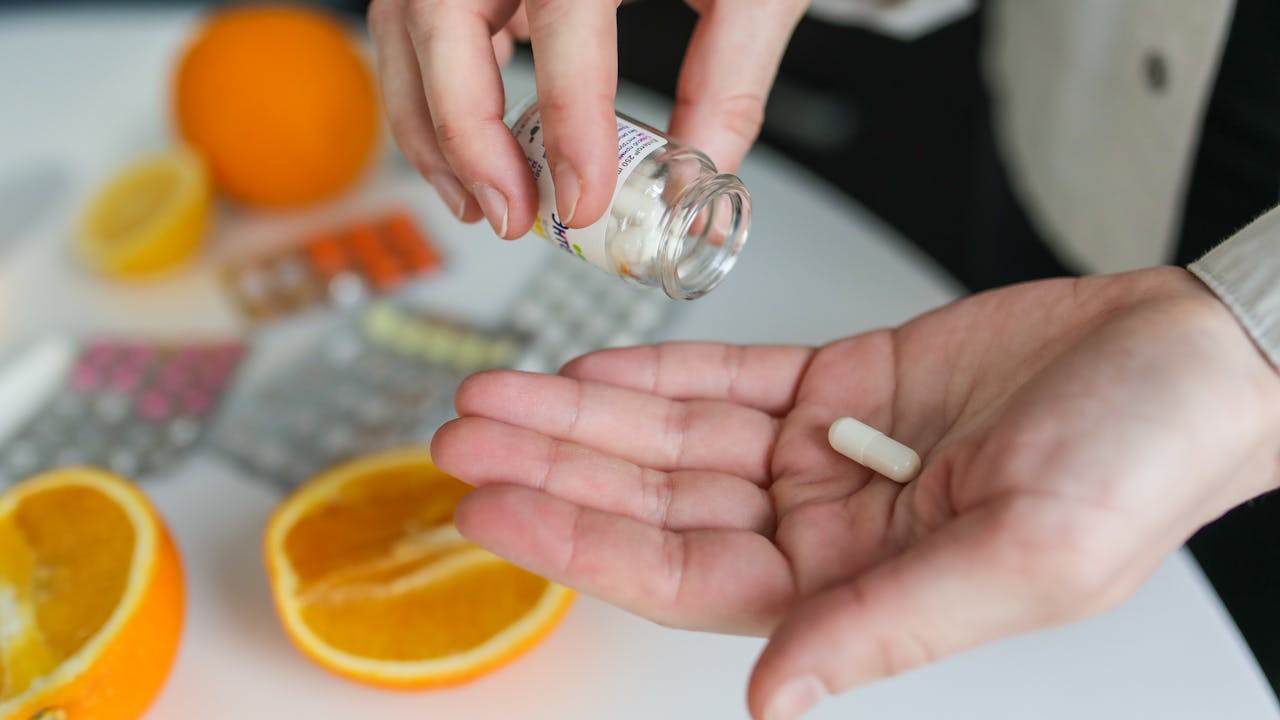 Buccal delivery sends compounds directly into the bloodstream through oral tissue, bypassing the digestive system entirely
Methylene blue is actually 100% bioavailable regardless of route, which is worth noting. The difference isn't about how much gets absorbed total. It's about when it gets absorbed, how consistently, and what the peak concentration looks like. Troches produce faster, more reliable peaks with less variability between doses. For a nootropic compound where timing matters for cognitive work, that's a meaningful advantage.
The other practical point: because the compound absorbs through your mouth, you can feel the onset before you've even finished with the troche. That real-time feedback helps you calibrate your response to the compound.
How methylene blue works in your body
To understand why people take methylene blue troches in the first place, you need to understand the mechanism. And the mechanism runs through your mitochondria.
The mitochondrial connection
Your mitochondria produce ATP, the energy currency your cells run on, through a process called the electron transport chain. This is a series of protein complexes in the inner mitochondrial membrane that pass electrons down a gradient, pumping hydrogen ions to generate ATP.
When this chain gets disrupted, which happens increasingly with age, cellular energy production drops. Neurons are especially vulnerable because they can't easily switch to alternative energy sources. Brain cells run on ATP almost exclusively. When mitochondrial function degrades, cognitive performance degrades with it.
Methylene blue acts as a redox mediator. It can accept electrons from the electron transport chain at Complex I and donate them to Complex IV, essentially creating a shortcut around dysfunctional middle segments of the chain. If Complex III is partially impaired (which happens in age-related mitochondrial dysfunction), methylene blue can route electrons around the blockage and keep ATP production running.
This isn't theoretical. Research published in PMC shows that low doses of methylene blue significantly enhance cytochrome oxidase (Complex IV) activity. In rat studies, a single 1 mg/kg injection produced a 30% increase in cytochrome oxidase activity in brain tissue within 24 hours. That's a substantial upregulation of the key enzyme driving mitochondrial ATP production.
Crossing the blood-brain barrier
Because methylene blue is lipophilic and small, it crosses the blood-brain barrier efficiently. Once there, it accumulates preferentially inside mitochondria due to the electrical gradient, concentrating where the action is. This targeted accumulation inside neurons makes it particularly interesting for cognitive applications.
The faster and more consistent this delivery, the better the brain-targeting effect. Which brings us back to troches.
The hormesis curve
Methylene blue follows a classic hormetic dose-response curve, also called an inverted-U shape. Low doses improve mitochondrial function and cognitive performance. High doses can actually impair it by over-reducing the electron transport chain and generating oxidative stress.
In rat models, 1-4 mg/kg improved memory and mitochondrial function. Above 50 mg/kg, the effects reversed. For human dosing, this means staying in the low range matters. The typical troche format, with 16 mg per troche and clear scoring for halving or quartering, is designed with this curve in mind.
You don't need a lot. You need the right amount, delivered consistently.
 Supporting mitochondrial function in neurons may have significant implications for cognitive performance and brain health over time
What the research shows
The research on methylene blue spans decades. Most of it comes from animal models, with a growing body of human research emerging. Here's what the evidence actually supports.
Memory and learning
The strongest evidence for methylene blue centers on memory enhancement and retention. Multiple animal studies demonstrate that methylene blue given after learning a task significantly improves recall 24 hours later. This is called the "memory consolidation" effect.
A frequently cited study from PMC (neurometabolic mechanisms for memory enhancement) showed that post-training administration of methylene blue enhanced memory in both object recognition and spatial navigation tasks. The effect appeared to require active engagement of mitochondrial pathways, since it was blocked by cytochrome oxidase inhibitors. This confirms the mechanism runs through mitochondrial function, not some other pathway.
In Morris water maze tests (a standard spatial memory test for rodents), methylene blue reversed scopolamine-induced memory deficits and improved performance in Alzheimer's disease mouse models. The relevant doses in these studies were 1-4 mg/kg, which translates to roughly 70-280 mg for a 70 kg human. But this is rat dosing through injection. Human oral doses are dramatically lower due to different pharmacokinetics, with 4-16 mg being the typical human therapeutic range.
Neuroprotection
A 2018 paper published in Frontiers in Aging Neuroscience showed neuroprotective properties of methylene blue against mitochondrial dysfunction in neurons. The research highlighted its role in preventing the kind of mitochondrial degradation linked to age-related cognitive decline and neurodegenerative disease progression.
Work published in PMC on "Mitochondria as a target for neuroprotection" showed that methylene blue combined with photobiomodulation (red light therapy) had synergistic effects on neuroprotection. This opened up an interesting angle for biohackers who use red light panels alongside their supplement stack.
Mood and neurotransmitters
Methylene blue interacts with nitric oxide synthase and monoamine oxidase (MAO), enzymes involved in neurotransmitter regulation. This gives it some MAO-inhibiting properties at certain doses, which has led to research into its potential antidepressant effects.
A 2018 clinical trial published in The Journal of Clinical Psychopharmacology found that methylene blue showed antidepressant-like effects at low doses by modulating neurotransmitter systems. The MAO-inhibiting property is also why methylene blue can't be combined with SSRIs, SNRIs, or other serotonergic drugs without risking serotonin syndrome. More on that in the safety section.
Fatigue and energy
Many users report subjective improvements in energy and mental clarity after starting methylene blue troches. This aligns with the mitochondrial mechanism: if ATP production improves in neurons, you'd expect better subjective energy, reduced brain fog, and faster cognitive processing. The effect isn't identical to stimulants because the mechanism is different. It's not forcing a release of catecholamines. It's supporting the underlying energy production infrastructure.
Use WinAging's supplement interaction checker before adding methylene blue to your stack. The interaction profile is unique and some common supplements and medications need to be flagged.
Methylene blue troche dosage
Getting the dose right is non-negotiable with methylene blue. Too little and you might not notice much. Too much and you tip past the hormesis curve into territory that counteracts the benefits.
Starting dose
Start with 1/4 of a standard 16 mg troche. That's 4 mg. If you're sensitive to compounds or new to methylene blue entirely, begin here. Hold at 4 mg for one week before adjusting.
The average effective starting dose is 1/2 troche (8 mg). Most people find this is enough to produce noticeable effects without overstimulation. Some people find even 4 mg is enough, especially if they're smaller or more sensitive.
Titration
Increase your dose every 3-5 days until you find your optimal response. Go slow. The compound builds and you want to understand how you personally respond at each level.
Most users land between 8-16 mg as their daily dose. Some people, typically those doing specific cognitive work or using it under physician guidance, go up to 32 mg (two troches). Don't exceed this range without medical supervision.
Dosing schedule
Most people use methylene blue troches in the morning or early afternoon. The cognitive effects make evening or night dosing a bad idea for most people since you'll be more alert when you want to wind down.
Some practitioners recommend cycling: 5 days on, 2 days off. Or 4 weeks on, 1 week off. The research doesn't give a clear answer on whether cycling is necessary. But given methylene blue's MAO-inhibiting properties, periodic breaks are a sensible precaution.
Don't stack multiple troches in a single session unless your physician has specifically guided you to do so.
Practical dosing summary
| Goal | Dose | Timing |
|---|---|---|
| First-time users | 4 mg (1/4 troche) | Morning, with food |
| Standard cognitive support | 8-16 mg | Morning or early afternoon |
| Advanced protocol | Up to 32 mg | Under physician guidance only |
| Maximum safe | 64 mg/day | Hard ceiling, do not exceed |
How to use a methylene blue troche properly
The technique matters. Using a troche wrong means slower absorption and inconsistent results.
The buccal technique
Place the troche between your upper or lower gum and cheek. Don't put it under your tongue immediately (sublingual is faster but stains the tongue more intensely). Between the cheek and gum gives you full absorption with slightly less intense staining.
Let it sit there and dissolve completely. Don't chew it. Don't swallow it early. Just let it dissolve. This takes 15-30 minutes depending on the formulation and your saliva production.
Resist the urge to swallow excess saliva while it's dissolving. The longer the compound stays in contact with the mucosal tissue, the more complete the absorption.
About the blue staining
Methylene blue is a dye. Your mouth will turn blue. Your teeth may pick up a bluish tint. Your urine will be blue-green for several hours. This is normal and temporary.
To minimize staining after the troche has fully dissolved: dissolve 1/4 teaspoon of baking soda in 4 oz of water and rinse your mouth for 2-3 minutes. Baking soda reduces methylene blue back to its leuco form, which is colorless. Do this 5-10 minutes after the troche has fully dissolved, not during dissolution (you'd wash away the compound).
Avoid coffee, tea, or anything that might stain in the first hour after use.
Timing around food
You can take methylene blue troches with or without food. If you take it on an empty stomach, absorption may be slightly faster but some people experience mild nausea. Taking it 30 minutes after a light meal reduces nausea without significantly slowing absorption through the buccal route.
Avoid taking it with high-fat meals. Fat can increase GI absorption (if you swallow the compound), which changes the dosing dynamics.
 Research on methylene blue's cognitive and mitochondrial effects spans decades, with studies from multiple independent institutions confirming the core mechanisms
Methylene blue troche vs other formats
You have options. Troches aren't the only way to take methylene blue, and understanding how they compare helps you decide which format fits your protocol.
Troches vs capsules
Capsules go through your digestive system. Onset takes 60-90 minutes. The liver processes a portion of the compound during first-pass metabolism. Absorption is good but slower and more variable.
Troches bypass all of that. Onset is 15-20 minutes. Absorption bypasses the liver's first pass. The active compound reaches your bloodstream more directly. If you're using methylene blue for acute cognitive effects around specific tasks or work sessions, troches win decisively on timing and precision.
Capsules are still valid for general daily maintenance dosing where timing isn't critical. They're typically cheaper per dose. But if timing and peak concentration matter for your use case, troches are the superior format. The methylene blue tablets guide covers the capsule/tablet format in more detail if you want to compare directly.
Troches vs liquid drops
Liquid drops are a popular format. You add them to water or take them directly. The sublingual liquid approach can rival troches for absorption speed, but the dosing precision is harder. Counting drops, accounting for evaporation, managing the concentration of the solution... troches eliminate all of that variability.
Troches are pre-dosed. Each one contains exactly 16 mg (or whatever the formula specifies). You score them with a knife to get 8 mg or 4 mg halves/quarters. The precision is much higher than drops.
For people who want consistency above all else, troches are generally the better choice over liquid drops.
Troches vs IV
IV methylene blue therapy exists. Clinics offer it as an infusion, delivering the compound directly into the bloodstream. Onset is immediate. There's no absorption step at all.
IV is orders of magnitude more expensive than troches and requires clinical administration. It's typically reserved for specific clinical applications or acute therapeutic use cases. For the average person building a longevity protocol, troches offer excellent absorption at a fraction of the cost and without requiring a clinic visit.
The mitozen methylene blue page covers one of the premium troche-based products in more detail. Mitozen uses a compounding pharmacy approach that many practitioners favor for quality control.
Troches vs powder
Methylene blue powder exists but is mostly used by those who want to make their own solutions or who need bulk quantities. For most users, pre-dosed troches are vastly more practical and consistent. Powder requires you to weigh your own doses, which introduces measurement error and requires lab-grade scales.
Safety, side effects, and who should not take it
Methylene blue has a real safety profile. Most of the risks are predictable and avoidable if you understand them going in.
Serotonin syndrome: the critical interaction
This is the most serious concern. Methylene blue inhibits monoamine oxidase A (MAO-A) at therapeutic doses. MAO-A breaks down serotonin. If you're taking anything that increases serotonin, combining it with methylene blue creates a dangerous accumulation of serotonin in your system.
Do not take methylene blue troches if you are on:
- SSRIs (fluoxetine, sertraline, escitalopram, paroxetine, etc.)
- SNRIs (venlafaxine, duloxetine, etc.)
- MAO inhibitors (phenelzine, tranylcypromine, selegiline)
- Tramadol
- Linezolid (this is actually the FDA-approved indication where methylene blue's MAO inhibition is intentionally used)
- Psilocybin or other psychedelics
Serotonin syndrome ranges from mild (tremor, mild fever, nausea) to life-threatening (hyperthermia, seizures, cardiac arrhythmia). Don't risk it. If you're on any serotonergic medication, methylene blue is contraindicated.
Use the supplement interaction checker before starting. It can flag conflicts with your current medications and supplements.
G6PD deficiency
People with glucose-6-phosphate dehydrogenase (G6PD) deficiency should not take methylene blue. G6PD deficiency is a genetic condition affecting red blood cells. Methylene blue can cause hemolysis (destruction of red blood cells) in G6PD-deficient individuals. G6PD deficiency affects roughly 400 million people globally. If you're of Mediterranean, African, Middle Eastern, or Southeast Asian heritage, getting tested before starting methylene blue is a smart move.
Pregnancy and breastfeeding
Methylene blue is contraindicated during pregnancy and breastfeeding. Don't use it.
Common side effects
At low doses (4-16 mg), side effects are typically mild:
Blue discoloration: Your urine will be blue-green. Your mouth will be blue temporarily. Both are expected and harmless.
Mild nausea: Some people experience nausea, especially on an empty stomach. Take it after a light meal.
Headache: Usually mild and resolves as you adjust. Often a sign you started too high.
Anxiety or overstimulation: If you feel anxious or overstimulated, you've probably taken too much. Drop down to a lower dose. The stimulating quality comes from increased ATP production and possibly some MAO interaction.
Serotonin-like symptoms at high doses: At higher doses, even without other serotonergic drugs, methylene blue can produce serotonin-adjacent symptoms due to its MAO inhibition. This is another reason to stay in the low-dose range.
People who should proceed with caution
Even without the absolute contraindications above, some people should be careful:
- Those with kidney disease (methylene blue is renally cleared)
- Those with cardiac arrhythmias
- Anyone taking other supplements that affect neurotransmitters (even seemingly benign ones)
When in doubt, talk to a physician before starting. Many functional medicine doctors and integrative physicians are familiar with methylene blue and can help you assess your specific situation.
Where to get methylene blue troches
Not all sources are equal. Quality matters more with methylene blue than with most supplements because the compound needs to be pharmaceutical grade. Contaminants, including heavy metals, can be a real problem with industrial-grade methylene blue.
Troscriptions Just Blue
Troscriptions is the most recognized brand in the troche space. Their "Just Blue" product contains 16 mg of USP-grade methylene blue per troche in a buccal delivery format. Each troche is scored for easy halving or quartering. They also make "Tro+ Blue," which contains 50 mg per troche for higher-dose applications.
Troscriptions was founded by physicians and uses pharmaceutical-grade methylene blue throughout. The formulations have been widely used in the biohacking and longevity community with a good safety record at standard doses.
Compounding pharmacies
In the US, compounding pharmacies can prepare custom methylene blue formulations under Section 503A of the Federal Food, Drug, and Cosmetic Act. Common compounded strengths include 2.5 mg and 5 mg troches for lower-dose protocols.
Prescription from a licensed physician is typically required. If you're working with a functional medicine doctor or integrative physician, they can prescribe a compounded formulation tailored to your specific needs.
Empower Pharmacy, Strive Pharmacy, and several other compounding pharmacies specialize in methylene blue and can fill prescriptions with high-quality formulations.
Quality indicators
Look for:
- USP grade methylene blue (pharmaceutical grade, not reagent grade)
- Third-party testing for heavy metals and purity
- Manufactured in FDA-registered facilities
- Clear labeling of methylene blue content per dose
The USP-grade methylene blue guide covers the quality distinctions in detail. Understanding the difference between reagent grade and pharmaceutical grade is worth your time before purchasing.
Avoid industrial-grade methylene blue. It contains heavy metals and impurities that make it unsuitable for human consumption regardless of delivery format.
 The compound's ability to accumulate inside mitochondria and act as a redox mediator makes it unique among cognitive supplements
Stacking methylene blue troches
Methylene blue doesn't exist in a vacuum. How you combine it with other compounds matters.
Red light therapy synergy
The most well-documented synergy is methylene blue plus photobiomodulation (red or near-infrared light). Both target mitochondrial function through complementary mechanisms. Red light activates cytochrome c oxidase directly. Methylene blue provides electrons to keep the electron transport chain running efficiently. The combination appears to produce additive or synergistic effects on mitochondrial ATP production.
If you have a red light panel, consider using your methylene blue troche 15-20 minutes before your red light session. The timing allows the compound to absorb and reach peak concentration in your neurons as you're starting the light therapy.
NAD+ precursors
WinAging's tools let you check your full stack. NAD+ precursors (NMN, NR) and methylene blue target overlapping but distinct aspects of mitochondrial function. NAD+ precursors support the availability of NADH, the electron donor that feeds the electron transport chain. Methylene blue helps keep those electrons moving even when specific complexes are impaired. Many longevity-focused physicians combine these two approaches.
There's no known dangerous interaction between methylene blue and NAD+ precursors. But always verify your stack with the interaction checker when adding new compounds.
What to avoid combining with troches
Beyond the serotonergic drug contraindications above:
- High-dose antioxidants at the same time: Large doses of Vitamin C or other antioxidants taken simultaneously can theoretically reduce methylene blue back to its leuco form before it does its work. Space them out by at least 2 hours.
- Alcohol: Both affect neurotransmitter systems and liver function. Avoid alcohol on dosing days, especially at higher methylene blue doses.
- Other cognitive stimulants at the same time: Stacking methylene blue with high doses of caffeine, racetams, or other stimulants at the same time increases overstimulation risk.
Tracking your response
The best way to know if methylene blue troches are working for you is to track your cognitive performance objectively. Subjective impressions are useful but limited.
The biological age calculator gives you a baseline to track from. Beyond that, consider tracking:
- Reaction time (simple online tests work)
- Working memory performance
- Sustained attention scores
- Sleep quality (some people find methylene blue affects sleep if taken too late)
- Subjective energy and brain fog levels on a 1-10 scale daily
Run a 4-week trial at your target dose before evaluating. One week isn't enough to separate the compound's effects from the placebo response or day-to-day variability.
Frequently asked questions
What is a methylene blue troche?
A methylene blue troche is a small dissolvable tablet containing pharmaceutical-grade methylene blue. It's designed to dissolve between your cheek and gum (buccal delivery), absorbing directly into your bloodstream through the oral mucosa. Onset is typically 15-20 minutes, compared to 60-90 minutes for swallowed capsules.
How long does a methylene blue troche take to work?
When placed between your cheek and gum and allowed to fully dissolve, most people notice effects within 15-20 minutes. Some users report feeling mental clarity or a subtle shift in energy as early as 10 minutes. The full effects typically peak around 30-45 minutes after the troche has dissolved.
Can you swallow a methylene blue troche instead of dissolving it?
Yes. Methylene blue is highly bioavailable regardless of route. If you swallow it, onset delays to 60-90 minutes and absorption goes through your GI system. You lose the fast-onset benefit of buccal delivery, but the total amount absorbed is similar. Many people dissolve it buccally and then swallow the remainder.
Will a methylene blue troche stain my teeth?
Temporarily, yes. Methylene blue is a dye and will color your teeth and mouth blue. The staining fades within a few hours. Using a baking soda rinse (1/4 tsp in 4 oz water) after the troche fully dissolves helps remove the blue color faster. Brushing immediately after isn't recommended as you'll disturb the absorption.
What dose of methylene blue troche should I start with?
Start at 4 mg, which is 1/4 of a standard 16 mg troche. Hold that dose for one week and assess your response. If you tolerate it well and want more effect, move up to 8 mg (half a troche). Most people find their optimal dose between 8-16 mg per session.
Can I take methylene blue troches with my antidepressant?
No. If you're on SSRIs, SNRIs, or MAO inhibitors, methylene blue troches are contraindicated due to serotonin syndrome risk. This is a serious interaction. Do not attempt to combine them. Talk to your prescribing physician before making any changes.
How often should I take methylene blue troches?
Daily dosing is common among regular users. Many practitioners recommend a 5-day-on, 2-day-off cycle, or a 4-week-on, 1-week-off approach to avoid tolerance and allow for assessment. If you're using it specifically for cognitive tasks, some people use it situationally rather than daily.
Do methylene blue troches require a prescription?
It depends on the source. Over-the-counter troches from companies like Troscriptions are available without a prescription in the US. Compounded formulations from a pharmacy typically require a physician's prescription. The compounded versions often offer lower doses (2.5 mg, 5 mg) that can be useful for more precise dose titration.
Is methylene blue troches safe long-term?
Long-term safety data in humans is limited. The compound has a long history of use in medicine at higher doses for acute conditions (methemoglobinemia, certain infections). Chronic low-dose supplementation is a newer application without decades of human data. Short- to medium-term use at low doses appears safe for most people without contraindications. Anyone doing extended protocols should do so with periodic physician check-ins.
Can I take methylene blue troches if I have G6PD deficiency?
No. G6PD deficiency is an absolute contraindication for methylene blue. The compound can cause hemolysis (red blood cell destruction) in G6PD-deficient individuals, which is dangerous. Get tested if you're uncertain whether you have this condition before trying methylene blue.
Ready to build a complete longevity protocol? The AI protocol builder takes your age, goals, and experience level to design a personalized plan.
Related guides
- Methylene blue tablets: forms, dosage, and what to know
- Mitozen methylene blue: the compounding pharmacy approach
- USP-grade methylene blue: why quality matters
- Supplement interaction checker
- Explore all longevity tools
Sources
- From Mitochondrial Function to Neuroprotection: An Emerging Role for Methylene Blue - PMC
- Neurometabolic mechanisms for memory enhancement and neuroprotection of methylene blue - PMC
- Mitochondria as a target for neuroprotection: role of methylene blue and photobiomodulation - PMC
Methylene blue troches aren't magic. But if you understand the mechanism and use them correctly, they're one of the more scientifically interesting tools in the longevity toolkit. Start low, titrate carefully, check your interactions, and track your results. The buccal format gives you speed and precision that other delivery methods can't match. And at this point, the research on the mitochondrial mechanism is solid enough that dismissing it as hype would be a mistake.
Use WinAging's free tools to build and validate your longevity stack, track your biological age, and understand how compounds like methylene blue fit into your broader protocol.