Methylene blue capsules: dosing guide and benefits
Methylene blue capsules explained: bioavailability vs. liquid, correct dosage, quality markers, and who benefits most from this convenient, mess-free format.

Methylene blue has been used in medicine since the 1890s. For most of that history, it came as a liquid administered in hospitals, a bright blue solution for treating methemoglobinemia and vasoplegic shock. Then something changed. The longevity and biohacking community discovered it. And with that discovery came a new question: can you get the same benefits in a capsule?
Short answer: yes, with trade-offs. Capsules are genuinely convenient. They eliminate the blue-mouth problem that makes liquid MB socially awkward. They offer precise, fixed doses. They travel well. But they don't absorb as efficiently as liquid, and that matters when you're trying to optimize rather than just check a box.
This guide covers the full picture. How methylene blue capsules work in your body, what the absorption research actually shows, how to dose them correctly, what separates a quality product from a risky one, and how to fit MB capsules into a broader longevity stack. By the end, you'll know whether capsules are the right format for you, and if so, exactly how to use them.
What is methylene blue?
Before getting into capsule specifics, it's worth grounding this in the basics. Because "methylene blue" means very different things to different people.
To a hospital pharmacist, it's an FDA-approved medication. Primarily used to treat methemoglobinemia, a condition where hemoglobin can't carry oxygen properly. Hospitals stock it in IV form. Emergency rooms use it routinely. It's been standard of care since the early twentieth century.
To a longevity researcher, it's something else entirely: a small, lipid-soluble molecule that crosses the blood-brain barrier, enters mitochondria, and acts as an alternative electron carrier in the respiratory chain. That last part is the interesting one. MB can donate electrons directly to cytochrome c, bypassing complexes I through III in the electron transport chain. This does two things at once: it boosts ATP production and it reduces the formation of reactive oxygen species, the oxidative byproducts that damage cells over time.
The result is a compound that, at low doses, functions as both a metabolic enhancer and an antioxidant simultaneously. Not many compounds do both. Most antioxidants work by neutralizing ROS after they've formed. MB can prevent some of that formation in the first place by keeping electron flow efficient.
The research base is genuinely interesting. Studies in animals show consistent memory and cognitive improvements across a range of tasks. Human trials are smaller, but a randomized double-blind study found that low-dose MB improved fear extinction memory and contextual memory in phobic patients. An Alzheimer's trial using 138 mg per day over 24 weeks showed slower cognitive decline compared to placebo. These aren't conclusive in healthy adults. Large long-term trials are still lacking. But the mechanisms make sense, and the scientific interest is legitimate.
There are multiple ways to consume MB: liquid drops, methylene blue tablets, troches that dissolve under the tongue, powder for mixing, topical methylene blue cream, and capsules. Each format has its place. This guide focuses on capsules, specifically why people choose them, where they fall short, and how to use them well.
Why people choose methylene blue capsules
Talk to anyone who has tried liquid methylene blue and they'll tell you the same story. Blue tongue. Blue mouth. Stained teeth if you're not careful. A bright blue glass of water that makes you look like you're drinking from a swimming pool. The staining is temporary, but it's not subtle, and it gets old fast.
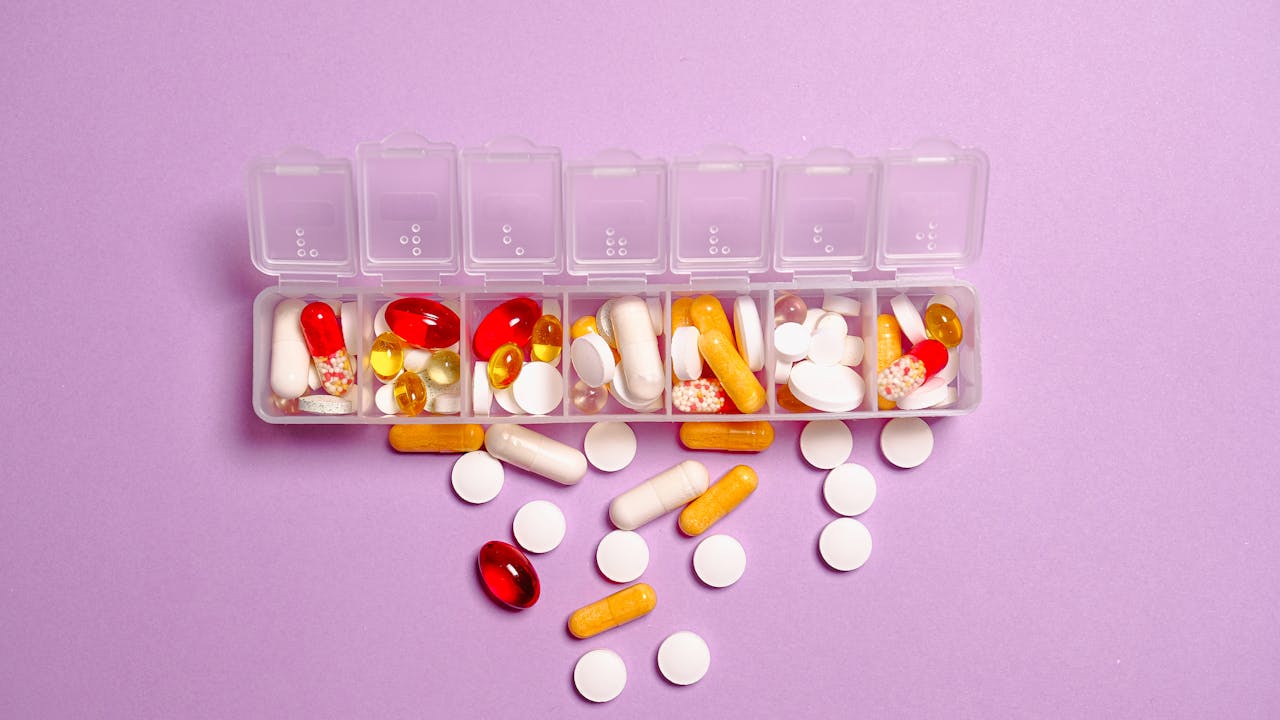
Capsules eliminate all of that. The MB is enclosed, released in the stomach or intestine depending on the formulation, and you never taste it, see it, or have to explain yourself to coworkers. For many people, this alone is enough to make capsules the default.
Beyond aesthetics, capsules offer something practically useful: fixed dosing. Each capsule contains exactly what the label says, typically 10 mg, 15 mg, 50 mg, or 100 mg. You open a bottle, swallow a capsule, done. No dropper, no measuring, no math. If your target is 15 mg per day, you take a 15 mg capsule. That precision matters when you're trying to find your optimal dose and track how you respond to it.
Liquid methylene blue via dropper offers more granular control over dose, which is useful when you're starting out and making tiny adjustments. But once you know your dose and you're taking it consistently, capsules make daily use far simpler. And simplicity correlates strongly with consistency, which is what actually produces results over time.
Travel is another real consideration. A small bottle of capsules is easy to pack in carry-on luggage. Liquid MB is fine to travel with technically, but you're managing a liquid that stains everything it touches, in a dropper bottle, in a bag that might get jostled or knocked over. Most people who travel regularly and take MB daily eventually switch to capsules.
There's also the adherence factor. Capsules feel like medicine. They fit into the routine of swallowing a few supplements with breakfast in a way that fumbling with a dropper over a glass of water doesn't. If you're more consistent with capsules than you would be with liquid, that's a legitimate reason to choose them even if liquid technically absorbs better.
Bioavailability: the honest trade-off
Here's where capsules get complicated, and where you need accurate information rather than marketing claims.
The bioavailability of methylene blue varies dramatically by formulation. A pharmacokinetics study found that oral liquid MB solution achieves approximately 72% bioavailability compared to IV administration. That's remarkably high for an oral compound and explains why liquid MB is effective even at doses far below what would be used intravenously.
Dry gelatin capsules tell a different story. Research suggests the area under the curve (which reflects total absorption over time) for dry capsule administration is only about 6.5% of IV, compared to 72% for oral solution. That's a large gap.
Before you decide capsules are useless, context matters.
First, most people taking MB for longevity or cognitive purposes aren't aiming for IV-equivalent blood levels. The doses they're using are low, often 5 to 20 mg per day, chosen specifically because research shows the benefits follow a hormetic curve. Too much is counterproductive. Lower absorption from a capsule might actually keep you in the beneficial low-dose range rather than pushing you into the potentially harmful high-dose range.
Second, capsule formulations have improved considerably since the older pharmacokinetic studies. Some brands now use rapidly dissolving capsule materials, formulations designed for better solubility in the GI environment, or Vitamin C as a co-ingredient to maintain MB in its reduced and active form during digestion. These innovations can meaningfully improve absorption compared to old-style dry gelatin capsules. The data from older studies may not accurately represent what modern capsules deliver.
Third, MB crosses the blood-brain barrier efficiently regardless of how you take it. Even at lower systemic blood concentrations, it accumulates in brain tissue at levels up to ten times higher than serum levels. The compound is brain-seeking by nature. This may explain why many users report clear cognitive and mood effects even at lower absorbed doses from capsules.
The honest bottom line: liquid MB gives you more total systemic exposure per mg taken. Capsules give you less absorption but much more convenience. For most people using MB for longevity purposes, capsules at slightly higher doses can compensate for reduced bioavailability while making daily use practical. The key is understanding this trade-off rather than assuming all forms are equivalent, and adjusting your dose accordingly.
If you want to understand the full picture of how much methylene blue to take daily and how the route of administration factors in, that guide covers the subject in depth.

How methylene blue capsules work in the body
When you swallow a methylene blue capsule, the capsule shell dissolves in your stomach or upper intestine. MB is released, absorbed through the intestinal wall, and enters the bloodstream. From there it distributes widely. MB is lipid-soluble and small, which means it can cross most biological membranes, including the notoriously selective blood-brain barrier. It gets into brain tissue faster and more efficiently than most compounds you could take orally.
What happens inside cells is where the real story is.
Mitochondria produce ATP, the energy currency your cells run on, through a series of protein complexes called the electron transport chain. Electrons from nutrients you eat get passed down this chain, and at each step, energy is released and used to pump protons, which drives ATP synthesis. The problem is that electron transfer isn't perfect. Some electrons escape the chain prematurely and react with oxygen to form superoxide, a reactive oxygen species that damages cell components including DNA, proteins, and lipid membranes. More ROS means more cellular damage over time. It's one of the central mechanisms of biological aging.
Methylene blue acts as an alternative electron carrier. It can accept electrons from NADH (at complex I) and donate them to cytochrome c (near complex IV), creating a shortcut that bypasses the leaky early steps. The result is less electron escape, less ROS production, and more efficient ATP synthesis.
In addition, MB directly increases the activity of complex IV, the terminal enzyme in the chain. Complex IV activity declines with age, which is part of why mitochondrial function deteriorates over decades. MB's ability to upregulate complex IV is one reason it's being studied as a mitochondrial support compound in aging research. A 2024 paper in the journal Aging found that MB targets mitochondrial dysfunction specifically in aging skeletal muscle, improving markers of mitochondrial health in aged tissue.
Beyond mitochondria, MB has other mechanisms worth knowing about. It inhibits monoamine oxidase A at low doses, which increases serotonin and dopamine availability and contributes to mood and focus effects. It inhibits nitric oxide synthase, reducing another source of oxidative stress. It promotes autophagy, the cellular cleanup process that removes damaged proteins and organelles. And it has direct antifungal and antibacterial properties that may explain some of its clinical uses.
This multi-target profile is both a strength and a complication. MB isn't a single-mechanism compound. That means dose-response relationships are complex, and what works at one dose might not work, or might even be counterproductive, at a different dose. This is why the hormetic principle, the inverted U-shaped dose-response curve, is so central to understanding MB.
For the specific angle on physical performance, methylene blue for muscles covers how these mechanisms play out in exercise physiology.
What the research shows
The research on methylene blue spans decades and touches multiple conditions. Here's what's most relevant for longevity and performance use.
Memory and cognition. Animal research has consistently shown that low-dose MB enhances memory across a variety of tasks, in healthy animals and in models of cognitive impairment. Human data is limited but positive. A double-blind study found that MB improved fear extinction memory and contextual memory in phobic patients, providing the first peer-reviewed evidence of memory enhancement in humans. A separate study in 248 elderly patients undergoing cardiac surgery found significantly fewer cases of postoperative cognitive dysfunction in the MB group compared to placebo.
Brain structure. A functional MRI study found that low-dose MB increased fMRI response to visual stimulation in the occipital cortex and enhanced memory retention at both 50 minutes and 24 hours after dosing. More remarkably, it increased gray matter volume in multiple brain regions after two weeks of administration. That's a structural change, not just a functional one.
Alzheimer's and neurodegeneration. MB has been studied extensively in Alzheimer's models. In one trial at 138 mg per day over 24 weeks, MB showed slower progression of cognitive decline versus placebo. The tau protein aggregation pathway, a central feature of Alzheimer's pathology, is partially inhibited by MB. This has driven pharmaceutical interest in MB derivatives as drug candidates for neurodegenerative conditions.
Anti-aging and skin. Research published in Scientific Reports found that MB reduced oxidative stress in skin fibroblasts and improved markers of skin aging at the cellular level. This is separate from the internal capsule use but reflects the same mitochondrial mechanism. Methylene blue cream covers the topical application in more detail.
Mitochondrial support. The 2024 skeletal aging study mentioned earlier showed that MB improves mitochondrial markers in aging muscle tissue. Given that mitochondrial decline is one of the core hallmarks of aging, this is directly relevant for anyone taking MB with longevity goals.
One theme runs through all of this: dose matters enormously. Low doses, typically under 1 mg per kg of body weight, show benefits. High doses show toxicity and can impair the same systems they help at low doses. This hormetic curve means that with MB, more is not better. Precision matters more than quantity.
Dosage guidelines for methylene blue capsules
Getting the dose right is the difference between MB capsules working and either doing nothing or creating problems. Here's a practical framework.
The low-dose range: 5 to 20 mg per day. This is where most biohackers and longevity-focused users work. At this range, the cognitive, energy, and mitochondrial benefits appear most consistently. You're operating in the zone where MB is acting as an antioxidant and alternative electron carrier, not overwhelming any system.
Most people starting with capsules use 10 mg as their entry point. A 10 mg capsule taken in the morning gives you a clear baseline to evaluate how you respond. Some people notice sharper focus and better energy within a few days. Others take two to four weeks before effects become clearly apparent.
The moderate range: 20 to 50 mg per day. Some protocols push into this range, particularly for more aggressive mitochondrial support or for individuals with higher body weight. The research in Alzheimer's patients used 138 mg, which is far above typical biohacker doses. Even at 50 mg, effects can shift from enhancing to potentially disrupting depending on the individual and any medications they're taking.
Start low, assess, adjust. A sensible protocol: start at 5 to 10 mg per day for two weeks. Track your energy, sleep quality, mood, and cognitive performance. If you notice clear benefits without side effects, hold there. If you want to experiment with higher doses, increase by 5 to 10 mg at a time and give yourself at least a week between adjustments before evaluating.
Time of day. Most users take MB capsules in the morning with breakfast. MB has mild stimulant-like properties due to its effects on monoamine neurotransmitters, and taking it late in the day can interfere with sleep for some people. If you're sensitive to caffeine or other stimulants, morning dosing is the right approach.
With or without food. Some evidence suggests that highly acidic stomach environments can degrade MB before it's properly absorbed. Taking capsules with food, particularly food that doesn't dramatically alter stomach pH, may support absorption. Some formulations include Vitamin C as a co-ingredient to maintain MB in its reduced, bioavailable form during digestion.
Cycling. Many MB users cycle the compound rather than taking it daily indefinitely. A common approach is five days on, two days off, or four weeks on, one week off. The rationale is partly precautionary given the limited long-term safety data in healthy adults at these doses, and partly practical. MB has a half-life of approximately five hours, so daily use does maintain consistent levels. But cycling is a reasonable conservative approach.
For how many drops of methylene blue equates to which capsule doses, that post breaks down the liquid-to-capsule conversion math clearly if you're switching formats.
What to look for in methylene blue capsules
This is where most buyers get it wrong. The quality gap between MB capsule products is significant, and the wrong choice isn't just ineffective, it can expose you to real contamination risks.
USP grade is the minimum standard. USP stands for United States Pharmacopeia. This designation means the product meets defined standards for purity (typically 98% or higher) and has established limits for specific impurities. For MB, this matters because reagent-grade MB, the kind used in labs for tissue staining, often contains heavy metals and other contaminants at levels that are unacceptable for human consumption.
A 2019 analysis published in the Journal of Pharmaceutical Sciences found that non-pharmaceutical MB products commonly contained lead, arsenic, and other heavy metals above safety thresholds. The difference between reagent grade and USP grade methylene blue isn't just a marketing distinction. It's a real contamination risk. For the full breakdown of what USP grade methylene blue actually means and how to verify it, that guide covers the subject comprehensively.
Third-party testing is non-negotiable. A company claiming USP grade without providing a Certificate of Analysis (COA) from an independent lab is making an unverifiable claim. Good brands provide QR codes or links to COAs showing purity percentage, heavy metal test results, and compound identification. If a company won't show you their testing data, that tells you everything.
GMP manufacturing. Good Manufacturing Practice certification means the facility follows standardized protocols for cleanliness, quality control, and documentation. This reduces the risk of contamination or dosing errors during production. Look for GMP-certified facilities, ideally in the US.
Capsule material. The capsule shell itself affects both absorption and tolerability. Rapidly dissolving or vegetarian capsule materials may improve absorption compared to standard gelatin. Some premium brands use tallow-based capsules. Check what the capsule shell is made of, not just what's inside it.
What else is in the capsule. Some brands add Vitamin C as an adjuvant, based on research suggesting ascorbic acid helps maintain MB in its reduced and active form during digestion. Others use fillers, binders, or flow agents. Simple formulations with minimal additives are generally preferable. You want MB, a capsule shell, and ideally Vitamin C. That's it.
Available dose options. Quality brands typically offer multiple strengths, 10 mg, 15 mg, 50 mg, so you can precisely dial in your dose. If a brand offers only one option, you lose flexibility.
For compounded capsules with physician oversight, providers can create custom-dose formulations. Compass Laboratory and similar compounding pharmacies have entered this space with pharmaceutical-grade products. And if you've read about Dr. Scott Sherr's protocols around MB, they typically specify pharmaceutical-grade capsule or troche formulations specifically because of the quality standards involved.
For a detailed breakdown of specific products and brands, pharmaceutical grade methylene blue capsules covers the landscape thoroughly.
WinAging tracks these compounds and quality standards so you don't have to spend hours on PubMed and product pages trying to sort legitimate options from junk. The free supplement interaction checker is particularly useful when you're stacking MB with other compounds.

Side effects and drug interactions
Methylene blue is not a supplement to take casually without understanding the safety picture. Most side effects at low doses are mild and manageable. But one interaction is serious enough that it warrants its own section.
Common side effects at low doses:
Blue-green discoloration of urine is normal and expected. Don't be alarmed by it. Mild headache when starting, particularly if you've started higher than 10 mg, is common and typically resolves after a few days. Nausea occurs in some people, especially on an empty stomach, and is usually solved by taking capsules with food. Temporary skin discoloration at the application site is irrelevant for capsules but worth knowing if you're switching formats.
These effects typically resolve as your body adjusts or when dose is reduced slightly.
The serious concern: serotonin syndrome. This is the interaction you absolutely need to know about. MB inhibits monoamine oxidase A at higher doses. When combined with serotonergic medications, SSRIs, SNRIs, tricyclic antidepressants, certain pain medications like tramadol, or serotonin-releasing compounds, this can cause serotonin syndrome. This is a potentially life-threatening condition characterized by agitation, rapid heart rate, high temperature, tremor, and in severe cases, seizures and death.
The FDA has issued explicit warnings about this interaction, particularly in surgical settings where MB is sometimes used intraoperatively. If you take any serotonergic medication, do not take methylene blue without consulting a physician first. This isn't a minor caution. It's a hard line.
G6PD deficiency. People with glucose-6-phosphate dehydrogenase deficiency should avoid MB entirely. In these individuals, MB can cause hemolytic anemia, where red blood cells break down faster than they can be produced. G6PD deficiency affects roughly 400 million people worldwide and is more prevalent in individuals with African, Mediterranean, or Middle Eastern ancestry. Testing for G6PD deficiency is simple and is worth doing before starting MB if you're uncertain about your status.
High-dose toxicity. Doses above approximately 5 mg per kg of body weight are considered toxic territory. At this range, MB paradoxically causes methemoglobinemia, the very condition it treats at therapeutic doses. The hormetic curve is real: too little does nothing, the right range helps, too much harms. There's no advantage to pushing doses high.
Pregnancy. MB should be avoided during pregnancy. Evidence in animal models shows potential developmental risks, and there are case reports of complications from in utero exposure to MB. Avoid entirely.
Who should (and shouldn't) take methylene blue capsules
Good candidates:
Healthy adults interested in mitochondrial support, cognitive enhancement, and longevity optimization are the primary audience for MB capsules. People experiencing age-related energy decline or mental fog who want something more mechanistically targeted than caffeine. Anyone who has tried liquid MB and found the staining impractical for daily use. Those with physician guidance who are using MB as part of a more formal protocol.
Poor candidates or those who need medical guidance:
Anyone taking SSRIs, SNRIs, MAOIs, or other serotonergic medications. People with G6PD deficiency. Pregnant or breastfeeding women. Children and adolescents. Anyone with kidney or liver disease that might impair MB clearance. People on multiple medications where complex interactions are possible. In these cases, physician review is not optional, it's necessary.
MB is not a supplement for everyone. For the right person, with honest eyes on the dosing and interactions, the risk profile at low doses is manageable and the potential benefits are meaningful.
Stacking methylene blue capsules with other compounds
MB doesn't exist in isolation for most people who use it. It's part of a broader longevity or performance stack. Here's how it fits with the compounds most commonly combined with it.
MB and red light therapy. This is one of the most researched MB pairings in biohacking circles. Red and near-infrared light activates cytochrome c oxidase (complex IV), the same enzyme that MB enhances directly. The two interventions appear synergistic, with some research suggesting that MB can act as a photosensitizer, amplifying the effects of photobiomodulation. Many protocols combine morning MB capsules with midday or early afternoon red light exposure.
MB and NAD+ precursors. Both NMN and NR support NAD+ levels, which are upstream of the mitochondrial electron transport chain. MB works downstream in the same system. The theoretical synergy is sound, and many longevity-focused users stack them without known interaction concerns. If you've been following the debate around why people stop taking NMN, MB offers a complementary angle on the same mitochondrial problem via a completely different mechanism.
MB and glycine. Glycine supports several longevity pathways including mTOR regulation, collagen synthesis, and sleep quality. Glycine dosage for anti-aging covers the research in depth. No known interaction with MB, and they can be taken together without concern.
MB and taurine. Taurine supports mitochondrial biogenesis and has shown longevity effects in animal models. Taurine for sleep covers the sleep-specific research. The combination with MB is common among biohackers and carries no known interaction risk.
MB and rapamycin. This pairing appears in more aggressive longevity stacks. Both compounds target aging biology but through different mechanisms: MB via mitochondrial efficiency, rapamycin via mTOR inhibition. If you're considering rapamycin and want to understand the cost landscape first, rapamycin cost is a useful starting point. Physician oversight is important when both compounds are in play simultaneously.
MB and antidepressants. As covered in the safety section: do not combine with serotonergic drugs. This isn't a stack consideration, it's a prohibition. The risk is real and well-documented.
When building any multi-compound protocol, use the WinAging supplement interaction checker to flag combinations worth scrutinizing before you start. And tracking your baseline with the biological age calculator gives you a reference point to evaluate whether your stack is actually moving the needle over months.
Frequently asked questions
Are methylene blue capsules the same as pharmaceutical methylene blue?
Not always. Pharmaceutical methylene blue refers to hospital-grade formulations used in IV or oral form for medical conditions like methemoglobinemia. Consumer capsule supplements are typically made from USP-grade MB, which meets pharmacopeia purity standards, but aren't FDA-approved medications for disease treatment. The purity standard should be equivalent (98% or higher), but dosing, intended use, and regulatory context differ considerably.
How long do methylene blue capsules take to work?
Subjective effects like improved focus and energy often appear within one to three days at 10 mg daily. Some people notice effects within hours of the first dose. Structural effects on mitochondrial function likely take longer, closer to two to four weeks of consistent use. Cognitive improvements in the clinical research literature emerge over weeks, not days. Don't judge by the first few days.
Can you take methylene blue capsules every day?
Many people do. There's no strong evidence of tolerance developing from daily use at low doses. MB has a half-life of roughly five hours, so daily dosing maintains consistent levels. Some users prefer cycling (five days on, two days off) as a precaution given the limited long-term safety data in healthy adults at these doses. Neither approach is definitively superior based on current evidence.
Why does MB turn urine blue?
Methylene blue is excreted primarily through the kidneys and colors urine blue-green. This is harmless and expected. It's actually a useful confirmation that your capsule has dissolved and the compound is absorbing. Blue urine for a few hours after your dose is normal. Consistently intense blue throughout the entire day might suggest a higher absorbed dose than intended.
Can methylene blue capsules be taken with food?
Yes, and this is generally recommended. Taking MB with food may buffer the stomach environment and reduce nausea in people who experience it. Some formulations include Vitamin C as a co-ingredient to maintain MB's bioavailability in the GI tract. If you're taking standalone capsules without Vitamin C in the formula, taking your dose with a Vitamin C-containing food or drink is a simple way to support absorption.
What's the difference between 10 mg and 50 mg capsules?
The dose, and consequently the risk profile. A 10 mg capsule is appropriate for most nootropic and longevity applications, particularly when starting. A 50 mg capsule is five times higher and brings you into a range where side effects and interaction risks become meaningfully more relevant. Most people don't need 50 mg unless they're following a physician-directed protocol for a specific clinical purpose. Start with 10 mg.
Do methylene blue capsules stain teeth?
Only if the capsule opens in your mouth before you swallow. This is rare but possible if you bite down or the capsule gets stuck. Swallowing whole with a full glass of water prevents this entirely. The staining is temporary and clears within a few hours even if it does happen.
Is liquid MB better than capsules?
Liquid formulations absorb more efficiently based on the available pharmacokinetic research. But capsules are significantly more practical for daily use. The right format depends on your priorities. If maximum absorption per mg is the goal and you don't mind the aesthetic issues, liquid via dropper or troches are more efficient. If daily consistency and convenience matter more, capsules are the practical choice for most people.
Need help building your stack? The WinAging protocol builder designs a personalized longevity plan based on 30+ data points about your health and goals.
Related guides
- Pharmaceutical grade methylene blue capsules: what separates quality from risk
- USP grade methylene blue: why grade matters for safety and results
- How much methylene blue to take daily: dosage guide
- Methylene blue troches: the sublingual advantage
- Supplement interaction checker
Sources
- From Mitochondrial Function to Neuroprotection - PMC
- Anti-Aging Potentials of Methylene Blue - PMC
- High absolute bioavailability of methylene blue given as an aqueous oral formulation - PubMed
Methylene blue capsules aren't magic. But at the right dose, from a quality source, with realistic expectations, they're one of the more interesting compounds in the longevity toolkit. The mitochondrial mechanisms are real. The cognitive data is promising. And the capsule format makes consistent daily use genuinely practical in a way that liquid often doesn't.
Start low. Verify your supplier's quality standards. Check your medications for interactions. That's the full protocol.
WinAging's goal is to cut through the noise and help you make smarter decisions about what goes into your body. Use the free tools to track your baseline and build a stack that actually makes sense for your biology.