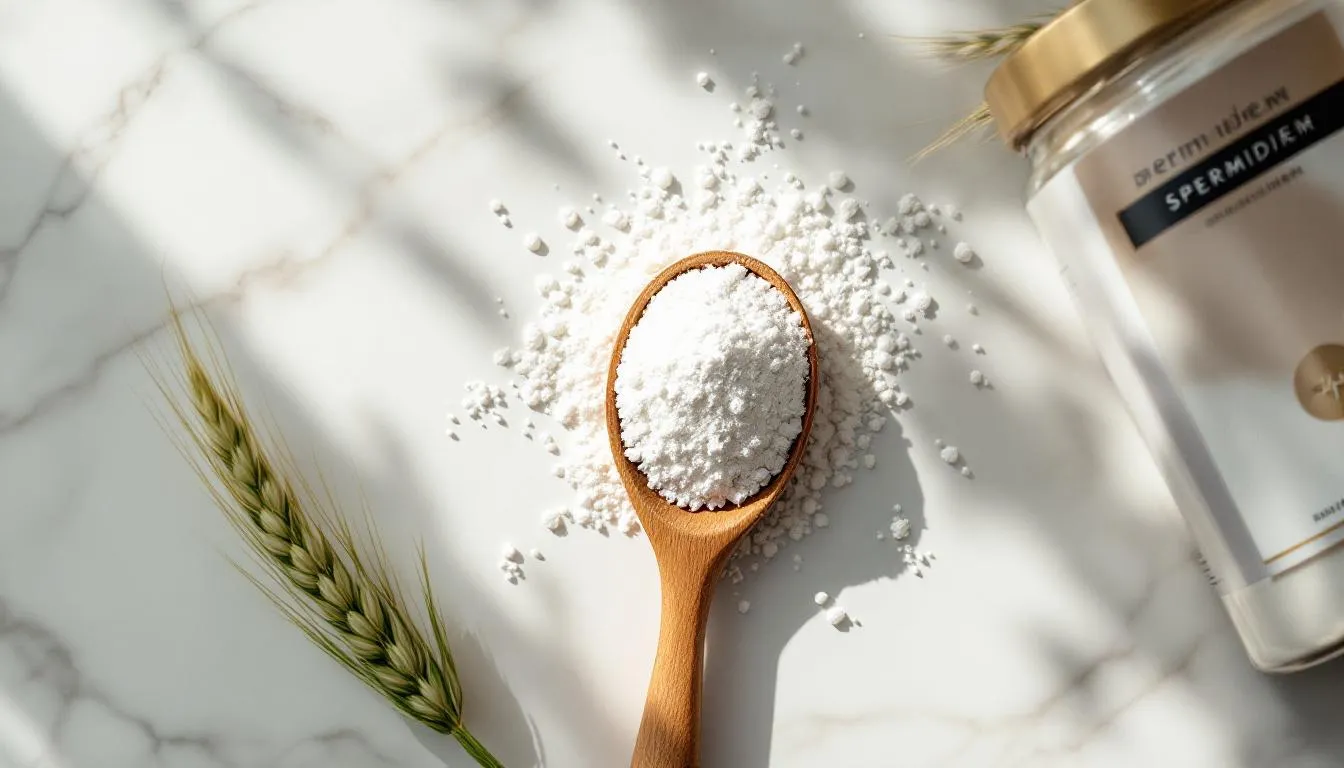
spermidineLIFE review: products, science, and verdict
spermidineLIFE is the most research-backed spermidine brand on the market. Here's the full breakdown: CelVio® extract, clinical trials, product lineup, and how it compares to Primeadine.
If you've spent any time researching spermidine supplements, you've run into spermidineLIFE. It's the brand that everyone in the longevity space seems to reference. David Sinclair's on the scientific advisory board. The extract used in their products is the one cited in published clinical trials. They've been around since 2019 and have completed over ten human studies.
That's a different story from most supplement brands, which exist primarily to sell you something rather than to generate research. Understanding why spermidineLIFE is different, and whether that difference justifies the price, is what this review is for.
Let's start with the compound itself, because the brand only makes sense once you understand what spermidine actually does.

What spermidine is and why it matters
Spermidine is a polyamine. It's a small molecule your body produces naturally, and it's present in every living cell. Your gut bacteria make some of it. You get some from food. Your cells synthesize it from an amino acid pathway starting with ornithine.
For the first few decades of your life, this isn't something you need to think about. Your body maintains adequate levels and cellular processes hum along. But starting in your 30s and accelerating through your 40s and 50s, spermidine levels decline. By the time you're 80, you may have 40 to 60 percent less circulating spermidine than you did at 20.
That decline matters more than it sounds like it should.
Here's why: spermidine is the most potent natural activator of autophagy that researchers have identified. Autophagy is your cells' internal cleanup system. The word means "self-eating," and the process is exactly that: cells break down and recycle damaged proteins, dysfunctional organelles, and accumulated cellular debris. When autophagy works well, cells stay clean and functional. When it slows down, damaged material accumulates. That accumulation is one of the core mechanisms of biological aging.
The connection between spermidine and autophagy was discovered at the University of Graz by Prof. Dr. Frank Madeo, whose research became the scientific foundation for spermidineLIFE. His 2018 paper in Science described spermidine as "a physiological autophagy inducer acting as an anti-aging vitamin in humans," which is about as strong a statement as a serious researcher will make in a scientific journal.
How the mechanism works
The cascade starts with histone acetyltransferases. These enzymes acetylate histones, the proteins that DNA wraps around, and that acetylation affects which genes get expressed. Spermidine inhibits histone acetyltransferases, which reduces acetylation, which in turn activates the genes that drive autophagy.
There's a second, related pathway that gets less attention but is arguably just as important. Spermidine is the only known substrate for a modification called hypusination of a translation factor called eIF5A. When spermidine is present, it modifies eIF5A at a specific location (lysine 50). Hypusinated eIF5A is then required for the translation of TFEB, a master transcription factor that activates hundreds of autophagy and lysosomal genes.
This is why spermidine decline with age is particularly damaging. It doesn't just reduce one autophagy signal. It disrupts the entire regulatory circuit that keeps cellular cleanup running. Less spermidine means less hypusinated eIF5A, which means less TFEB, which means weaker autophagy across the board.
The mitochondria connection flows from the same pathway. Hypusinated eIF5A is required for producing proteins involved in mitochondrial fatty acid oxidation. Without adequate spermidine, mitochondrial metabolism deteriorates. Research in fruit flies showed dietary spermidine prevents age-related mitochondrial dysfunction and cognitive decline. The same pathway appears conserved in mammals.
The fasting connection
If you've done any reading on longevity, you know fasting is one of the most robustly validated interventions for extending lifespan in model organisms. What you may not know is that a significant part of fasting's mechanism runs through spermidine.
A 2024 study in Nature Cell Biology showed something striking: fasting promotes endogenous spermidine synthesis in yeast, nematodes, flies, mice, and humans, and blocking that synthesis prevents fasting from inducing autophagy. If you genetically block spermidine production, fasting loses much of its lifespan-extending effect. Spermidine is not one of several fasting signals. It's a required mediator.
The same applies to rapamycin. Rapamycin inhibits mTOR, which normally suppresses spermidine synthesis. When you inhibit mTOR with rapamycin, spermidine surges, which drives autophagy. Researchers tested what happens when you block spermidine production while giving rapamycin: the longevity effects largely disappear. So rapamycin's mechanism also depends on spermidine.
This is why spermidine is sometimes called a fasting mimetic. It's not a perfect substitute for fasting. But for people already doing time-restricted eating or periodic fasting, supplemental spermidine may work synergistically with those interventions, reinforcing the same underlying cellular pathways.
Not sure how spermidine fits with the other compounds in your stack? The WinAging supplement interaction checker will flag any timing or interaction considerations worth knowing about.
The clinical evidence
Spermidine has more human clinical research than most longevity supplements. That's one of the real differentiators in this category, where most compounds have extensive animal data and almost nothing in humans.
Cognitive function trials:
The SmartAge pilot study gave older adults with subjective cognitive decline 1.2mg of spermidine per day for three months. Memory performance improved compared to placebo, with no adverse effects. A follow-up year-long study (the SmartAge trial, published in JAMA Network Open, 2022) used a higher dose of 3.3mg per day in 100 older adults over 12 months. The primary endpoint on mnemonic discrimination performance didn't reach statistical significance, but exploratory analyses showed improvements in verbal memory and inflammation markers. The researchers flagged the dose as potentially too low and called for follow-up trials with higher doses.
Hair growth:
A double-blind, placebo-controlled RCT published in Dermatology enrolled 100 participants and tested spermidine supplementation for 90 days. The treatment group showed a 12.8% increase in the proportion of hair follicles in the anagen (growth) phase. The effect persisted for more than three months after stopping supplementation. Earlier in vitro work showed spermidine upregulates markers of hair follicle stem cells and growth factors.
Cardiovascular health:
Population studies have found that higher dietary spermidine intake correlates with lower all-cause mortality and reduced cardiovascular disease incidence. One observational study of 800+ adults found that higher spermidine intake linked to lower systolic blood pressure and improved endothelial function. Mouse model studies show spermidine promotes cardioprotective autophagy in heart tissue via an AMPK/mTOR pathway.
Longevity epidemiology:
Perhaps the most compelling data comes from the large European population studies. Higher dietary spermidine intake is associated with a 24% reduction in all-cause mortality, a 27% reduction in cognitive impairment, and a 47% reduction in Alzheimer's disease risk. Centenarians, as a group, maintain blood spermidine levels similar to middle-aged people, unlike most people their age.
These numbers are from observational studies, so causation isn't proven. But the consistency across multiple populations, combined with the mechanistic data showing how spermidine slows aging at the cellular level, builds a genuinely compelling picture.
Safety:
Studies have tested spermidine at doses up to 40mg per day without serious adverse events. No significant changes in blood pressure, lipids, liver enzymes, kidney function, or blood counts compared to placebo across multiple trials. The safety record is one of spermidine's clearest strengths.
About spermidineLIFE: the company behind the brand
spermidineLIFE is made by Longevity Labs+, headquartered in Graz, Austria, with a US branch established in 2020. The company was founded in 2016 when Herbert Pock and Gerald Sitte became aware of Prof. Madeo's research and partnered with the University of Graz to develop what became the CelVio® extraction process.
That process matters. CelVio® is a proprietary method that isolates natural spermidine from non-GMO European wheat germ using pure water, with no harsh solvents. The resulting extract is standardized for spermidine content and is, critically, the extract actually used in human clinical trials. When researchers run an RCT on spermidine, they're often using spermidineLIFE's CelVio® extract. That gives the brand a unique position: they're not just selling you something that theoretically should work because of general spermidine research. They're selling you the exact material that's been tested.
The company has received two International Innovation Awards, completed 10+ clinical studies, and employs over 60 people, with more than 60% being researchers. Their products are used by 80+ international research teams.
The scientific advisory board includes Prof. Madeo himself, the world's most-cited autophagy researcher Prof. Guido Kroemer, and David Sinclair from Harvard Medical School, who includes 1mg of spermidine in his personal daily protocol.
This isn't a marketing arrangement. These are the researchers who built the science. Their involvement is a meaningful signal about the seriousness of the company.
WinAging tracks longevity compounds across all tiers of evidence. Spermidine sits among a small group of supplements with genuine human clinical trial support, alongside compounds like NMN, berberine, and rapamycin.
The product lineup: what CelVio® actually delivers
All spermidineLIFE products use the CelVio® Complex. That's consistent across the lineup. What varies is the dose, the format, and any additional co-factors.

spermidineLIFE Original (800mg / ~1mg spermidine)
The entry-level product. 800mg of CelVio® per day, delivering approximately 1mg of natural spermidine. 60 capsules per bottle (2 per day), 30-day supply. Price: around $69.
This is the dose closest to what was used in the SmartAge pilot trial. It's also what Sinclair takes daily. The research case for 1mg is real, even if higher doses may produce stronger effects.
All products include added zinc and thiamine (B1) as co-factors. The formula is vegan, GMO-free, lactose-free, and nut-free. It does contain gluten: about 1.3mg per day from the wheat germ extract. Not a problem for most people, but relevant if you have celiac disease.
spermidineLIFE Extra+ (1300mg / ~2mg spermidine)
Double the dose at 1300mg per day, delivering roughly 2mg of spermidine. Same format, same co-factors. Price: around $109/month.
For most people serious about longevity supplementation, Extra+ is the sweet spot. It delivers a meaningfully higher dose than Original without the substantial price jump of the Ultra+ or Pro+ tiers. At $109/month versus $69, you're paying 58% more for roughly double the spermidine.
The Memory+ variant combines 1300mg CelVio® with Brahmi extract and saffron, targeting cognitive function specifically. It runs around $99/month.
spermidineLIFE Ultra+ (2150mg / ~3mg spermidine)
2150mg CelVio® per day, delivering approximately 3mg of spermidine. This format comes as powder sachets rather than capsules, at 30 sachets per box. Price: around $149/month.
The powder format makes Ultra+ convenient for people who prefer mixing supplements into drinks. Dosing is 1 sachet per day. The sachet format also means no capsule shell, which matters for some people.
3mg per day aligns closely with the year-long SmartAge trial dose, which is the most rigorous human study published to date.
spermidineLIFE Pro+ (4300mg / ~6mg spermidine)
The highest-dose product. 4300mg CelVio® per day, delivering approximately 6mg of natural spermidine per day. Available in 10-sachet packs ($149) and 30-sachet packs ($249/month).
6mg per day is at the upper limit of EFSA's safe daily intake for food-derived spermidine. It's the dose for people who want maximum coverage and are already serious about longevity interventions.
At $249/month (about $8.30/day), this is a significant budget commitment. The cost per milligram of spermidine ($1.39) is actually better than the Original, but the total monthly cost is substantial.
Which product makes sense for you
Just starting out: Original at 1mg is the entry point. It has the clinical trial backing, it's what Sinclair uses, and at $69/month it's not a huge commitment for a 90-day trial.
Already convinced by spermidine: Extra+ at 2mg or Ultra+ at 3mg. The dose increase relative to Original is meaningful, and you're still within well-studied ranges.
Building a serious longevity protocol: Pro+ at 6mg is the ceiling for food-derived spermidine based on current safety guidance. If you're already stacking NMN, berberine, and other longevity compounds, Pro+ completes the spermidine component properly.
The bioavailability question
This is the most uncomfortable topic in the spermidine supplement space, and any honest review has to address it.
A 2024 pharmacokinetic study tested 40mg per day of high-purity spermidine in healthy adults. The result: plasma and saliva spermidine levels didn't change substantially even at this high dose. A similar finding appeared in a separate 2023 study. You'd expect that swallowing 40mg of spermidine would raise your blood spermidine levels. It doesn't seem to, at least not in measurable plasma concentrations.
This doesn't necessarily mean the supplements aren't working. There are several explanations:
The gut is likely where much of the action happens. Spermidine may work primarily on intestinal epithelial cells before being metabolized, rather than entering systemic circulation in intact form. The gut-liver axis may be the primary route, not systemic absorption. This would explain why epidemiological studies find strong associations between dietary spermidine intake and longevity outcomes even though plasma levels don't track directly with intake.
There's also the homeostatic regulation argument. The body tightly controls circulating polyamine levels, and may actively work to prevent plasma spermidine from rising even when intake increases. What matters is the activity in target tissues, not what shows up in blood measurements.
The honest position: the bioavailability question is real, and anyone who tells you it's fully resolved is oversimplifying. What we have is consistent epidemiological data showing dietary spermidine predicts longevity outcomes, mechanistic studies showing spermidine activates autophagy in living organisms, clinical trials showing measurable effects on memory and hair growth, and the puzzling observation that blood levels don't rise predictably with oral doses.
The most reasonable interpretation is that spermidine supplementation works, that blood level measurements aren't the right proxy for efficacy, and that the gut mechanism is likely central to its effects. This is an area where more research is genuinely needed.
For what it's worth, spermidineLIFE's clinical research uses functional endpoints (memory, hair growth, biomarkers) rather than plasma levels to measure outcomes. That's the right approach given what we know about absorption.
spermidineLIFE vs. the competition
The spermidine supplement market has grown considerably, and spermidineLIFE faces real competition. Here's an honest breakdown of the main alternatives.
spermidineLIFE vs. Primeadine
Primeadine (by Oxford Healthspan, founded by Leslie Kenny) is the closest direct competitor and the most common comparison. They're both premium wheat germ-based brands. The differences are genuine.
Dose: Primeadine Original delivers 1mg per serving. spermidineLIFE Original also delivers 1mg. At this base level, they're comparable.
Source philosophy: Primeadine sources from Japanese wheat germ and includes FOS (fructooligosaccharide) prebiotic fiber, arguing that feeding the gut bacteria that produce spermidine endogenously is more effective than loading exogenous doses. They also add spermine and putrescine explicitly. spermidineLIFE's CelVio® naturally contains companion polyamines from the wheat germ matrix without separate supplementation.
Clinical research: This is where spermidineLIFE has a clear advantage. The CelVio® extract is the one used in published RCTs. Primeadine doesn't have comparable clinical trial data tied to their specific product.
Price: Primeadine Original runs around $90/month. spermidineLIFE Original is around $69. Primeadine GF (chlorella-based, gluten-free) is around $90/month and is the better option for celiac disease.
Verdict: If you want the most research-backed option, spermidineLIFE wins. If the prebiotic gut-bacteria approach resonates with you and you're willing to pay more, Primeadine is a legitimate choice. For gluten-free needs, Primeadine GF is currently the better alternative.
Read the full Primeadine spermidine review for a deeper comparison.
spermidineLIFE vs. Double Wood
Double Wood uses synthetic spermidine trihydrochloride (3HCl). Their product delivers 10mg per capsule, with 120 capsules for around $40. The cost per milligram is dramatically cheaper: about $0.13/mg versus $1.82-$2.30/mg for spermidineLIFE.
The tradeoff is clinical validation and the companion polyamine complex. Double Wood's synthetic spermidine hasn't been used in clinical trials. It delivers isolated spermidine without spermine, putrescine, or other naturally co-occurring compounds. Whether the food-based matrix matters is unknown, but spermidineLIFE's research is based on exactly that matrix.
For someone who wants to test spermidine with minimal financial commitment, Double Wood is a reasonable entry point. For someone who wants the most validated option, spermidineLIFE is the better choice.
spermidineLIFE vs. Do Not Age
Do Not Age is a UK-based brand offering 8mg of wheat germ-derived spermidine for around $39/month. Good value, clean formulation, and a decent dose. Fewer research connections than spermidineLIFE. If budget is the primary concern and you want food-derived spermidine at a higher dose than spermidineLIFE Original, it's worth considering.
Quick comparison table
The landscape in brief: spermidineLIFE leads on clinical validation, research backing, and scientific credibility. Primeadine leads on prebiotic philosophy and gluten-free options. Double Wood and Do Not Age lead on cost per milligram. The right choice depends on what you're optimizing for.
Who should take spermidineLIFE
The clearest candidates are adults 40 and above who are actively building a longevity protocol and want the supplement with the strongest clinical evidence base.
More specifically: if cognitive health is a concern, the SmartAge trial data is directly relevant. The 90-day and 12-month trials showed memory improvements at relatively low doses. If hair thinning is on your radar, the RCT evidence for spermidine is actually quite good for a supplement claim. If you're already using other autophagy-activating interventions like time-restricted eating, rapamycin, or berberine, spermidine stacks naturally with all of them.
The person who gets the most from spermidineLIFE specifically (versus a cheaper competitor) is someone who values clinical validation. You're paying a premium for the CelVio® extract that's in the studies, not a generic wheat germ powder.
Less suitable candidates:
Anyone with celiac disease or a significant wheat/gluten sensitivity should avoid the wheat germ-based products and consider Primeadine GF or synthetic spermidine 3HCl instead. Pregnant or breastfeeding women should avoid due to insufficient safety data. The clinical trials haven't included those populations.
For people with active cancer, the polyamine question is worth discussing with an oncologist. Polyamines support cell growth in general, and there's a theoretical concern about promoting tumor growth, even though spermidine also promotes immune surveillance and autophagy-mediated clearance of damaged cells. The human data doesn't show harm, but the nuance warrants a direct conversation with a doctor.
See spermidine benefits for men and spermidine benefits for women for more specific guidance.
Side effects and safety
The safety record across all published spermidine research is excellent. Studies up to 40mg per day haven't produced serious adverse events. The most common side effects from clinical trials and user reports are:
Mild gastrointestinal discomfort, especially when taken on an empty stomach. Taking it with food largely eliminates this for most people. Some users report a mild headache during the first week of use. A small number report initial fatigue before energy improvements appear, typically around weeks two to three.
The wheat-derived gluten content (1.3mg per day at the Original dose) is worth noting but not a practical concern for people without celiac disease or wheat allergy.
The most relevant drug interaction consideration is with immunosuppressants. Spermidine has significant effects on immune cell autophagy. If you're on tacrolimus, cyclosporine, or similar drugs, check with your prescribing physician before adding spermidine. This is also relevant for anyone on rapamycin: the combination is mechanistically logical (see above) but worth flagging to your doctor.
Run your full stack through the supplement interaction checker to identify any timing or combination considerations.
How to take spermidineLIFE
Dose: Start with the Original (1mg) or Extra+ (2mg). Give it at least 90 days before evaluating.
Timing: Take it with food. This is the one consistent piece of practical advice across all spermidine products. Fasted dosing increases GI sensitivity for some people. Food doesn't reduce efficacy.
Time of day: There's no strong evidence that morning versus evening matters for spermidine specifically. Most people take it with their main supplement routine. For guidance on timing relative to other compounds in your stack, see best time to take spermidine.
Duration: Minimum 90 days for a meaningful trial. Autophagy induction builds over time. Don't judge spermidine at the 30-day mark. The SmartAge pilot showed the clearest memory improvements at three months. Hair follicle changes in the dermatology RCT were measurable at 90 days and persisted beyond that.
Cycling: There's no established cycling protocol for spermidine and no evidence of tolerance or receptor downregulation. Most serious longevity practitioners take it continuously. spermidineLIFE recommends a minimum continuous use of three months.
Stacking spermidine with other longevity compounds
Spermidine's mechanism is distinct enough from other longevity compounds that it stacks well without obvious conflicts.
With NMN or NR: NAD+ precursors support mitochondrial function primarily via the SIRT1/NAD+ pathway. Spermidine's primary pathway is the eIF5A/TFEB/autophagy axis. These are complementary rather than overlapping. Most serious longevity protocols include both. See NAD vs NMN for background on the NAD+ side.
With berberine: Berberine activates AMPK and inhibits mTOR through a different mechanism than spermidine. Both promote autophagy via different upstream inputs. The combination is mechanistically logical and is included in several practitioner-designed longevity stacks.
With fasting: Fasting and supplemental spermidine are working through overlapping biological machinery. Supplementing on days when you're doing time-restricted eating or extended fasting may be additive rather than redundant. The 2024 Nature Cell Biology research suggests fasting works partly by triggering endogenous spermidine production, so supplementing during or around fasting periods makes sense.
With rapamycin: As discussed above, spermidine is required for rapamycin's longevity effects. The combination is not just logical; the research suggests it's how rapamycin works. If you're taking rapamycin under physician supervision, continuing spermidine during that protocol is well-supported.
With quercetin or fisetin (senolytics): Senolytics clear senescent cells, which is a different cellular cleanup mechanism from autophagy. Some longevity practitioners stack them for broader cellular housekeeping coverage.
For a personalized view of how spermidine fits with your specific goals and current compounds, WinAging's AI protocol builder builds a customized longevity stack based on your age, goals, and existing supplements.
What the research still doesn't know
Being honest here matters. Spermidine's research is impressive but not complete.
The human clinical trials are still relatively small. The SmartAge year-long trial had 100 participants. Hair growth RCT: 100 participants. These are meaningful studies but not the large-scale, multi-site trials that would fully establish efficacy.
The bioavailability mechanism remains incompletely understood. We know dietary spermidine correlates with longevity outcomes. We don't fully know how the supplemental form reaches its targets, given that plasma levels don't predictably rise with oral intake.
The optimal dose in humans hasn't been determined. Clinical trials have used 0.9mg to 40mg daily. The dose-response curve in humans isn't established.
Long-term safety data beyond 12 months is limited. The existing safety data is reassuring, but multi-year trials are still needed.
None of these gaps are reasons to avoid spermidine. They're reasons to calibrate your expectations correctly. You're supplementing a compound with strong mechanistic backing, good epidemiological data, and encouraging clinical trial results. You're not waiting on overwhelmingly definitive proof that may never exist for any longevity compound.

Is spermidineLIFE worth the price?
At $69-$249/month depending on the product, spermidineLIFE is not cheap. But pricing needs to be contextualized against what you're getting.
You're buying the extract that's been used in clinical trials. You're buying from a company whose scientific advisory board includes the scientists who discovered spermidine's longevity role. You're buying a product that feeds into 80+ active research programs. That's a different thing from buying a generic wheat germ powder at a lower cost per milligram.
The value case for each product tier:
Original ($69/month, 1mg): Reasonable entry point. This dose has clinical support. It's what Sinclair takes. If you're not sure whether you'll stick with spermidine long-term, this is where to start.
Extra+ ($109/month, 2mg): The value sweet spot. You're doubling the dose for 58% more cost. If you're committed to longevity supplementation and have the budget for it, Extra+ makes more sense than Original.
Ultra+ ($149/month, 3mg): The dose closest to the year-long trial. Powder format is convenient. If you prefer not to take capsules, this is the right tier.
Pro+ ($249/month, 6mg): For committed longevity stackers who want maximum dose from the most validated source. The cost per milligram ($1.39) is actually better than lower tiers, but the monthly total is significant.
If you're building a broader longevity protocol and trying to figure out budget allocation, spermidine from spermidineLIFE is a high-priority inclusion given the evidence base. Use WinAging's biological age calculator to track where you're starting from, and consider how spermidine fits alongside your other interventions.
Frequently asked questions
What is spermidineLIFE made from?
spermidineLIFE uses the CelVio® Complex, a proprietary spermidine-rich wheat germ extract developed in partnership with the University of Graz. The extract comes from non-GMO European wheat germ and is processed using pure water, without harsh solvents. It contains naturally occurring spermidine along with the companion polyamines spermine and putrescine.
What dose of spermidineLIFE should I start with?
Most people start with the Original (1mg per day). This dose has direct clinical trial support, it's the dose David Sinclair includes in his protocol, and it's a reasonable amount to test for 90 days before deciding whether to increase. If you're already committed to a longevity protocol and have the budget, Extra+ at 2mg is the better starting point.
Is spermidineLIFE gluten-free?
No. The wheat germ extract contains gluten: approximately 1.3mg per day at the Original dose, up to 2mg per day at higher doses. This is low compared to most foods containing wheat, but it's not appropriate for people with celiac disease or severe wheat sensitivity. For gluten-free alternatives, consider Primeadine GF (chlorella-based) or synthetic spermidine 3HCl products.
How long before I notice effects from spermidineLIFE?
Most people don't notice significant changes in the first month. Some notice improved sleep quality or energy in weeks two to four. The clearest effects typically appear at 60 to 90 days, consistent with the timeline in clinical trials. Hair growth changes require at least three months. Commit to 90 days before evaluating.
Can I take spermidineLIFE with rapamycin?
The 2024 Nature Cell Biology research suggests spermidine and rapamycin work through overlapping pathways, with spermidine actually required for rapamycin's longevity effects. The combination is mechanistically well-supported. If you're taking rapamycin under physician supervision, let your doctor know your full supplement stack. Check the combination through the supplement interaction checker as well.
How does spermidineLIFE compare to eating wheat germ directly?
A tablespoon of wheat germ (about 7g) provides roughly 2-3mg of spermidine. Getting 2-6mg from wheat germ daily is possible but requires consistent daily consumption of a food most people don't eat regularly. The supplement form offers standardized dosing, dosing convenience, and the clinical validation that comes from a controlled extract. See spermidine-rich foods for a full breakdown of dietary sources.
Is spermidineLIFE better than Primeadine?
For clinical research backing, spermidineLIFE is ahead: the CelVio® extract is used in published RCTs, which Primeadine's product is not. For the prebiotic gut-bacteria approach (FOS fiber), Primeadine's Original formula has that unique component. For gluten-free needs, Primeadine GF is currently the stronger option. Read the Primeadine review for a detailed head-to-head.
Related guides
- Primeadine spermidine review
- Omre spermidine review
- How much spermidine per day: dosage guide
- Spermidine-rich foods: complete dietary guide
- Best time to take spermidine
Sources
- Nature Cell Biology: Spermidine essential for fasting-mediated autophagy (2024)
- JAMA Network Open: SmartAge spermidine RCT (2022)
- Science: Spermidine as anti-aging physiological autophagy inducer (2018)
Spermidine has earned its place in the longevity supplement conversation. The mechanism is real, the clinical data is meaningful, and spermidineLIFE is the brand most directly connected to the research that established that case. It's not the cheapest option on the market. It is the most validated one.
If you want to understand where spermidine fits in your broader protocol, WinAging's protocol builder builds a personalized longevity stack based on your goals, age, and current supplements. Or explore the free tools to start mapping your biological baseline.