Methylene blue cream: the complete guide
Methylene blue cream targets mitochondria inside skin cells to reduce oxidative stress, boost collagen, and slow skin aging. Here's what the research actually shows.
Most anti-aging skincare works on the surface. Vitamin C neutralizes free radicals in the extracellular space. Retinol accelerates cell turnover in the epidermis. Peptides signal receptors to produce more collagen. These are all real effects. But they don't touch the actual engine driving skin aging: the mitochondria inside your skin cells.
That's where methylene blue is different. It's one of the few skincare ingredients that crosses into the cell and directly targets the mitochondrial electron transport chain, the place where most reactive oxygen species (ROS) in skin are actually generated. And the research behind it is more compelling than most people realize.
This guide covers everything: what methylene blue cream is, what the science actually shows, which products are worth buying, how to use it properly, and whether it deserves a spot in your routine.
What is methylene blue cream?
Methylene blue is a synthetic phenothiazine dye that's been used in medicine since 1891. You probably know it from its original uses: treating methemoglobinemia (a blood disorder), staining tissues for surgical procedures, or as an antimalarial. More recently, it's gotten attention in the longevity community as a cognitive enhancer and anti-aging compound.
Topical methylene blue is a newer application. The mechanism is real: MB is a small lipophilic molecule, which means it can penetrate lipid-rich cell membranes and reach the mitochondria. Once inside, it acts as a redox cycler.
Here's what that means in practice. Most antioxidants (like vitamin C) are consumed when they neutralize a free radical. They donate an electron, neutralize the ROS, and they're done. Spent. They need to be replenished. Methylene blue is different because it can cycle continuously between its oxidized form (MB) and its reduced colorless form (leucomethylene blue). This cycling lets it repeatedly scavenge ROS without being depleted. It's a self-regenerating antioxidant.
And because it targets the mitochondrial inner membrane specifically, it intercepts ROS at the source rather than mopping them up after they've already escaped into the cell. That's a fundamentally different mechanism than anything else on the skincare market.

The science: what the research actually shows
The entire methylene blue skincare field traces back to one person: Dr. Kan Cao at the University of Maryland. She wasn't looking for a skincare ingredient. She was researching progeria, a rare genetic disease that causes children to age at 8-10x the normal rate. While studying how progeria accelerates cellular aging, she noticed that methylene blue dramatically improved the health and proliferation of aging skin fibroblasts.
That led to the landmark 2017 study published in Scientific Reports that changed how people think about MB for skin.
The 2017 University of Maryland study
The study tested methylene blue on cultured human skin fibroblasts from three groups: healthy middle-aged donors, progeria patients, and donors over 80 years old. They also compared MB against three well-regarded antioxidants: NAC (N-acetylcysteine), MitoQ, and MitoTEMPO. After a four-week treatment period, the results were striking.
Methylene blue outperformed all three comparison antioxidants across every single metric they measured.
Specifically:
- Decreased ROS levels in fibroblasts
- Reduced cell death rates
- Increased cell division rates throughout the treatment period
- Reduced expression of two senescence markers (SA-beta-galactosidase and p16, the proteins that signal a cell has "given up" and stopped dividing)
- Upregulated elastin gene expression at concentrations of 0.1, 0.5, and 2.5 µM
- Upregulated five extracellular matrix genes including COL2A1 (collagen type 2A1)
- Downregulated MMP9, a collagenase enzyme that breaks down existing collagen
The collagen and elastin numbers are particularly notable. Fibroblasts treated with MB produced nearly twice as much collagen and elastin compared to untreated cells. And it wasn't just production: by downregulating MMP9, MB simultaneously reduced collagen degradation. More produced, less destroyed.
They also used a 3D reconstructed human skin model (MatTek EpiDermFT) to test MB at the tissue level. The results: the MB-treated model "retained more water and increased in thickness" compared to the control. Both are markers of younger, healthier skin.
The safety profile in the study was clean. No irritation at concentrations below 2.5 µM. At 5.0 µM and above, tissues started to appear visibly blue after three days, which is the key finding that drives the concentration guidance for commercial products.
The 2021 UV protection study
A follow-up study published in Scientific Reports in 2021 added another dimension to the picture. This one compared MB to oxybenzone, the most common active ingredient in chemical sunscreens.
At the same concentrations, MB showed stronger UVB absorption than oxybenzone. But the more interesting finding was what happened after UV exposure. Oxybenzone blocks photons passively. That's it. Methylene blue both blocks UV and activates DNA repair pathways after exposure, leading to significantly better overall cell survival compared to oxybenzone treatment.
The caveat: for wavelengths above 310 nm (UVA), oxybenzone absorbs more strongly. The profiles are complementary rather than competitive. Use SPF that covers the full spectrum and consider MB as a layer of additional protection and post-UV repair support.
One more notable finding from that study: MB did not harm coral at 1 µM concentration. Oxybenzone at equivalent concentrations caused drastic coral bleaching and death within a week. If you care about reef-safe formulation, MB is the better option.
What the research doesn't yet show
Be honest with yourself about the evidence base. The 2017 and 2021 studies are cell culture and 3D model studies. They're solid mechanistic evidence, but they're not the same as large-scale randomized controlled trials in living humans. Bluelene (the main commercial product from Dr. Cao's lab) did run a blind consumer study with 40 participants, showing 4.4-4.5 out of 5 satisfaction ratings and no irritation in 100% of participants. But 40 people is not a Phase III clinical trial.
Retinol has 40 years of large-scale human clinical data behind it. Methylene blue does not. That doesn't mean it doesn't work; the mechanistic evidence is genuinely compelling. But you should understand the level of evidence you're working with. The same is true for most longevity-adjacent compounds: strong mechanistic data, limited large-scale human trials. It's the territory you're in when you're ahead of mainstream medicine.
Methylene blue vs. retinol, vitamin C, and peptides
Here's the honest comparison.
Methylene blue vs. vitamin C: Different layers of defense. Vitamin C works in the extracellular space and cytoplasm, acting as a direct antioxidant and cofactor for collagen synthesis. MB works inside the mitochondria, targeting ROS at their origin. They're complementary, not competitive. Some products (Bluelene's Night Plus+) combine both, which makes mechanistic sense.
Methylene blue vs. retinol: This is the more interesting comparison because they both affect collagen production but through completely different mechanisms. Retinol accelerates cell turnover and stimulates collagen directly via nuclear receptors. It has 40+ years of clinical validation, impressive evidence, and a well-understood side effect profile (dryness, peeling, sun sensitivity). MB works through the mitochondrial-antioxidant pathway, with results appearing faster (2-4 weeks vs. 8-12 weeks for retinol) and dramatically less irritation. The limitation: MB's human evidence base doesn't match retinol's. For sensitive skin, MB is the obvious choice. For those who tolerate retinol well, they stack beautifully: MB in the morning for protection, retinol at night for cell turnover.
Methylene blue vs. peptides: Peptides signal receptors to produce collagen and elastin from the outside in. MB does it from the inside out by keeping fibroblasts healthier and more metabolically active. Again: complementary mechanisms, not redundant ones.
The most important thing to understand: MB doesn't make any existing skincare ingredient redundant. It fills a gap that nothing else was addressing.
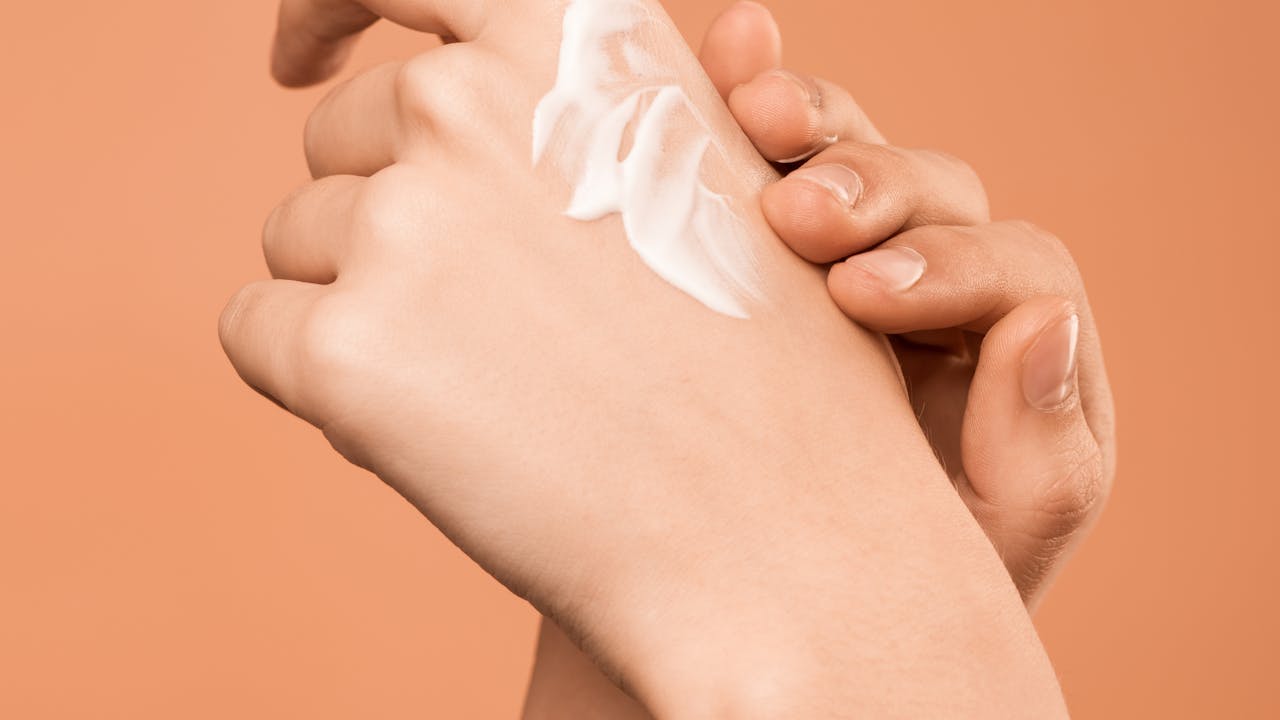
Top methylene blue skin care products
The market for MB skincare is still relatively small but growing fast. Here are the products worth knowing about.
Bluelene (MBlue Labs)
Bluelene is the market leader and the only product directly licensed from University of Maryland research. Dr. Kan Cao, who ran the foundational 2017 study, co-founded MBlue Labs in 2018 and licensed the university's patent. That provenance matters.
Their formulations use pharmaceutical-grade (USP) methylene blue, precisely dosed at 0.5 µM, the concentration Dr. Cao's lab identified as optimal. This concentration delivers efficacy without visible skin staining and without triggering the pro-oxidant flip that occurs at higher doses.
Products in the lineup:
- Night Cream (30 ml, ~$44 on Amazon): Their flagship formula.
- Daily Moisturizer (30 ml, ~$40-44): For morning use with SPF on top.
- Night Plus+ Cream (50 ml, ~$55): Adds vitamin C to the MB base.
- HandPlus+ Cream: Formulated with MB, niacinamide, hexylresorcinol, and tranexamic acid for hyperpigmentation and hand aging.
If you're new to MB skincare, Bluelene is the right starting point. The formulation is backed by the research, the concentration control is precise, and the pricing is reasonable for what it is.
Renue Blue (Renue by Science)
Renue Blue is the longevity-stacker formulation. They've combined methylene blue with a complex that includes liposomal NAD+, NMN, NR, resveratrol, apocynin, glutathione, alpha-lipoic acid, and hyaluronic acid. If you're already taking oral NAD+ precursors and interested in the synergistic theory (that NAD and MB may work on overlapping mitochondrial pathways), this is worth looking at.
Their recent reformulation quadrupled the MB concentration from previous versions. Available in both a face cream and a serum. Find it at renuebyscience.com and Amazon.
Alpinia Labs
Alpinia's Restorative Methylene Blue Face Cream ($99) is the premium Nordic-botanical option. The formulation combines USP-grade MB with squalane, shea butter, rosehip oil, cloudberry oil, and edelweiss extract. They explicitly recommend pairing with red light therapy sessions, which aligns with the biohacker community's approach to MB as a photosensitizer.
Shwally
Shwally's Tallow and Methylene Blue Anti-Aging Face Cream combines grass-fed tallow as the base with MB, organic olive squalane, jojoba oil, calendula, vitamin C (as tetrahexyldecyl ascorbate), and CoQ10. The target audience is the ancestral health and clean beauty crowd. If you prefer animal-fat-based skincare over conventional emulsions, this is the MB option for you.
Saturee
Saturee's BioEnergetic Methylene Blue Skin Serum is the pick for the Ray Peat and bioenergetics community. Australian brand, ships internationally, positioned around cellular energy production theory.
How to use methylene blue cream
Application is straightforward but a few details matter.
Concentration: the number that determines everything
The effective range is 0.1 to 2.5 µM. Below that, minimal effect. Above 5.0 µM, visible skin staining within days. Commercial products like Bluelene hit 0.5 µM. If you're evaluating a product, look for transparency about MB concentration. Vague "contains methylene blue" language without concentration disclosure is a red flag.
Daily routine
Apply a pea-sized amount to clean, dry skin. Press it in gently rather than rubbing aggressively. MB can be used morning and evening. In the morning, always follow with SPF 30+, both because of MB's photosensitizer properties and just because SPF is non-negotiable for anti-aging. In the evening, MB pairs well with a moisturizer on top.
If you use retinol, the simplest split: MB in the morning, retinol at night. No interactions, complementary mechanisms, no fighting over receptor targets.
How to start
Start 2-3 times per week for the first two weeks. Assess for any reaction. If skin tolerates it well, increase to daily. Patch test first on your inner forearm or behind your ear and wait 48-72 hours before applying to your face. This isn't common, but contact dermatitis does occasionally occur.
Timeline for results
Consumer reports and the small Bluelene clinical study suggest visible improvement in skin tone, texture, and hydration within 2-4 weeks. That's meaningfully faster than retinol, which typically requires 8-12 weeks for equivalent results.
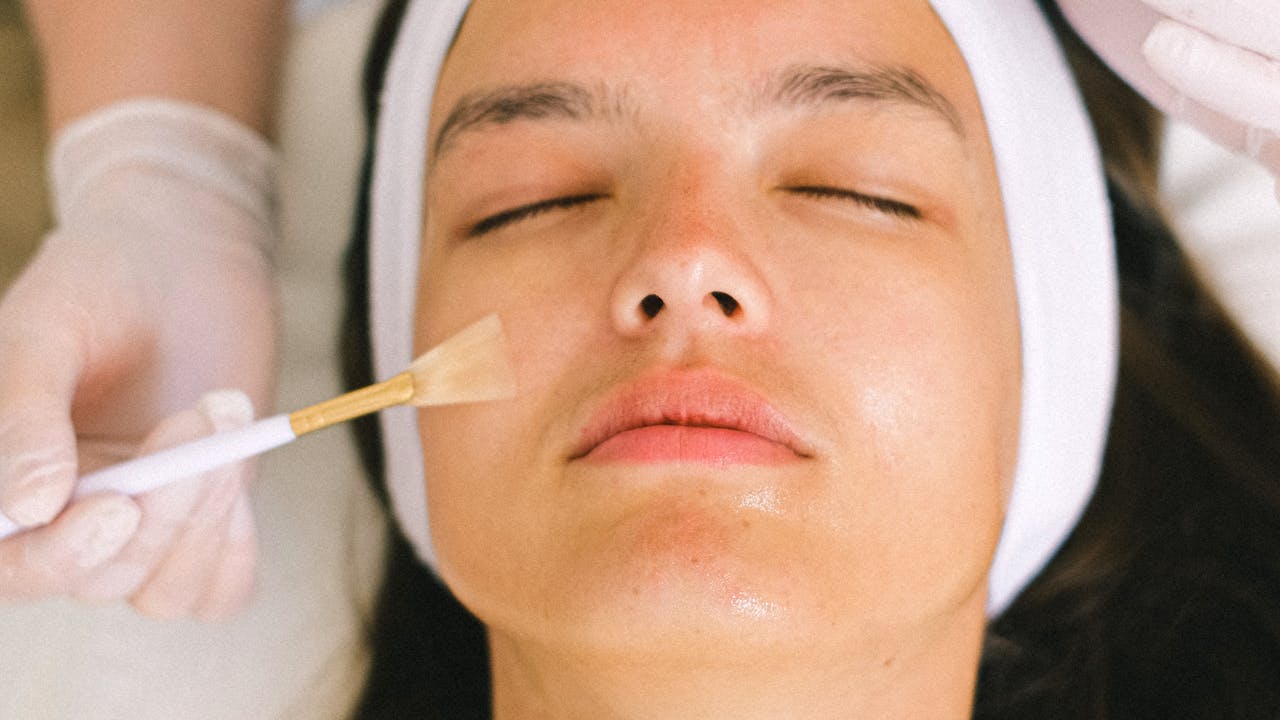
Red light therapy synergy
This is where things get interesting for biohackers. Methylene blue is technically a photosensitizer. It absorbs light, particularly in the red (630-700 nm) and near-infrared (700-900 nm) range. When MB absorbs light energy, it can transfer that energy to molecular oxygen, generating reactive oxygen species in a controlled, low-level way that may actually trigger beneficial adaptive responses.
The practical protocol: apply MB cream or serum to your face before a red light therapy session (2-5 minutes of application time), then do your usual red light session. The theoretical synergy is that MB increases the energy capture efficiency of your mitochondria during the photobiomodulation session.
Several brands including Alpinia Labs and Saturee explicitly recommend this protocol. There aren't human clinical trials specifically testing MB + red light therapy for skin, but the mechanistic rationale is sound and the anecdotal reports in the biohacker community are positive.
Use the supplement interaction checker if you're stacking MB topically with oral MB or other mitochondrial compounds. And if you're tracking biological age and want to know whether your skincare interventions are moving the needle, the biological age calculator is a useful baseline to start from.
DIY methylene blue cream: should you try it?
People do make it themselves. Forums like Longecity have DIY protocols: dissolve USP-grade MB powder or solution in aloe vera gel or a cream base at extremely low concentrations.
But here's the honest assessment. The risk is real. MB is a potent dye. An error by a factor of 10 in concentration and you've got a pro-oxidant formula that stains your skin blue. Reagent-grade methylene blue (the lab-chemical version) contains heavy metal contaminants including lead and arsenic. Using the wrong grade is genuinely hazardous. Stability is another issue: MB degrades with light exposure and pH changes.
Given that the leading commercial product (Bluelene) costs $40-44 for 30 ml and was formulated by the researcher who ran the foundational study, the cost-benefit on DIY is poor. You're trading meaningful risk for very modest savings. If you're determined to DIY: pharmaceutical-grade MB only, maximum 0.01-0.05% concentration, fresh small batches, keep in a dark container.
The one context where DIY makes sense: if you want to experiment with MB in your red light therapy protocol and want a simple leave-on preparation to apply pre-session. Even then, start with dilute pharmaceutical MB in a clean carrier like aloe vera, and err sharply on the side of low concentration.
Quality matters: USP grade vs. reagent grade
This deserves its own section because it's not obvious and it matters.
If you're reading about this topic, you'll encounter different grades of methylene blue. Reagent-grade MB is the laboratory chemical variety. It's cheaper but contains heavy metal impurities at levels that are unacceptable for skin application. You can learn more about the differences in our guide to heavy metals in reagent vs USP grade methylene blue.
USP-grade methylene blue meets pharmaceutical standards for purity. It's what Bluelene, Renue Blue, and Alpinia Labs use. When buying any MB skincare product, confirm it specifies USP-grade or pharmaceutical-grade MB in the formulation.
If you're already exploring methylene blue in other forms, check the relevant guides: methylene blue tablets, methylene blue troche, and USP grade methylene blue for a full picture of how different forms and grades compare.
Who should consider methylene blue cream
Good candidates:
People with sensitive skin who can't tolerate retinol. MB delivers similar collagen and elastin benefits without the peeling, dryness, and irritation. You don't have to choose between effective anti-aging and skin that feels comfortable.
Biohackers already interested in mitochondrial health. If you're taking CoQ10, NMN, or other mitochondrial compounds orally, topical MB is a logical extension of the same philosophy to the skin specifically. WinAging covers the full longevity stack for people who want to target aging at the cellular level, and topical MB fits naturally into that framework.
Anyone using retinol who wants to optimize their routine. MB morning, retinol night is a well-reasoned combination: protection and repair all day, cell turnover at night.
People interested in UV protection without reef-damaging chemicals. The 2021 research showing MB's UV absorption profile and coral safety is genuinely compelling for this use case.
Who should be cautious:
People taking SSRIs, SNRIs, or MAOIs. Methylene blue is a potent reversible MAO-A inhibitor, and IV methylene blue combined with serotonergic medications can cause serotonin syndrome. The risk with topical application is much lower because systemic absorption is minimal, but if you're on serotonergic medications, have the conversation with your prescribing physician before adding any MB product. The FDA has issued specific communications about MB and serotonergic drug interactions.
People with G6PD deficiency. MB is contraindicated for this genetic condition with systemic use. Again, topical application involves far less systemic absorption, but exercise caution.
Pregnant or nursing women. Insufficient safety data. Avoid during pregnancy and breastfeeding.

What to expect (honest expectations)
Methylene blue cream is not a miracle. It's a well-mechanized ingredient with genuinely strong cell-level evidence and a reasonable early-adopter risk profile. Here's what the realistic picture looks like:
You'll likely notice improved skin tone and texture within 2-4 weeks if you're using a well-formulated product at the right concentration. Hydration and firmness are the qualities most reported in the consumer study data. The deeper collagen benefits, the kind that visibly reduce the appearance of fine lines over months, need more time.
You're not going to turn blue. Not with a quality commercial product. Visible staining only occurs at concentrations significantly above what reputable products use. The color concern is real for DIY preparations at the wrong concentration, not for formulations calibrated to 0.5 µM.
The comparison to retinol is honest: MB gets you to initial results faster with less irritation, but retinol's 40 years of large-scale human clinical data is something MB can't match yet. They're genuinely complementary. Neither is a replacement for the other.
Use the free tools at WinAging to track your biological age baseline before starting, and reassess every 3-6 months. Skin is one proxy for cellular aging more broadly, and the tools that work on skin mitochondria are often working on the same pathways that matter throughout the body.
Frequently asked questions
Does methylene blue cream really prevent wrinkles?
Cell and 3D skin model studies show MB increases collagen and elastin production while reducing collagen breakdown. In treated fibroblasts, collagen and elastin production was nearly double compared to untreated cells. But these are lab studies, not large-scale human trials. Consumer reports show visible improvement in skin texture and firmness within 2-4 weeks. The evidence is compelling but the large RCT data doesn't yet exist the way it does for retinol.
Will methylene blue cream stain my skin blue?
Not with a quality commercial product used as directed. Visible skin staining in the 2017 University of Maryland study only appeared at concentrations of 5.0 µM and above, after three days of continuous exposure. Reputable products like Bluelene are calibrated to 0.5 µM, well below the staining threshold. DIY preparations at incorrect concentrations are where staining becomes a real risk.
Can I use methylene blue cream with retinol?
Yes, and it's actually a good combination. The recommended split: MB in the morning for antioxidant protection and UV defense, retinol at night for cell turnover. Different mechanisms, no receptor competition, complementary benefits.
What concentration of methylene blue should I look for in a cream?
The optimal research-validated concentration is 0.5 µM (micromolar), the level used by Bluelene based on Dr. Kan Cao's lab findings. Above 2.5 µM, irritation and staining risk increases. Below 0.1 µM, the evidence for efficacy is weaker. If a product doesn't disclose their MB concentration, that's a problem.
Is methylene blue cream safe for sensitive skin?
The 2017 study tested MB on progeria patient skin (already severely compromised skin) and showed no irritation at effective concentrations. The consumer study showed 100% no-irritation across 40 participants with various skin types. MB is generally considered well-tolerated, making it particularly interesting for people who can't use retinol.
Can I make methylene blue cream at home?
Technically yes, but it requires pharmaceutical-grade MB (not reagent-grade), precise concentration control, and careful formulation to prevent degradation. The cost-benefit is poor given that quality commercial products are modestly priced. If you pursue DIY, use USP-grade MB only, keep concentration at 0.01-0.05% maximum, and make fresh small batches stored in dark containers.
How long before I see results from methylene blue cream?
Consumer reports and the small Bluelene clinical study indicate visible improvements in skin tone, texture, and hydration within 2-4 weeks. This is faster than retinol, which typically requires 8-12 weeks for comparable results. Deeper wrinkle reduction takes longer, consistent with how collagen remodeling works biologically.
Does methylene blue interact with my medications?
Systemic methylene blue (IV or oral) has a known interaction with SSRIs, SNRIs, and MAOIs that can trigger serotonin syndrome. Topical application involves much lower systemic absorption, reducing this risk significantly. But if you're on any serotonergic medication, consult your prescribing physician before using any MB product. Also check our supplement interaction checker if you're stacking MB with other compounds.
If you're not sure how to put the pieces together, WinAging's AI protocol builder can create a custom longevity stack matched to your biology and goals.
Related guides
- USP grade methylene blue: what it means and why it matters
- Heavy metals in reagent vs USP grade methylene blue
- Methylene blue troche: sublingual form guide
- Methylene blue tablets: complete guide
- Free longevity tools
Sources
- Xiong ZM et al. "Anti-Aging Potentials of Methylene Blue for Human Skin Longevity." Scientific Reports, 2017
- Zheng M et al. "Ultraviolet radiation protection potentials of Methylene Blue." Scientific Reports, 2021
- "The Potentials of Methylene Blue as an Anti-Aging Drug." Aging and Disease, 2022
Skin aging is fundamentally a mitochondrial problem. Cells that can't produce energy efficiently stop dividing, stop making collagen, and accumulate damage. Methylene blue is the first skincare ingredient with a mechanism that directly targets that root cause. The science is early but it's real. Start with a quality commercial product at the validated concentration, give it 4-6 weeks, and see what your skin shows you. Explore the full longevity toolkit at WinAging and build from there.