Rapamycin cost: what you'll actually pay
Brand name Rapamune runs over $1,000/month. Generic sirolimus with GoodRx can cost under $80. Here's the complete rapamycin price breakdown for longevity use.

The price range for rapamycin is genuinely confusing. One pharmacy might quote you $1,270 for a month's supply. Another might say $80. A telehealth clinic might charge $290. And that's before you figure out insurance, which almost certainly won't cover it for the reason you're buying it.
So let's get concrete. This is a complete breakdown of what rapamycin actually costs in 2026 for someone using it off-label for longevity, why prices vary so wildly, which options make sense depending on your situation, and how to minimize what you spend without compromising on quality.
The short answer: most people taking rapamycin for longevity spend between $60 and $200 per month once they know what they're doing. But getting there requires understanding why the sticker price is so much higher.

Why rapamycin prices are all over the map
Rapamycin (the generic name is sirolimus) has been around since the 1970s, FDA-approved since 1999, and its patents have long expired. In theory, that should mean cheap generics everywhere. And for the most part, it does.
The confusion comes from a few layers stacked on top of each other.
Layer one: brand name vs generic. Rapamune is the original brand name product made by Pfizer. Sirolimus is the generic, made by multiple manufacturers. The same molecule. Completely different prices.
Layer two: dosage format. For organ transplant patients, standard dosing runs 1-4 mg daily. For longevity users taking it once a week at 2-8 mg, the math on a monthly pill supply looks completely different.
Layer three: compounded vs commercial. Compounding pharmacies can create custom dosage capsules, which longevity users often prefer because they want odd doses like 3.5 mg or 5 mg that don't exist as standard commercial tablets. But compounding adds cost.
Layer four: whether you have a prescription. Without a prescription, rapamycin is simply not available legally in the US. The consultation to get that prescription, whether from a traditional doctor or a telehealth platform, adds to the picture.
Understanding these layers is the key to navigating the market. Let's go through each option.
Brand name Rapamune: the expensive route
Pfizer's Rapamune comes in 0.5 mg, 1 mg, and 2 mg oral tablets, plus a 1 mg/mL liquid formulation. It's the version that transplant specialists know best and what most hospital pharmacies stock.
The retail price without insurance is brutal. A one-month supply of Rapamune at 1 mg/day (the lowest end of transplant dosing) runs roughly $1,100 to $1,400 at standard pharmacy pricing. At 2 mg/day, which some longevity protocols use on a weekly basis, you're looking at even higher totals if you buy it by the conventional supply.
For longevity users, this is almost never the right choice. You're paying a massive brand premium for something where a generic does the exact same job. The only reason to go this route would be if a physician strongly prefers it for a specific medical reason, or if your insurance covers brand name specifically.
There's also a Rapamune patient assistance program through Pfizer for qualifying patients, but this is intended for transplant recipients managing ongoing immunosuppressive therapy. Off-label longevity users generally don't qualify.
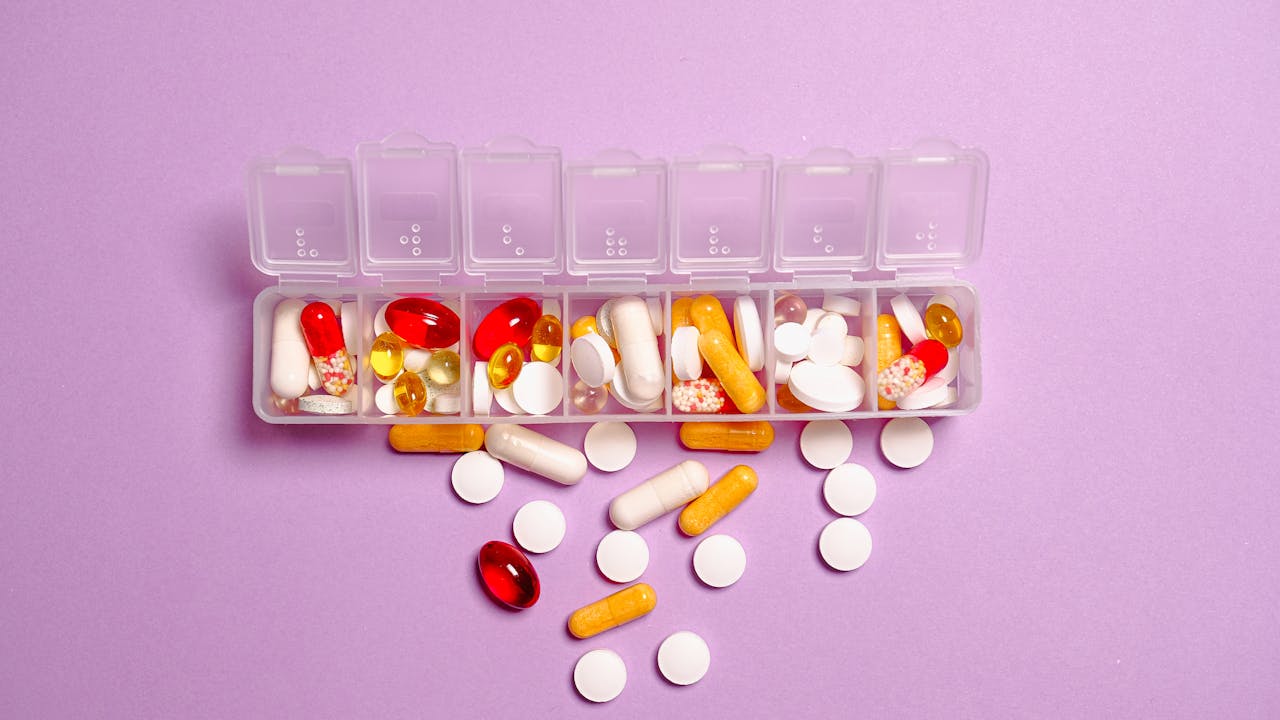
Generic sirolimus: where most people should start
Generic sirolimus is the exact same active molecule as Rapamune. The FDA requires bioequivalence for generic approval, meaning it gets into your bloodstream at the same rate and amount. There is no meaningful pharmacological difference.
And the price difference is dramatic.
With a GoodRx coupon at a standard retail pharmacy, a 30-day supply of 1 mg sirolimus tablets can run as low as $66-80. For a longevity protocol using 4 mg/week (that's about 16 tablets per month if you're taking it all at once weekly), that comes out to roughly $35-45/month. That's genuinely affordable.
The pricing varies quite a bit by pharmacy. Here's roughly what you'll find:
Costco pharmacy: Often one of the lowest prices. Their generic pricing is competitive, and you don't need a Costco membership to use their pharmacy.
Mark Cuban's Cost Plus Drugs (costplusdrugs.com): Transparent cost-plus pricing. Sirolimus pricing is available on their site and tends to be among the most affordable options around.
Walmart and Sam's Club pharmacy: Usually competitive on generic pricing. Worth checking.
GoodRx as a comparison tool: Not a pharmacy itself, but their coupon tool lets you compare prices across every pharmacy in your area. Always check before filling anywhere.
Mail-order pharmacies: For a 90-day supply, prices often drop further. Some insurance plans require mail order for maintenance medications, though this rarely applies to off-label longevity prescriptions.
The catch with standard generic sirolimus: it only comes in 0.5 mg, 1 mg, and 2 mg tablets. If your protocol calls for a dose that doesn't divide evenly into those sizes, you're either splitting tablets (some people do this, though it's not ideal for precise dosing) or looking at compounded options.
Compounding pharmacies: the longevity-optimized option
Compounding pharmacies have become the preferred route for many longevity users, and there are good reasons for it.
First, they can make custom dosages. If you and your doctor settle on 3 mg/week, or 5 mg/week, or 7.5 mg/week, a compounding pharmacy makes those exact capsules. No tablet splitting, no mental math, no taking four different tablets.
Second, some compounding pharmacies offer formulations that may have better bioavailability. There's some discussion in the longevity community about whether certain excipients or formulation approaches affect absorption. This hasn't been definitively settled, but it's a reason some users and physicians prefer compounded.
Third, compounding pharmacies can combine rapamycin with other compounds if a physician wants to create a specific protocol. This is less common but worth knowing.
What does compounding cost?
AgelessRx, one of the larger longevity-focused telehealth and pharmacy platforms in the US, starts at around $290/month for compounded rapamycin. That price includes the prescription service and the medication.
Empower Pharmacy, one of the largest 503B-licensed compounding pharmacies, also compounds sirolimus capsules in custom dosages. Their pricing isn't listed publicly because it depends on dosage and quantity, but you can get a quote from them directly.
Other reputable compounding pharmacies used in the longevity community include Massey Drugs, Restorative Compounding Pharmacy, and various regional 503A pharmacies. Prices vary, and it's worth calling a few to compare.
Generally, compounded rapamycin from a reputable pharmacy runs $100-300/month depending on dosage and the specific pharmacy's pricing model.
There's an important distinction to understand: 503A vs 503B pharmacies. 503A pharmacies compound for individual patients with a specific prescription. 503B pharmacies operate more like manufacturers, producing larger batches under stricter FDA oversight. 503B is generally considered higher quality control, but availability varies. Both are legitimate. When in doubt, ask the pharmacy which designation they operate under.

The consultation cost: getting a prescription
Here's the part of the cost equation people forget to factor in: you need a prescription.
In the US, rapamycin is not a controlled substance, so it can be prescribed off-label. But you still need a licensed physician to write that prescription. Getting one has several paths, each with different costs.
Your primary care physician (free if already a patient): Some PCPs are willing to prescribe rapamycin off-label, especially if you come in with research, bloodwork, and a clear protocol. This is the cheapest route if it works. Many physicians aren't familiar enough with the longevity literature to feel comfortable, so you may be turned down.
Telehealth longevity platforms: This has become the most common route. Platforms like AgelessRx, Fountain Life, or various longevity-focused practices typically charge a consultation fee ranging from $0 (some platforms offer free initial consultations) to $150-300 for an initial evaluation. Some charge ongoing monthly subscription fees for continued monitoring.
AgelessRx specifically offers free initial consultations for rapamycin, with the ongoing cost built into the medication pricing.
Longevity-focused clinics (in-person): Places like clinics aligned with the longevity medicine movement often bundle consultation and prescription management. Initial consultations can run $200-500, with follow-up visits less expensive. These clinics often provide more comprehensive monitoring, including bloodwork interpretation, which adds value but also cost.
Annual ongoing cost of monitoring: One thing the longevity community takes seriously is that rapamycin isn't a "set and forget" supplement. You need bloodwork to monitor lipid panels, glucose, and immune markers. Most protocols call for bloodwork every 3-6 months. If you're paying out of pocket for labs, factor in $50-150/quarter for a basic metabolic panel plus lipid panel. Insurance often covers annual bloodwork even if it doesn't cover the medication itself.
Monthly cost breakdown by protocol
Let's put this in concrete terms. Here are four realistic scenarios for what rapamycin actually costs per month:
The budget route: generic sirolimus, 4 mg/week
- GoodRx generic sirolimus (16 x 1 mg tablets/month): $35-45
- Prescription via PCP (free if covered by existing relationship): $0
- Bloodwork quarterly, amortized monthly: $25-40
- Monthly total: $60-85
This works if your doctor is on board and you're comfortable at a dose where standard 1 mg tablets divide cleanly.
The middle path: compounded at 5 mg/week
- Compounded sirolimus from a mid-tier pharmacy: $150-200
- Telehealth consultation, amortized monthly: $20-30
- Bloodwork quarterly, amortized monthly: $25-40
- Monthly total: $195-270
This is where most longevity users land. Clean dosing, flexible protocol, dedicated physician oversight.
The concierge route: AgelessRx or similar platform
- AgelessRx compounded rapamycin: $290/month
- Consultation typically included
- Some monitoring included
- Monthly total: $290-350 depending on add-ons
This is the hands-off, everything-included option. Higher cost, but less friction and more oversight built in.
The Rapamune brand-name route (not recommended for longevity use)
- Brand name Rapamune: $1,100-1,400/month retail
- Same molecule as generic, no clinical advantage for off-label longevity use
- Monthly total: $1,100+
Unless your insurance covers this for a qualifying diagnosis and it costs you nothing out of pocket, this doesn't make sense for longevity purposes.
Insurance coverage: the honest answer
Rapamycin is not FDA-approved for anti-aging or longevity. It's approved for organ transplant rejection prevention, lymphangioleiomyomatosis, and certain cancers. Insurance covers it for those approved indications.
For off-label longevity use, most insurance plans, including most private insurance and Medicare, will not cover it. Some physicians work around this by billing for related diagnoses where rapamycin could be clinically justified, but this is complicated territory that varies by insurer and physician.
Medicare Part D does have rapamycin on its formulary, but coverage generally requires a covered medical diagnosis. If you have Medicare and a physician who can justify rapamycin for a covered condition, it may be covered. If you're using it purely off-label for longevity, expect to pay out of pocket.
The good news: the generic is affordable enough that for many protocols, insurance coverage doesn't matter much. At $40-50/month for a 4 mg/week protocol using generic sirolimus, you're paying less than many insurance copays anyway.
How dosage affects your total cost
This part deserves its own section because it dramatically affects your monthly spend.
The longevity dosing literature suggests weekly intermittent dosing rather than daily use. The goal is to inhibit mTORC1 (the beneficial target) without chronically suppressing mTORC2 (which handles longer-term functions including immune regulation). Daily dosing suppresses both. Weekly pulsing gives the system time to recover.
Common weekly doses in the longevity community:
2 mg/week: Starting dose for new users. Very conservative. Minimal cost impact regardless of formulation.
4-6 mg/week: The range most commonly discussed in the research and by physicians like Matt Kaeberlein. The PEARL trial used 5 mg/week and found it well-tolerated with meaningful biomarker changes.
8-10 mg/week: Some users and longevity physicians push higher. Higher cost, more pronounced effects on biomarkers (both positive and concerning), requires closer monitoring.
At 6 mg/week with standard 1 mg generic tablets, you're taking 24 tablets per month. At the GoodRx price of roughly $65-75 for a 30-count supply of 1 mg, that's about $50-60/month just for the medication. Very manageable.
At 10 mg/week via compounded capsules, you're looking at significantly higher compounding costs, particularly if the pharmacy charges by mg content.
The practical implication: if you're comfortable at 4-6 mg/week and standard 1 mg tablets work for your dose, generic sirolimus from a retail pharmacy is almost always the most economical choice.

Is the cost worth it? What the science says
This is the most important question, and it deserves a straight answer.
Animal data is extraordinary. Rapamycin has extended lifespan in every model organism tested: yeast, nematodes, flies, and mice. The NIA Interventions Testing Program found 9-14% lifespan extension in mice even when started at age equivalent to 60 in humans. No other compound has replicated this across multiple independent labs with this consistency.
Human data is more modest, which is appropriate given how early we are.
The PEARL trial, published in 2024, is the most relevant human data to date. It enrolled 333 healthy adults who self-administered rapamycin at 5 mg/week for one year. The study found the protocol was well-tolerated with no serious adverse events. Participants showed improvements in several biological age biomarkers. Notably, 58% reported feeling better overall, and key aging markers including GrimAge and PhenoAge showed favorable changes.
That's meaningful. Not proof of lifespan extension in humans, but meaningful signal that the mechanism is doing something useful at the biological level.
The risk picture: rapamycin's side effect profile at longevity doses (weekly low-dose) is significantly more favorable than at transplant doses (daily high-dose). Mouth sores (oral ulcers) affect some users and are usually dose-dependent. Lipid elevations occur in some people and should be monitored. Immune suppression at weekly low doses appears minimal in most users, but anyone with active infection, planned surgery, or a compromised immune system should not use rapamycin without careful physician supervision.
The honest cost-benefit calculation: if you're going to take rapamycin, $60-200/month is a reasonable spend relative to other longevity interventions. You might pay more per month on a quality NMN or NR product. But you should have a physician involved, monitor your bloodwork, and go in with realistic expectations about what the human evidence currently supports.
For context, compare this to other longevity investments people make without hesitation. A decent gym membership runs $50-100/month. A continuous glucose monitor costs $80-150/month. A comprehensive blood panel at a longevity clinic can run $300-500. At $60-150/month for a compound with some of the strongest mechanistic data in longevity science, the price-to-evidence ratio is actually quite good.
WinAging tracks the longevity research as it develops, and the rapamycin story is one of the most watched spaces in the field. Use the biological age calculator to establish a baseline before starting any new protocol, so you can track whether your interventions are actually working.
5 ways to minimize rapamycin cost
If you're going to use rapamycin for longevity, here's how to get the most value:
1. Start with generic sirolimus if your dose is compatible. For 4-6 mg/week, standard 1 mg tablets from a retail pharmacy with a GoodRx coupon often beat compounding costs significantly. Do the math on your specific dose before defaulting to compounded.
2. Compare compounding pharmacy prices directly. Prices vary more than you'd expect. Call three or four pharmacies and ask for a per-capsule price at your target dose and quantity. A 90-day supply often costs less per unit than a 30-day supply.
3. Batch your telehealth costs. Most longevity platforms charge per visit or per month. If you're stable on a protocol, you may not need quarterly check-ins once you've established your dose. Annual monitoring with quarterly lab work is a reasonable maintenance schedule.
4. Check Cost Plus Drugs. Mark Cuban's pharmacy (costplusdrugs.com) offers transparent pricing on generic medications including sirolimus. Compare their price against your GoodRx quotes before filling anywhere.
5. Get bloodwork through your primary insurance. Even if insurance won't cover rapamycin itself, most plans cover routine lab panels. A lipid panel and metabolic panel ordered by your PCP as part of a regular checkup is usually covered or low-cost. Don't pay out of pocket for monitoring labs if you can work them into your standard annual care.
What you get for your money
Let's zoom out for a moment.
Rapamycin is unique among longevity compounds because it acts at a fundamental regulatory node, mTOR, that has been demonstrated to control lifespan in virtually every organism studied. That's not marketing language. It's why researchers like Matt Kaeberlein, David Sabatini, and Lloyd Klickstein have spent their careers studying it.
Compare it to other things people spend money on for longevity. A gym membership with no clear biomarker feedback. Expensive blood tests that tell you what's wrong but not how to fix it. Supplements with single small trials behind them. Rapamycin has a genuinely unusual depth of mechanistic and preclinical evidence, emerging human safety data, and a growing community of physicians willing to prescribe it for longevity purposes.
The cost structure, once you understand it, is actually reasonable. The headline prices ($1,000+/month for Rapamune) are real but not what people using it for longevity typically pay. The realistic price, for a thoughtfully constructed protocol with generic or compounded sirolimus, is $60-200/month.
That's a meaningful spend, but it's in the same range as many other longevity investments with far less evidence behind them.
Use the supplement interaction checker at WinAging to understand how rapamycin might interact with other compounds in your stack, especially things like mTOR inhibitors (berberine, metformin), immunomodulators, and any antifungal medications.

Common mistakes that drive costs up unnecessarily
A few patterns that lead people to overpay:
Defaulting to the brand name. There's no medical reason for most longevity users to choose Rapamune over generic sirolimus. If a clinic automatically prescribes Rapamune and doesn't offer the generic option, ask why.
Not shopping pharmacies. A 10-minute comparison across a few pharmacies can save $20-40/month consistently. That's $240-480/year. Worth the call.
Paying for unnecessary monitoring. Some longevity clinics offer comprehensive monthly check-ins as part of a subscription model. If you're stable and your biomarkers are moving in the right direction, quarterly labs and a semi-annual physician visit is probably sufficient monitoring for most people.
Starting at too high a dose. Higher dose means higher cost, more side effect risk, and no demonstrated longevity benefit over moderate doses. Most protocols start at 2-4 mg/week and titrate up slowly. There's no reason to start at 10 mg/week and there's every reason not to.
Ignoring free monitoring tools. Apps like WinAging's biological age calculator and similar tools can help you track functional aging markers between bloodwork appointments without adding cost.
Rapamycin vs other longevity compound costs
For perspective, here's how rapamycin compares in monthly cost to other longevity compounds people use:
NMN (quality brand, 500mg/day): $60-100/month. Similar cost to rapamycin's budget route, with good mechanistic evidence but less robust preclinical data.
NR (nicotinamide riboside, standard dose): $40-80/month. Solid NAD+ precursor data, similar price range.
Berberine (therapeutic dose 500mg 3x daily): $15-40/month. Highly cost-effective mTOR and AMPK activator. The best berberine supplement analysis covers quality brands. Some longevity users combine berberine with rapamycin because the mechanisms are complementary, though this should be discussed with your physician.
Metformin (1000-1500mg/day): $10-30/month on generic. Extremely cheap. Also an mTOR-adjacent compound with strong longevity interest.
Fisetin/Quercetin (pulsed senolytic protocol): $30-60/month amortized. Intermittent dosing.
Rapamycin (4-6 mg/week, generic route): $40-85/month including estimated monitoring costs.
The comparison is useful. Rapamycin sits in the middle of the longevity stack in terms of cost, but has arguably the deepest mechanistic evidence for longevity effects among any single compound.
Understanding how compounds interact matters. Our supplement interaction checker helps identify combinations worth monitoring. And for tracking where you actually stand against your biological age, the WinAging biological age calculator is a useful baseline.
Frequently asked questions
How much does rapamycin cost per month?
For longevity use (weekly intermittent dosing), most people spend $60-200/month. Generic sirolimus from a retail pharmacy with GoodRx can run $40-80/month for medication alone. Compounded rapamycin from platforms like AgelessRx starts around $290/month all-in. Brand name Rapamune costs $1,100-1,400/month but offers no clinical advantage for off-label longevity use.
Does insurance cover rapamycin for longevity?
Usually not. Insurance covers rapamycin for FDA-approved uses: organ transplant rejection prevention, lymphangioleiomyomatosis, and certain cancers. Off-label longevity use is typically not covered. Medicare Part D includes sirolimus on its formulary, but coverage requires a qualifying diagnosis. Most longevity users pay out of pocket.
Is compounded rapamycin the same as brand name?
The active molecule is the same. Compounding pharmacies formulate it into custom doses not available commercially. Quality varies by pharmacy, so stick to licensed 503A or 503B facilities. The main advantages of compounding are custom dosages and potentially more flexibility in formulation. The main disadvantage is higher cost compared to generic sirolimus at standard doses.
What's the cheapest way to get rapamycin legally?
Generic sirolimus from a retail pharmacy using GoodRx or Cost Plus Drugs, with a prescription from your existing physician or a telehealth consultation. At 4 mg/week, you're using roughly 16-17 tablets per month. A 30-count supply of 1 mg tablets can run as low as $66-77 with a GoodRx discount, making the medication cost under $45/month.
Do I need bloodwork to take rapamycin?
Yes, and it's genuinely important to monitor. Before starting, get a baseline lipid panel, comprehensive metabolic panel, and CBC. During use, repeat these every 3-6 months. Rapamycin can raise triglycerides and LDL in some people, affect glucose metabolism, and at higher doses affect immune markers. Most insurance covers routine lab panels, so this monitoring cost is often minimal.
What dose of rapamycin do most longevity users take?
Most protocols center on 4-8 mg once per week, taken with or after a meal (grapefruit and pomelo juice significantly raise rapamycin blood levels and should be avoided). The PEARL trial used 5 mg/week. Peter Attia has discussed 2-5 mg/week as a reasonable starting range. Most physicians recommend starting at 2 mg/week and slowly titrating up while monitoring for side effects.
Can I take rapamycin with other longevity supplements?
Many longevity stacks include rapamycin alongside other compounds. Common combinations include NMN or NR (for NAD+ support), glycine or GlyNAC, and omega-3s. Berberine also inhibits mTOR via AMPK activation, so combining the two amplifies mTOR suppression, which may require dose adjustments. Read about glycine dosage for anti-aging and check the supplement interaction checker before combining. Always discuss any combination with your prescribing physician.
Is low-dose naltrexone similar in terms of cost and how to get it?
Both are prescription-only drugs used off-label for longevity and health optimization. Low-dose naltrexone (LDN) is generally cheaper, often $30-60/month from a compounding pharmacy. Read the guide on what to avoid when taking low dose naltrexone for more context. The prescription process is similar: you need a physician who understands the off-label use case.
Rapamycin's price is more accessible than the headlines suggest. The confusion comes from people quoting brand name Rapamune prices when most longevity users are taking generic sirolimus at a fraction of the cost. Once you understand the landscape, $60-150/month for medication and monitoring is a realistic budget for a thoughtfully managed protocol.
Get your baseline, find a physician who understands the science, start at a conservative dose, and track your biomarkers. WinAging's free tools can help you build that baseline and monitor progress over time.
Ready to build a complete longevity protocol? The AI protocol builder takes your age, goals, and experience level to design a personalized plan.
Related guides
- How to buy rapamycin
- Why I stopped taking NMN
- Glycine dosage for anti-aging
- What to avoid when taking low dose naltrexone
- Supplement interaction checker