Natural Factors berberine: complete brand review
Is Natural Factors berberine worth buying? We review their WellBetX and LipoMicel products, compare quality, certifications, dosing, and value against top brands.

You've probably heard berberine called "nature's metformin." The name stuck because the research actually backs it up. But with dozens of brands now selling berberine, picking one isn't obvious. Natural Factors comes up constantly in these conversations. They've been making supplements since 1955, they're ISURA certified, they're a B Corp, and their formulations go deeper than most. So the question is: is their berberine actually worth your money?
This guide covers everything: the two distinct Natural Factors berberine product lines, how their quality standards stack up against the industry, the science on berberine itself (what it does and how it does it), dosing protocols, who it's for, and a side-by-side comparison with the main competitors. By the end, you'll know exactly which Natural Factors berberine product makes sense for your goals, or whether a competitor is a better fit.
WinAging tracks the longevity compound stack in depth. Berberine ranks among the top five supplements for metabolic aging, and the brand you choose matters more than most people think.
What is Natural Factors?
Natural Factors isn't a startup that spun up to ride the berberine trend. The company was founded in 1955 in British Columbia, Canada. It's still family-owned under the Factors Group umbrella. That longevity, pardon the word choice, means something in the supplement industry. Brands that survive seven decades do so by getting quality right.
A few things set Natural Factors apart before we even get to berberine specifically.
ISURA certification
This is the standout credential. Natural Factors partnered with ISURA (Institute for Supplemental Research and Analysis) in 2015 and has maintained that certification across their entire product line ever since. ISURA tests for over 800 contaminants per product: heavy metals, pesticides, herbicides, glyphosate, plasticizers, residual solvents, and more. They use mass spectrometry and gas chromatography, which are gold-standard analytical methods. Their GMO threshold is 0.1%, which is stricter than the EU standard of 0.9% and stricter than the Non-GMO Project's own threshold.
Most supplement brands do two rounds of quality testing. Natural Factors does four. That's not a minor difference. The supplement industry has a contamination problem, and brands that test more find more issues before they reach you.
B Corporation status
Factors Group USA and Factors Group Canada are both certified B Corporations. B Corp certification requires rigorous verification of social and environmental standards across the company's operations. It's not a marketing badge you can buy. It reflects how the company actually operates.
TGA certified manufacturing
The TGA is Australia's Therapeutic Goods Administration, one of the most demanding pharmaceutical regulators in the world. Natural Factors' manufacturing facilities are TGA certified. This means they meet pharmaceutical-grade production standards, not just dietary supplement standards.
Full supply chain control
Most supplement brands source raw materials from third-party suppliers and contract out manufacturing. Natural Factors controls the entire chain from raw ingredient sourcing through finished product. That matters because most contamination in supplements occurs at the raw material stage.
The short version: Natural Factors is an elite-tier quality operation by any objective measure. Now let's get to the actual berberine products.
Natural Factors' berberine product lines
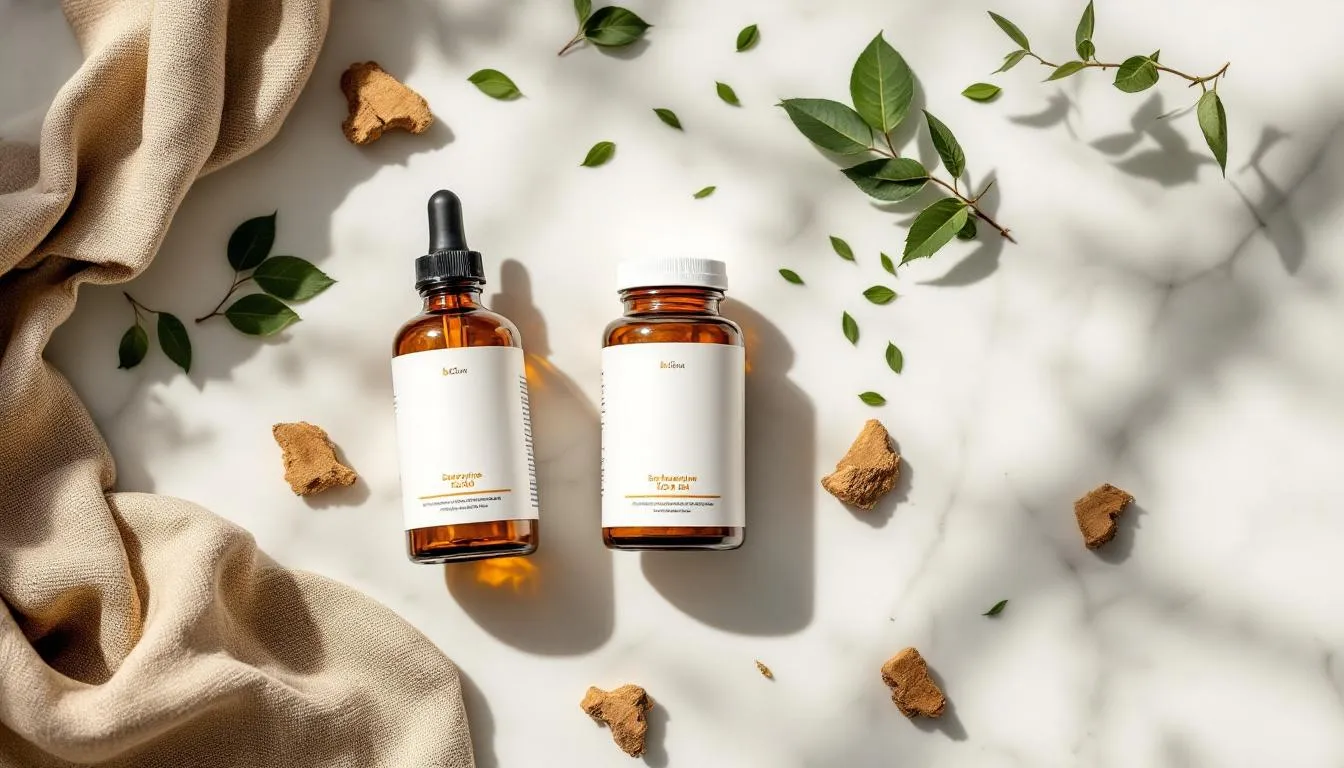
Natural Factors makes two distinct berberine formulations. They're not interchangeable. Which one makes sense for you depends on what you're optimizing for.
WellBetX berberine (standard capsules)
This is the classic formulation. Each vegetarian capsule contains 500 mg of berberine HCl derived from barberry root extract. The recommended dose is two capsules, giving you 1,000 mg per serving, which matches the dosage used in the majority of clinical trials.
The formula is clean. Very clean. The capsule itself is hypromellose (plant-derived). Other inactive ingredients: rice flour, magnesium stearate from vegetable sources, silica, stearic acid. That's it. No artificial colors, no preservatives, no sweeteners, no fillers you can't identify.
WellBetX available sizes:
- 60 vegetarian capsules (~$18-22)
- 120 vegetarian capsules (~$30-42)
At 120 caps taken as two per day, you're getting 60 servings at approximately $0.50-0.70 per day at 1,000 mg. For a supplement with this level of certification and quality control, that's genuinely good value. Most comparable brands charge more for less documentation.
Berberine LipoMicel Matrix (enhanced absorption softgels)
This is where Natural Factors gets interesting. Standard berberine HCl has a bioavailability problem. The molecule is hydrophilic (water-soluble) but doesn't cross membranes easily. Absorption from standard capsules sits around 5% in some estimates. Most of what you swallow doesn't get absorbed.
Natural Factors developed a patent-pending LipoMicel delivery system to address this. Berberine is suspended in micro-droplets of medium-chain triglycerides (MCT from coconut oil) and phosphatidylcholine lecithin (sunflower-derived). This creates a micellar structure that dramatically improves absorption across the intestinal wall.
The claimed improvement: up to 6x greater absorption compared to standard berberine HCl. The clinical implication: meaningful blood glucose changes appear in approximately two days with LipoMicel, versus two or more weeks with standard capsules. That's not a small difference if you're trying to dial in a metabolic protocol.
The LipoMicel formula also includes synergistic additions: bergamot extract (which independently supports LDL reduction and cholesterol management), MSM, xylitol, and stevia. Each softgel contains 500 mg berberine.
LipoMicel available sizes:
- 60 liquid softgels (~$35-42)
- 90-120 softgels (~$55-72)
RegenerLife Berberine is the third product in the Natural Factors berberine family. It uses the identical LipoMicel technology but is positioned specifically for longevity and anti-aging. Same delivery, same dose, different brand label for different retail channels. If you see it, it's the same product.
Which one to choose?
The standard WellBetX capsules make sense if you want maximum value per dollar at a proven 1,000 mg/day dose, and you don't mind a slower onset (two to three weeks before full effects). They're also the better option if you're vegan and want to confirm no animal-derived softgel ingredients.
The LipoMicel softgels make sense if you want faster results, lower effective doses (due to higher absorption), and fewer GI side effects. Enhanced absorption formulations consistently show better GI tolerability than standard berberine, because you're absorbing more from less material in the gut.
The science: what berberine actually does
Before comparing brands further, you need to understand why berberine is worth taking at all. The compound has been used in traditional Chinese medicine for over 2,000 years. Modern research has been catching up. The results are legitimately good.
AMPK activation: the central mechanism
Berberine's primary mechanism is activation of AMPK, adenosine monophosphate-activated protein kinase. AMPK is the body's master energy sensor. When cellular energy is low (ATP falls, AMP rises), AMPK activates and shifts the cell into a maintenance and repair mode.
Berberine mildly inhibits mitochondrial Complex I, which slightly reduces ATP production. The cell detects this and activates AMPK in response. It's a controlled signal, not damage. The AMPK activation then cascades into a long list of metabolic effects: enhanced glucose uptake in muscle tissue, suppressed gluconeogenesis in the liver, improved insulin signaling, and reduced fat accumulation.
This is exactly the same mechanism as metformin, the most widely prescribed diabetes drug in the world. The parallel is close enough that multiple researchers have described berberine as "a botanical metformin." A landmark 2008 clinical trial (Zhang et al., published in Metabolism) ran a head-to-head comparison: berberine 500 mg three times daily versus metformin 500 mg three times daily in type 2 diabetic patients. The results were comparable on HbA1c, fasting glucose, and postprandial glucose. Berberine actually outperformed metformin on lipid markers.
Blood sugar effects
The human clinical evidence on berberine and blood sugar is extensive. A weighted mean analysis across multiple randomized controlled trials shows:
- HbA1c reduction of approximately 0.45% (statistically significant across studies)
- Fasting blood glucose reductions of 20-30% in diabetic populations
- Postprandial glucose reductions of 25-30%
These are clinically meaningful numbers. For context, pharmaceutical metformin typically reduces HbA1c by 1-2%. Berberine's effect is smaller but real, and the safety profile is better for most people.
For people who are insulin resistant but not yet diabetic, berberine is one of the most evidence-backed interventions available. It addresses the root mechanism: improving how well cells respond to insulin signals.

Cholesterol and cardiovascular effects
Berberine reduces LDL cholesterol through a different mechanism than statins. Instead of blocking cholesterol synthesis, it upregulates LDL receptors in the liver, increasing the liver's ability to clear LDL from circulation. It also reduces triglyceride production.
The data here is consistent across trials:
- LDL reduction: 23-25% in studies using 500 mg twice daily over 2-3 months
- Triglyceride reduction: statistically significant in virtually all trials
- Total cholesterol: meaningful reductions
A 2022 meta-analysis in Frontiers in Nutrition, covering 27 randomized controlled trials, confirmed berberine's cardiovascular benefits are robust and reproducible. For people managing metabolic syndrome or high LDL without statin medication, berberine deserves serious consideration.
mTOR inhibition and longevity
This is where berberine gets interesting for people focused on lifespan, not just metabolic health.
AMPK and mTOR (mechanistic target of rapamycin) are inversely related. When AMPK goes up, mTOR signaling goes down. mTOR suppression is one of the most consistent signals across longevity research. Rapamycin, the most potent known lifespan-extending drug, works primarily by inhibiting mTOR. Caloric restriction, which reliably extends lifespan in animal models, works partly through the same AMPK/mTOR axis.
Berberine activates AMPK strongly enough to suppress mTOR activity meaningfully. This shifts cells toward autophagy (cellular cleanup), reduces gero-conversion (the process by which cells transition from growth arrest to full senescence), and activates sirtuin 1 and FOXO3 pathways that are associated with longevity gene expression.
Animal data on berberine and lifespan is striking: 28% lifespan extension in yeast, 16-52% extension in various mouse models, 27% mean lifespan extension in C. elegans. Human lifespan data doesn't exist yet, but the mechanistic pathways are solid and directly relevant.
Use the WinAging supplement interaction checker if you're combining berberine with rapamycin, metformin, or other mTOR-modulating compounds. The interactions can be additive and worth tracking.
Gut microbiome effects
This deserves its own mention. Berberine has strong antimicrobial properties and selectively alters the gut microbiome. It enriches short-chain fatty acid-producing bacteria and reduces pathogenic species. This contributes to its metabolic effects through the gut-liver axis. It also means you want to cycle berberine periodically. Most practitioners recommend 8-12 weeks on, 2-4 weeks off, partly to allow microbiome recovery between cycles.
Natural Factors berberine vs. the competition
There are a lot of berberine brands now. Not all of them are worth your attention. Here's how Natural Factors compares to the main ones.
Thorne berberine
Thorne is the gold standard for practitioner-grade supplements. Their berberine uses a Phytosome delivery technology (berberine complexed with phosphatidylcholine from soy) that achieves approximately 10x improved absorption vs. standard berberine HCl. That's a higher absorption multiplier than Natural Factors LipoMicel's claimed 6x. Thorne also has NSF Certified for Sport status, which matters if you're drug-tested.
Price: typically $45-55 for 60 capsules. More expensive than Natural Factors. Thorne is the better choice if maximum bioavailability and practitioner-grade certification is the priority and cost isn't the main concern.
Pure Encapsulations berberine
Pure Encapsulations offers berberine in their UltraSorb format (another Phytosome delivery). Very clean label, hypoallergenic, widely used in clinical practice. Price is similar to or slightly above Thorne. Same general tier as Thorne: premium quality, Phytosome delivery, higher price point.
Integrative Therapeutics berberine complex
This is a practitioner-only brand with a long clinical track record. Their Berberine Complex combines berberine HCl with additional herbal support (bitter melon, Gymnema Sylvestre). FDA-inspected facility, GMP compliant. The combination formula makes it less flexible for people who prefer pure berberine. Price is moderate.
Luma Nutrition berberine
The budget pick. Luma Nutrition's berberine is standard HCl at 1,200 mg per serving, so high dose per capsule at a low price. Third-party tested but without the depth of ISURA certification. Fine for the budget-conscious who aren't looking for premium quality assurance.
Just Ingredients berberine
Clean-label, food-first marketing, 500 mg per capsule. Solid product but lacks the certification depth of Natural Factors. No ISURA, no TGA. More marketing-led than quality-led compared to Natural Factors.
The honest comparison
For raw quality assurance and documentation, Natural Factors WellBetX is the best value in the certified category. ISURA certification is more comprehensive than most third-party testing programs. If you're paying for quality assurance, you're getting it.
For bioavailability, Thorne's Phytosome edges Natural Factors LipoMicel (10x vs. 6x), but at higher cost. Natural Factors LipoMicel sits in a good middle position: meaningfully enhanced absorption with a cleaner ingredient list than many Phytosome products.
If cost is a priority and you're comfortable with standard HCl absorption, Natural Factors WellBetX is the best-certified option at that price tier. Full stop.

Dosing: how to actually take berberine
The research-backed dose is 500 mg, two to three times daily with meals. That's 1,000-1,500 mg/day total. This is the range used in the clinical trials. Going lower than 500 mg twice daily is probably insufficient for full metabolic effects. Going much higher doesn't appear to add benefit and increases GI side effects.
Why split dosing matters
Berberine has a short half-life of several hours. Peak plasma concentration after a dose is reached within one to two hours, then it drops. Taking the full 1,500 mg in one shot hits you with a spike and a long gap. Splitting into three doses throughout the day maintains steadier blood levels and reduces GI distress, which is the most common side effect.
For LipoMicel users
With enhanced absorption (6x), lower total doses may achieve similar plasma levels to higher doses of standard HCl. Many users get meaningful effects at 500-1,000 mg/day with LipoMicel versus 1,000-1,500 mg/day with standard. The other advantage: faster GI clearance. Less berberine sitting in the gut means less GI discomfort for sensitive people.
Beginner ramp-up protocol
Start lower and build up. This reduces the GI adjustment period significantly.
- Week 1-2: 500 mg once daily with your largest meal
- Week 3-4: 500 mg twice daily with meals
- Week 5+: 500 mg three times daily if tolerated and needed
Timing
Take berberine 15-30 minutes before or with carbohydrate-containing meals. The whole point is blunting postprandial glucose spikes, so timing around meals matters.
Avoid taking berberine late at night unless you're eating a large late meal. Not for any pharmacological reason, just because the metabolic signaling you're trying to modulate is most active around eating.
Cycling
8-12 weeks on, 2-4 weeks off is the common protocol. This isn't based on strong human evidence for tolerance development (the clinical data shows sustained effects at 12 months), but the cycling rationale is microbiome health: periodic breaks allow gut flora to rebalance after berberine's antimicrobial pressure. It also fits how most longevity practitioners think about metabolic interventions: use them seasonally, not as a constant background drug.
Timeline for results
- Blood sugar and insulin response: 1-2 weeks (faster with LipoMicel, 2 days in some reports)
- Cholesterol and triglycerides: 6-12 weeks
- Body composition: 3-6 months, and depends heavily on diet
Track your markers. If you have access to a continuous glucose monitor, berberine's effects on postprandial glucose are visible in real time. Use the WinAging biological age calculator to track broader metabolic health markers over time.
Who should consider berberine?
Berberine isn't for everyone. But for the right profile, it's one of the most research-backed metabolic interventions available without a prescription.
Strong candidates:
- Prediabetes or metabolic syndrome with insulin resistance
- Type 2 diabetes (as an adjunct to or alternative to metformin, under medical supervision)
- PCOS with the insulin-resistant phenotype
- High LDL or triglycerides without current statin use
- Non-alcoholic fatty liver disease
- Anyone 40+ with signs of metabolic slowdown (weight gain around the middle, energy crashes after meals, creeping blood sugar)
- Longevity-focused individuals who want AMPK/mTOR modulation through a well-studied supplement
Berberine is particularly good for people who can't tolerate metformin. Metformin's most common side effects are GI: nausea, diarrhea, cramping. Many people stop taking it because of this. Berberine has similar mechanisms and similar GI side effect potential, but the enhanced absorption forms (LipoMicel, Phytosome) have a significantly better GI tolerability profile at equivalent blood levels.
Not ideal for:
- Pregnant or breastfeeding women. Contraindicated. Berberine crosses the placental barrier and has been associated with neonatal hyperbilirubinemia.
- Children.
- Anyone on blood-glucose-lowering medications without medical supervision. The combination creates additive hypoglycemia risk.
- Anyone on cyclosporine or warfarin. Berberine inhibits CYP enzymes that metabolize these drugs, potentially raising their blood levels.
Drug interactions to know
This section matters. Berberine inhibits multiple CYP450 enzymes (2C9, 3A4, 2D6). These enzymes metabolize a large fraction of common prescription medications. If you're on multiple drugs, run a full interaction check before adding berberine.
The metformin interaction specifically. Taking berberine two or more hours before metformin has been shown to increase metformin's plasma levels and half-life. Taking them simultaneously doesn't appear to cause this effect. The combination can cause additive GI side effects and additive blood sugar lowering. Not dangerous if monitored, but worth knowing. Always discuss with your prescribing doctor.
The serotonin question. Unlike some other supplements, berberine doesn't have meaningful serotonergic interactions. This is relevant because methylene blue does (it inhibits MAO-A). Berberine and methylene blue can theoretically be stacked, but confirm via the supplement interaction checker before doing so.
Run your full stack through WinAging's supplement interaction checker before starting. It's free and takes two minutes.
Side effects: what to expect
The most common side effect is GI discomfort. Nausea, diarrhea, constipation, cramping, or bloating affects a meaningful minority of users, especially in the first 1-2 weeks. This usually resolves. The ramp-up protocol above (starting at 500 mg once daily) reduces this significantly.
Enhanced absorption formats (LipoMicel, Phytosome) consistently report fewer GI complaints in user reviews because you're achieving similar plasma levels with less material sitting in the gut.
Blue-green urine is not a berberine side effect. That's methylene blue. You shouldn't confuse the two compounds, but it comes up enough to mention.
Long-term safety across 12-month clinical trials shows a good profile. No serious adverse events have been reported in clinical studies.

How to stack berberine for longevity
Berberine doesn't have to work alone. Several compounds synergize with its AMPK/mTOR pathway activity.
Berberine + NAD+ precursors (NMN or NR). AMPK activation stimulates NAMPT, the enzyme responsible for NAD+ biosynthesis. This creates a synergistic loop: berberine activates AMPK, AMPK boosts NAD+ production, NAD+ activates sirtuins, sirtuins further support metabolic efficiency. If you're already taking NMN or NR, berberine stacks well with it.
Berberine + resveratrol. Resveratrol activates SIRT1 directly. Berberine activates SIRT1 indirectly through AMPK and NAD+ elevation. Combining them may provide additive sirtuin activation. This combination also appears in Bryan Johnson's Blueprint protocol at various points.
Berberine + quercetin. Quercetin is a senolytic and flavonoid with AMPK-activating properties of its own. The combination is mechanistically sensible for cellular aging.
Berberine + metformin (with medical supervision only). Additive effects on blood sugar and AMPK. The combination requires medical oversight because of hypoglycemia risk and GI amplification.
What not to stack with berberine. Cyclosporine, warfarin, or any medication that relies on CYP2C9, 3A4, or 2D6 for clearance. Check all interactions before combining.
Where to buy Natural Factors berberine
Natural Factors products are widely available. iHerb typically has the best pricing, with WellBetX 120-capsule bottles running $30-42 and LipoMicel softgels at $35-72 depending on size. Amazon carries both lines. So does Vitamin Shoppe, Sprouts, Whole Foods, Walmart, and Vitacost. You can also buy directly at naturalfactors.com.
The WellBetX line is easier to find in brick-and-mortar stores. The LipoMicel Matrix softgels are more commonly found online.
Avoid third-party sellers on Amazon Marketplace or eBay where you can't verify provenance. For ISURA-certified products especially, you want to buy from authorized retailers to ensure the product hasn't been stored improperly or adulterated. Natural Factors' natural-channel focus means their products in mainstream stores are generally legitimate.
Frequently asked questions
Is Natural Factors berberine third-party tested?
Yes. Natural Factors is ISURA certified, which is one of the most rigorous third-party verification programs in the supplement industry. ISURA tests for over 800 contaminants including heavy metals, pesticides, and glyphosate using mass spectrometry and gas chromatography. Natural Factors also performs four rounds of internal testing per product, double the industry average.
What's the difference between WellBetX and LipoMicel berberine?
WellBetX is standard berberine HCl in vegetarian capsules at 500 mg per capsule. LipoMicel Matrix uses a patent-pending micellar delivery system that increases absorption by up to 6x, resulting in faster onset and potentially fewer GI side effects. LipoMicel also includes bergamot extract and MSM as additional metabolic support. WellBetX is the better-value option; LipoMicel is the better-bioavailability option.
How long before I see results from Natural Factors berberine?
Blood sugar effects with standard WellBetX typically appear within 1-2 weeks of consistent use at 1,000 mg/day split into two doses. With LipoMicel, some users report meaningful glucose changes in as little as 2 days due to enhanced absorption. Cholesterol and triglyceride improvements take longer: 6-12 weeks. Body composition changes: 3-6 months minimum.
Can I take Natural Factors berberine with metformin?
Only under medical supervision. Both compounds activate AMPK and lower blood glucose. The combination can cause additive blood sugar lowering and additive GI side effects. Research shows taking berberine 2+ hours before metformin raises metformin plasma levels, which adds another layer of complexity. This is a medically supervised combination.
Is berberine safe for long-term use?
The clinical data through 12 months shows a good safety profile with no serious adverse events. Most practitioners use a cycling approach: 8-12 weeks on, 2-4 weeks off. This isn't strictly necessary based on the tolerability data, but it allows gut microbiome recovery between cycles. Pregnant and breastfeeding women should avoid it entirely.
Does Natural Factors berberine help with weight loss?
Berberine supports metabolic health and addresses insulin resistance, which can contribute to weight management. The evidence for direct weight loss in healthy-weight people is limited. In overweight or insulin-resistant populations, berberine studies show modest BMI reductions alongside the stronger metabolic improvements. Think of it as a metabolic optimizer, not a weight loss drug.
How does Natural Factors compare to Thorne berberine?
Thorne uses Phytosome technology that achieves approximately 10x absorption improvement vs. standard berberine HCl. Natural Factors LipoMicel achieves approximately 6x. Thorne also has NSF Certified for Sport status for drug-tested athletes. Thorne is the better choice for maximum bioavailability; it costs more. Natural Factors WellBetX is better value in the certified category at standard absorption. Natural Factors LipoMicel sits between them: better absorption than standard at lower cost than Thorne.
Want a personalized stack tailored to your goals? Try the AI protocol builder to get a custom longevity protocol in minutes.
Related guides
- Best berberine supplement: top brands ranked
- Berberine supplement brand guide
- Berberine and inositol: how to stack them
- Supplement interaction checker
- Biological age calculator
Sources
- Berberine efficacy in type 2 diabetes (Zhang et al., 2008) - PMC2410097
- Berberine AMPK anti-aging mechanisms - PMC5758350
- Natural Factors ISURA partnership - naturalfactors.com
Berberine is one of the most research-backed supplements for metabolic health and longevity signaling. Natural Factors is one of the most credibly certified brands in the industry. The two together make for a sensible combination. Start with WellBetX if value per dollar is the priority. Move to LipoMicel if GI tolerability or faster onset matters more. Track your glucose and lipids, cycle appropriately, and use the free tools at WinAging to monitor whether it's actually moving the needle for you.