Creatine monohydrate vs micronized: real differences
Creatine monohydrate and micronized creatine are the same compound. Here's what actually differs, which performs better, and which form you should buy.
You walk into a supplement store or scroll through Amazon and you're immediately hit with choices. Creatine monohydrate, micronized creatine, ultra-micronized, CreaPure-certified. All promising the same results. All at slightly different prices. Which one do you actually need?
Here's the honest answer: they're the same compound. Both are creatine monohydrate. The difference is particle size. That's it.
But the practical details matter. While the underlying molecule is identical, the differences in how they mix, how your gut handles them, and what you'll pay are real. Understanding them helps you make a smarter buying decision and stick to a more consistent protocol. And if you're using WinAging's free tools to build your longevity stack, creatine is one of the first compounds worth getting right.
This guide breaks down everything that distinguishes monohydrate from micronized creatine. We'll cover what the research says about absorption and performance, why creatine is one of the most underrated longevity compounds for anyone over 35, and exactly who should buy which form.
What creatine actually is
Before getting into the monohydrate vs micronized debate, it helps to understand what creatine is and why it matters.
Creatine is a naturally occurring compound synthesized primarily in your liver, kidneys, and pancreas from three amino acids: arginine, glycine, and methionine. Your body makes roughly 1-2 grams per day. You get another 1-2 grams daily from food, mostly from red meat and fish. Roughly 95% of your body's creatine is stored in skeletal muscle as phosphocreatine, with the remaining 5% distributed between the brain, heart, and other tissues.
The job of phosphocreatine is to rapidly regenerate ATP, the energy currency your cells run on. When you sprint, lift something heavy, or push through an intense effort lasting fewer than 10 seconds, ATP gets depleted fast. Phosphocreatine donates a phosphate group to ADP, regenerating ATP and keeping the energy flowing. The more phosphocreatine you have stored in your muscles, the longer you can sustain that high-intensity output before fatigue sets in.
That's the core mechanism. And supplemental creatine works by saturating your muscles with more phosphocreatine than diet and endogenous synthesis alone can provide.
Here's the part most people miss: creatine synthesis declines as you age. A 2025 study found that both the production and dietary intake of creatine drop progressively with age, and this decline may interfere with the DNA methylation patterns that predict biological aging and mortality risk. Supplementation becomes more important with each passing decade, not less.
WinAging covers the full longevity supplement stack, and creatine consistently earns its place near the top of the list. Not because of the marketing around it. Because the research is unusually solid.
What is creatine monohydrate?
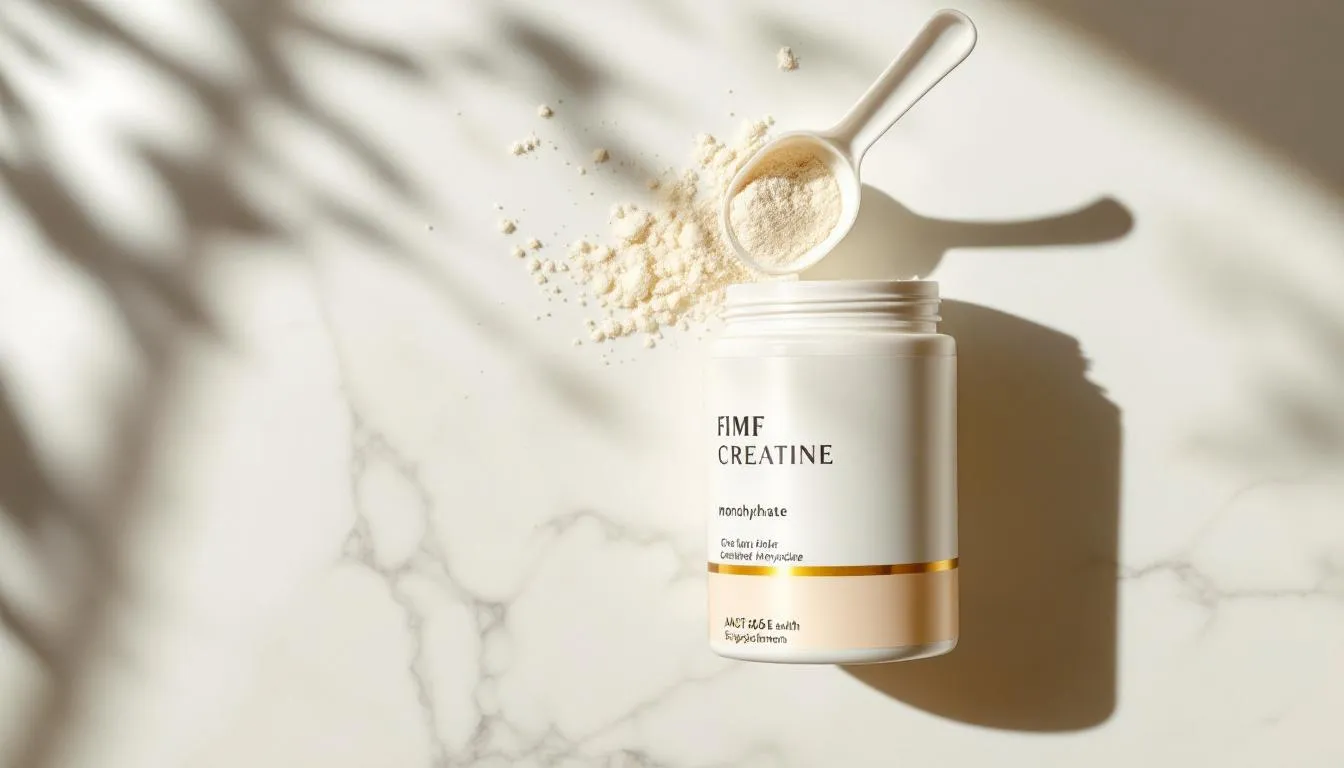
Creatine monohydrate is the original form. It's creatine molecules bonded with a single water molecule, hence "monohydrate." It's been studied longer and more thoroughly than any other form. The International Society of Sports Nutrition (ISSN) repeatedly endorses it as the most effective and cost-efficient form of creatine available.
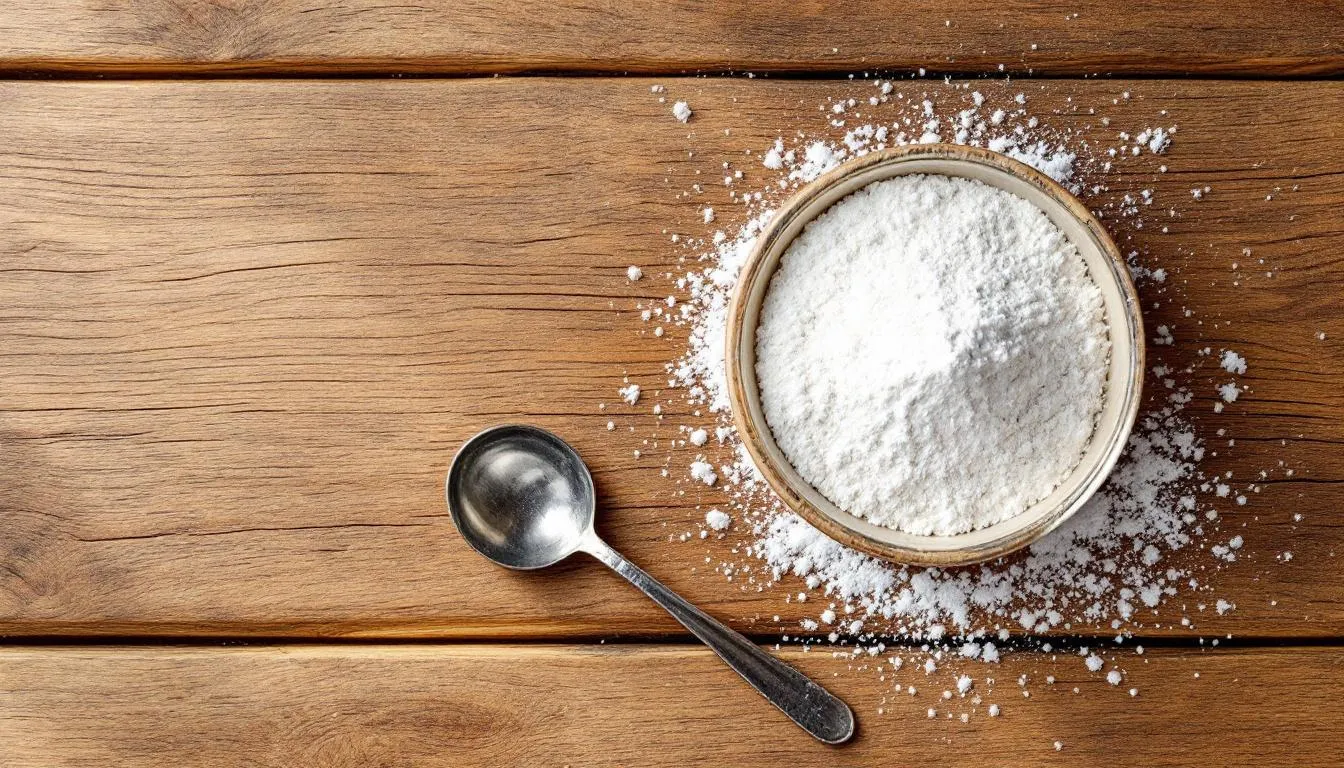
Standard creatine monohydrate powder has particles averaging around 44 micrometers in diameter. That's roughly half the width of a human hair. The powder is white, has a slightly gritty texture, and doesn't dissolve perfectly in cold water. Stir it long enough and most of it mixes in, but you'll often see some residue at the bottom of your glass.
At roughly $0.12 per gram, it's also the cheapest form of creatine you can buy. And for most people, that low cost combined with decades of research makes it the default recommendation.
What is micronized creatine?
Micronized creatine is still creatine monohydrate. The word "micronized" refers to a manufacturing process that grinds the creatine particles down to a much finer size, typically around 20 times smaller than standard monohydrate. Particle sizes range from about 0.36 to 9 micrometers depending on the production method.
The micronization process uses jet mills, ball mills, or high-pressure techniques to reduce particle diameter without altering the chemical structure of the creatine itself. You end up with the exact same molecule, just distributed across far more and far smaller particles.
Those smaller particles have a much larger total surface area. More surface area means more contact with water, which translates to better solubility. Micronized creatine dissolves more completely and more quickly than standard monohydrate, and the texture is noticeably smoother.
The tradeoff is cost. Micronized creatine typically runs about $0.20-0.26 per gram, roughly twice the price of standard monohydrate. That adds up over months of daily use.
The key differences

Particle size and solubility
This is where the difference starts and mostly ends. Standard monohydrate has particles around 44 micrometers. Micronized creatine runs 0.36 to 9 micrometers. That 20x size reduction dramatically improves solubility.
When you mix standard monohydrate in water, some particles dissolve and some sink to the bottom. You'll often see a white sediment if you let the glass sit for a minute. That sediment isn't wasted creatine, it still gets absorbed in your digestive tract, but it does make the drink feel gritty and less pleasant.
Micronized creatine dissolves almost completely. Stir it into water and it looks clear within 30 seconds. No sediment. No gritty texture. No chalky aftertaste. If you're someone who takes creatine in plain water first thing in the morning, that difference is actually noticeable.
Digestive comfort
Here's the practical point that gets glossed over. Some people experience digestive discomfort with standard creatine monohydrate. Bloating, cramping, and loose stools are common complaints, especially during a loading phase when doses are high.
The working theory is that larger, poorly dissolved creatine particles can draw water into the gut and cause osmotic effects before they're fully absorbed. Micronized creatine, because it dissolves more completely, may reduce this effect for sensitive people.
The research doesn't conclusively prove micronized creatine causes fewer GI issues than monohydrate. But the anecdotal evidence is consistent enough to take seriously. If you've tried monohydrate and had stomach problems, switching to micronized is a reasonable experiment. The vast majority of people tolerate both forms just fine, but if GI comfort is your concern, micronized has the edge.
Cost
Standard creatine monohydrate: roughly $0.08-0.14 per gram depending on brand and bulk size. Micronized creatine: roughly $0.18-0.28 per gram. At 5 grams per day, that's $0.40-0.70 for monohydrate vs $0.90-1.40 for micronized, daily. Over a year, you're looking at roughly $150-250 for monohydrate vs $330-510 for micronized.
If budget matters (and for most people it does), that's a meaningful difference for a compound that delivers identical results.
Use the WinAging creatine calculator to figure out your ideal daily dose based on body weight and training goals. That number helps you calculate actual annual cost for each form.
Bioavailability: what the research actually shows
This is where marketing claims get ahead of reality. Micronized creatine is often marketed as having significantly better bioavailability than standard monohydrate. The truth is more nuanced.
A 2026 randomized controlled clinical study on KleanCREATINE, a specific enhanced micronized formulation, found 38.97% higher bioavailability compared to regular micronized creatine and faster peak plasma levels (Cmax of 8.10 vs 4.80 nmol/UI, with Tmax of 2 vs 3 hours). That sounds impressive, but there's an important catch: this was comparing enhanced micronized creatine to regular micronized creatine, not to standard monohydrate.
The more relevant comparison shows something different. When you look at isotope-labeled creatine studies, oral bioavailability is dose-dependent: around 53% at lower doses and only 16% at higher doses. The rate-limiting factor isn't how well the powder dissolves in water. It's creatine transporter saturation in muscle cells. Your muscle transporters can only pull creatine in so fast. Once they're saturated, the rate of absorption plateaus regardless of particle size.
In practical terms: standard monohydrate and micronized creatine reach muscle saturation at the same rate. The 3-4 weeks it takes to fully load your muscles doesn't change based on which form you use. The long-term muscle creatine stores you end up with are also identical.
Micronized may enter your bloodstream slightly faster because it dissolves more completely in the gut. But that faster peak absorption doesn't translate to meaningfully greater muscle loading over time. The endpoint, saturated muscle phosphocreatine stores, is the same.
Performance results: are they different?
No. This is well-established across the research.
Both forms produce the same improvements in muscle strength, power output, lean mass, and exercise capacity. The compound doing the work is identical in both products. A study doesn't become less effective because the particles were ground finer. What drives results is the total creatine reaching your muscle cells over time, and both forms get you there.
Where this matters is consistency. If you find standard monohydrate unpleasant to drink, gritty, or hard to mix, you might skip doses. Sporadic creatine use is substantially less effective than daily use. Muscle creatine stores take several weeks to saturate and start declining again within days of stopping. If micronized creatine's smoother texture makes you more consistent, that's a real performance advantage, just not a pharmacological one.
Check your training protocol against our supplement interaction checker to make sure creatine fits well with whatever else you're taking.

Creatine for longevity and healthy aging
Here's where the monohydrate vs micronized debate becomes less interesting and the case for creatine itself becomes compelling.
Most people think of creatine as a bodybuilder supplement. It's not. The research on creatine for healthy aging is substantial, growing, and frankly underappreciated by the general longevity community.
Muscle mass and strength
Sarcopenia, the age-related loss of muscle mass and strength, begins as early as your 30s and accelerates after 50. It's one of the leading contributors to functional decline, falls, disability, and mortality in older adults. Creatine supplementation at doses of 3 grams or more per day, combined with resistance training, consistently improves both strength and lean mass in older adults across multiple meta-analyses.
A 2025 systematic review found that creatine monohydrate combined with resistance training significantly improves one-repetition maximum strength in adults over 60. These aren't small effects. We're talking about meaningful, clinically relevant improvements in functional capacity that translate directly to better quality of life.
The dose matters less than the consistency. Research on older adults shows 4 grams daily can increase muscle strength by approximately 10% after one month of supplementation combined with training.
Brain health and cognition
Your brain uses creatine too. Brain creatine levels can increase by up to 11% with supplementation. That's significant because phosphocreatine in the brain helps buffer ATP depletion during cognitive tasks, reduces oxidative stress, and upregulates genes associated with neuronal growth and neuroprotection.
Multiple studies show cognitive benefits from creatine supplementation, including improvements in working memory and executive function, particularly in older adults and vegetarians who have lower baseline creatine levels from diet. A 2026 systematic review in Nutrition Reviews found consistent evidence for creatine's role in supporting cognitive performance as we age.
For people focused on longevity, protecting cognitive function is as important as maintaining physical performance. Creatine addresses both.
Falls and functional independence
Falls are the leading cause of injury-related death and hospitalization in people over 65. Creatine supplementation may reduce fall risk through two pathways: improved muscle strength and better neural function. Both contribute to the motor control and reaction time you need to catch yourself before a fall becomes serious.
The research here is still developing, but the mechanisms are plausible and the evidence is promising enough that creatine belongs in any serious discussion of healthy aging protocols.
DNA methylation and biological aging
This is the most recent and arguably most interesting angle. The 2025 research showing that creatine synthesis declines with age and that this decline correlates with changes in DNA methylation patterns is significant. DNA methylation clocks, like the GrimAge and DunedinPACE clocks, are increasingly used as markers of biological aging rate. The possibility that creatine deficiency contributes to epigenetic aging is a meaningful finding for anyone tracking their biological age.
If you're not already measuring your biological age, the WinAging biological age calculator is a good place to start. Creatine is one of the few compounds where the longevity argument goes beyond muscle and into cellular aging itself.
Dosage: how much to take
The dosage question is completely independent of whether you choose monohydrate or micronized. Both forms are dosed identically.
Daily maintenance
3-5 grams per day is the standard maintenance dose. Most research uses 5 grams daily. For smaller individuals or those with lower body weight, 3 grams can be sufficient. For larger individuals or those with high creatine demands from intense training, 5 grams or slightly more may be optimal.
Use the creatine calculator to get a personalized dose recommendation based on your body weight. The general formula is 0.03 grams per kilogram of body weight for maintenance, which puts most people between 2.5 and 5 grams daily.
Loading phase
Loading is optional. A loading protocol: 20 grams per day split across 4 doses for 5-7 days, followed by 3-5 grams daily for maintenance. Loading saturates muscle creatine stores in about a week rather than the 3-4 weeks it takes with maintenance dosing alone. You reach the same saturation point either way. Loading just gets you there faster.
For most people, especially those who aren't in active competition prep, loading isn't necessary. Daily maintenance dosing is simpler, causes fewer GI issues, and produces the same long-term results.
If you do choose to load, micronized creatine is particularly worth considering here. The high daily doses during a loading phase are more likely to cause digestive discomfort with standard monohydrate. Smaller particles mean gentler digestion when you're taking 20 grams in a day.
Timing
Creatine timing is one of the most overstated topics in sports nutrition. The research is mixed on whether taking it pre- or post-workout matters meaningfully. What does matter is taking it every day, at roughly the same time, consistently.
Post-workout with a meal is a reasonable default. Some evidence suggests that taking creatine with carbohydrates or protein slightly improves muscle uptake due to the insulin response. But the effect size is small and the practical difference over weeks and months is minimal.
Pick a time that's easy to remember. Do it daily. That's the protocol.

How to take creatine (practical considerations)
Mixing tips
Standard monohydrate: mix in at least 200-250ml of warm or hot water, stir well, then add cold water or ice if preferred. Warm water dissolves the particles better. The gritty texture is normal and won't affect results.
Micronized creatine: mixes easily in cold water. Add to a shaker bottle, shake for 15-20 seconds, and you're done. No sediment, no grit.
Both forms can be mixed into protein shakes, juice, or any other beverage. Mixing with a carbohydrate-rich drink may slightly improve uptake.
Taking it with food
You can take creatine with or without food. On an upset stomach, taking it with a meal tends to reduce any GI discomfort. During a loading phase, always take it with food and spread doses evenly throughout the day.
Some people find that taking creatine with coffee or other caffeine sources causes stomach discomfort. This isn't universal, but if you notice it, separate your creatine and caffeine by an hour or two.
Water intake
Creatine draws water into muscle cells. This is part of how it works, but it also means you need to stay hydrated. Low water intake while taking creatine can cause muscle cramps and headaches. Aim for at least 2-3 liters of water per day, more if you're training intensely or in a hot environment.
Stacking creatine with other longevity compounds
Creatine stacks well with most other longevity-focused compounds. There are no known negative interactions with the major supplements used in longevity protocols.
Creatine and glycine: Glycine is an amino acid precursor to creatine synthesis, and supplemental glycine supports collagen production, sleep quality, and cellular repair. Taking both together makes sense for anyone focused on musculoskeletal health and anti-aging. The glycine dosage for anti-aging guide covers how to integrate glycine into your stack effectively.
Creatine and TMG (trimethylglycine): TMG donates methyl groups that are used in creatine synthesis. Your body uses a significant portion of your daily methyl group supply to make creatine endogenously. Supplementing creatine externally may reduce the demand on your methylation pathways, potentially freeing up methyl groups for other functions like DNA methylation and neurotransmitter synthesis. Check out the TMG guide for more on how this compound fits into the longevity stack.
Creatine and protein: Creatine works through a different mechanism than protein. They complement rather than compete. Taking creatine post-workout with a protein shake is a sensible combination for both muscle synthesis and recovery.
Creatine and NMN or resveratrol: No negative interactions. If you're running a broader longevity stack, creatine fits in without interfering with NAD+ precursors, senolytics, or mTOR inhibitors. Use the supplement interaction checker to verify your full stack.
For any combination questions, the WinAging interaction checker is built to flag problematic combinations and confirm safe ones. It's free to use and covers the major longevity compounds.
Instantized creatine: a third option
You might also see "instantized" creatine on labels. This is essentially the same as micronized, just a marketing term some brands use. Instantized creatine has been processed to improve its solubility and dispersibility in water. The particle reduction is the same mechanism. If you want the details, the instantized creatine guide covers exactly what that label means and whether it changes anything about how you should use it.
Creatine vs creatine gummies: a different comparison
Creatine has recently exploded in the gummy supplement category. If you've been wondering whether creatine gummies are worth it compared to powder, the short answer is that the bioavailability is similar but the cost per gram of creatine is typically much higher. The creatine gummies vs powder guide breaks down the tradeoffs in detail, including which format makes sense for different people.
Who should choose monohydrate vs micronized?

Choose standard creatine monohydrate if...
You're budget-conscious and want the best value per dollar. Standard monohydrate is cheaper, just as effective, and backed by more research than any other supplement form. If the gritty texture doesn't bother you, there's no reason to pay more.
You're buying in bulk. Large bags of creatine monohydrate from reputable brands can bring the cost down to $0.08 per gram or less. At that price, a full year's supply costs under $150. Micronized at similar volumes costs 2-3 times as much.
You're new to creatine and want to start simple. Standard monohydrate is the default for a reason. Start here, see how you respond, and switch to micronized only if you have a compelling reason.
Choose micronized creatine if...
You have a sensitive stomach. If you've tried standard monohydrate and experienced bloating, cramping, or loose stools, micronized is worth trying. The improved solubility reduces the osmotic load in your gut and many people with GI sensitivity do better on it.
You're doing a loading phase. High daily doses (20g per day) are more likely to cause digestive discomfort with standard monohydrate. The loading window is short enough that the extra cost of micronized for those 5-7 days is minimal.
You mix creatine in cold liquids or shakes where solubility matters. If you're making a smoothie or protein shake and don't want visible powder sitting in the liquid, micronized is noticeably better.
You value convenience enough to pay for it. Some people simply prefer the cleaner mixing experience. That's a valid reason.
What to look for when buying either form
Third-party testing
Look for third-party testing certification. NSF Certified for Sport or Informed Sport are the two most credible certifications for supplements sold in athletic contexts. These certifications verify that the product contains what it claims to contain, at the dose on the label, without banned substances or contaminants.
For creatine specifically, the main quality concern is contamination with other compounds during manufacturing. Third-party tested products reduce that risk significantly.
CreaPure certification
CreaPure is a branded form of creatine monohydrate manufactured in Germany by AlzChem Trostberg GmbH. It's considered the gold standard for purity, with extremely tight quality controls and a documented safety record. Many premium supplement brands source their creatine from CreaPure. If a product is CreaPure-certified, it's a reliable signal of quality for either monohydrate or micronized forms.
Serving size and creatine content
Read labels carefully. Some creatine products contain fillers, proprietary blends, or added ingredients that dilute the creatine per serving. You want a product that delivers a full 3-5 grams of creatine monohydrate per serving, not a product where creatine is buried in a "performance matrix" alongside a dozen other compounds at unknown doses.
Use the creatine calculator to determine your ideal serving size, then check that the product you're considering actually delivers that dose.
Price per gram of actual creatine
Calculate cost per gram of creatine, not cost per serving or per container. Divide the total price by the total grams of creatine in the container. For standard monohydrate, anything above $0.20 per gram is overpriced. For micronized, anything above $0.35 per gram is pushing it.
Common questions about creatine monohydrate vs micronized
Does micronized creatine cause less water retention?
No more or less than standard monohydrate. Both forms cause the same intramuscular water retention because the mechanism is identical. The water follows the creatine into muscle cells regardless of particle size. This water retention is largely within the muscle cells, not subcutaneous, so it contributes to muscle fullness rather than a puffy or bloated appearance.
Can you switch between monohydrate and micronized?
Yes, without any issue. Your body sees the same compound either way. If you run out of one form and buy the other, there's no adjustment period needed and no loss of the creatine already stored in your muscles.
Do you need to cycle creatine?
No. There's no scientific basis for cycling creatine. The older advice to cycle it (take it for 8 weeks, off for 4 weeks, etc.) came from speculation, not research. Long-term daily supplementation is safe and effective. Your body doesn't downregulate its response to creatine with continuous use in the same way it might with some other compounds.
Is creatine safe for older adults?
Extensively studied and safe. Multiple long-term studies in adults over 65 show no adverse effects on kidney function, liver function, or cardiovascular health at standard doses. The kidneys are often the concern people raise, but creatine supplementation in healthy individuals doesn't stress kidney function. If you have pre-existing kidney disease, consult a physician before supplementing. For healthy adults, it's one of the safest supplements with the strongest evidence base.
Does creatine form matter for women?
No. The monohydrate vs micronized comparison applies equally to men and women. The longevity and performance benefits of creatine are well-documented in women, including post-menopausal women where muscle preservation becomes particularly important. Dose recommendations are typically the same (0.03 g/kg/day for maintenance) though some research suggests women may respond well to slightly lower doses.
Does creatine help with brain function?
The evidence is promising. Your brain uses roughly 20% of your body's energy supply and runs on ATP. Phosphocreatine in the brain buffers that ATP demand during intense cognitive tasks. Studies show supplementation can increase brain creatine levels by up to 11%, and several trials show improvements in working memory, processing speed, and executive function, particularly in sleep-deprived individuals and older adults. It's not a nootropic in the traditional sense, but it supports the energy substrate your brain needs to function well.
What's the best time to take creatine?
Post-workout with a meal is a reasonable default, but timing matters less than people think. The primary variable is taking it consistently every day. The difference between pre-workout and post-workout creatine dosing in terms of outcomes is small and inconsistent across studies. Pick a time that fits your routine and stick to it.
Use the creatine calculator to confirm your dosing protocol and get personalized recommendations based on your body weight and goals.
The verdict
Creatine monohydrate and micronized creatine are chemically identical. The performance results are identical. The saturation kinetics are essentially identical.
The real differences are solubility, GI comfort, and cost. Micronized dissolves better and mixes more smoothly. It may cause fewer digestive issues for sensitive people. It costs roughly twice as much per gram.
For most people, standard creatine monohydrate at 3-5 grams per day is the right choice. It's the most studied form, the most affordable, and the default recommendation for a reason.
For people with sensitive digestion, those doing a loading phase, or anyone who simply prefers a cleaner mixing experience, micronized is worth the extra cost.
Either way, just take it. Consistently. Every day.
That's what the research supports. That's what moves the needle.
Looking for a complete protocol, not just one compound? The WinAging protocol builder creates personalized longevity stacks based on your specific goals and health profile.
Related guides
- Creatine gummies vs powder: which is actually worth it
- What instantized creatine actually means
- Glycine dosage for anti-aging: what the research shows
- Free creatine dosage calculator
- Supplement interaction checker
Sources
- Comparative Efficacy and Pharmacokinetic Parameters of Micronized Creatine Monohydrate (KleanCREATINE) - Cureus, 2026
- Creatine monohydrate supplementation for older adults and clinical populations - PMC, 2025
- Bioavailability, Efficacy, Safety, and Regulatory Status of Creatine and Related Compounds - PMC
Creatine is one of the few supplements where the research is so consistent that the debate is mostly settled. Pick a form you'll take every day, nail the dose, and let it work. Use the WinAging creatine calculator to dial in your protocol, and check the supplement interaction checker to confirm it fits with everything else in your stack.