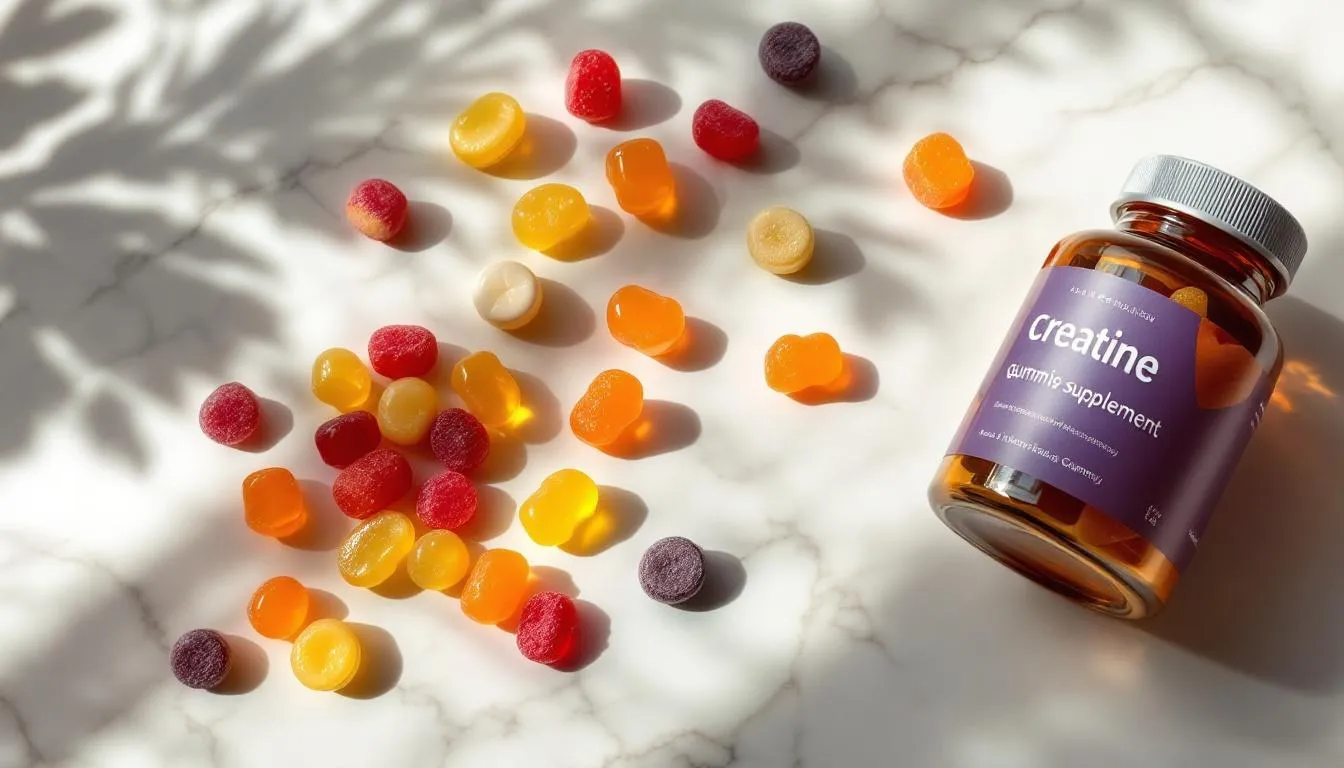
Creatine Gummies vs Powder: Which Actually Works?
Independent lab testing found nearly half of creatine gummies contain little to no actual creatine. Here's the chemistry behind why, and which form works.
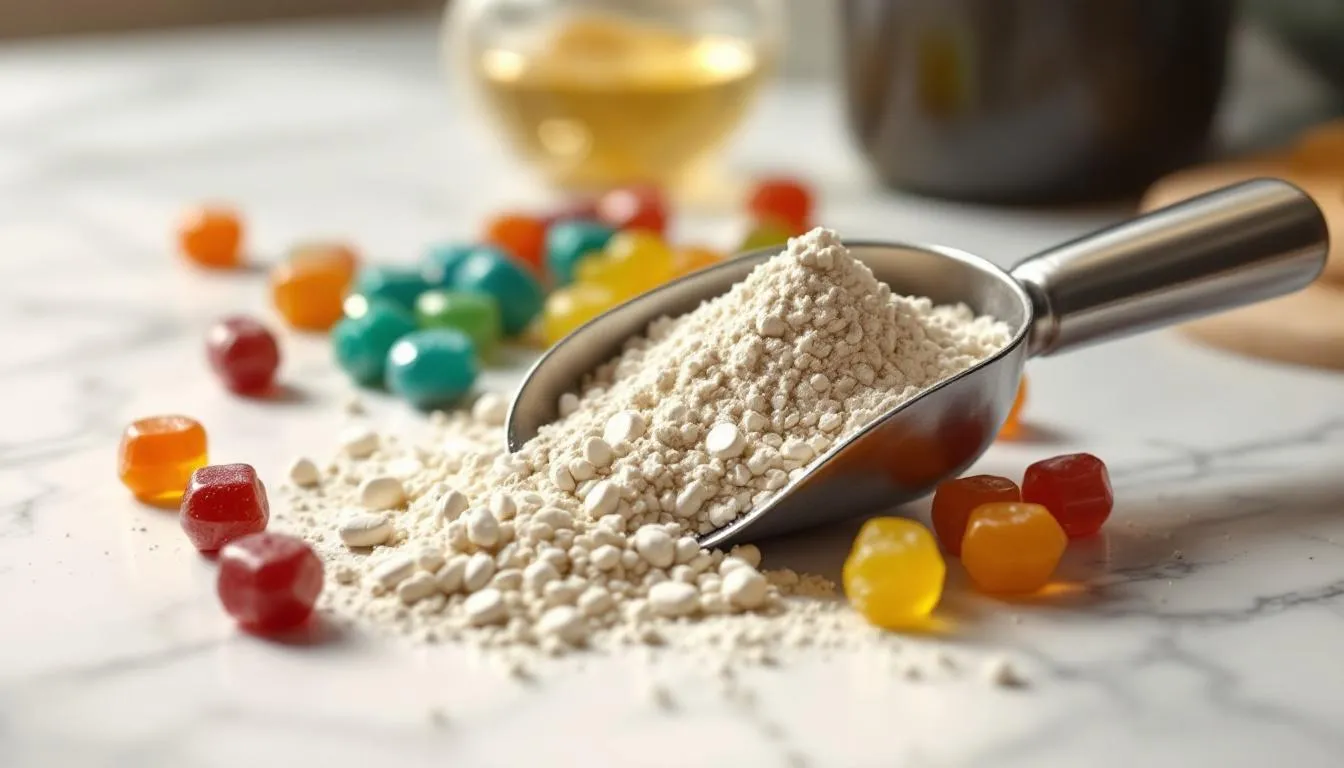
Nearly half the creatine gummies on the market contain little to no actual creatine.
That's not a fringe claim. That's the finding from two independent testing studies run in 2024 and 2025. NOW Foods tested 12 creatine gummy brands and found 6 of them failed to meet label claims. SuppCo tested 6 of Amazon's best-selling creatine gummies in 2025 and found 4 contained virtually zero creatine. One product had less than 1% of its claimed dose. Another had none detectable at all.
Those same products had average Amazon ratings above 4.4 stars.
Customers were buying, reviewing positively, and getting nothing. Or close to nothing. They reported feeling fine, maybe a little placebo effect, no idea the product they paid a premium for wasn't delivering.
The creatine gummy market is exploding. Convenient, tasty, colorful, no measuring required. The marketing is compelling. But there's a fundamental chemistry problem that makes gummies an inherently unstable delivery vehicle for creatine, and most consumers never hear about it.
This guide covers that chemistry problem in plain terms. It also explains when gummies can make sense, what to look for if you still want them, and why creatine, in whatever form you can actually get it consistently, is one of the few supplements with rock-solid evidence for both athletic performance and healthy aging. Use the creatine calculator to find your ideal dose before you even pick a form.
What creatine actually is
Creatine is a naturally occurring compound your body produces in the liver, kidneys, and pancreas, primarily from the amino acids glycine, arginine, and methionine. About 95% of your body's creatine is stored in skeletal muscle, mostly as phosphocreatine. The rest is in the brain and other tissues.
Phosphocreatine is an energy buffer. When your muscles need ATP fast, during a sprint or a heavy lift, phosphocreatine donates a phosphate group to ADP to rapidly regenerate ATP. This system keeps you going for the first 8-10 seconds of maximum effort before other energy pathways take over.
Your body produces about 1-2g of creatine per day. You also get it from food, primarily red meat and fish. A 4oz steak contains roughly 0.9-1.3g. Vegetarians and vegans get essentially none from diet.
The case for supplementing is straightforward. Raising muscle creatine levels beyond what diet and endogenous production can provide extends the duration and capacity of this energy buffer. More creatine stored means more ATP available faster, better recovery between efforts, and over time, more training volume and adaptation. Use the creatine calculator to figure out your target daily dose based on body weight and goals.
Why creatine matters beyond the gym
Creatine is usually framed as an athletic supplement. That framing undersells it significantly.
For longevity, the case is increasingly compelling. The research base has expanded well beyond performance into aging, brain health, and cellular biology. Here's what the science actually shows.
Sarcopenia and muscle preservation
After age 30, you lose 3-8% of muscle mass per decade. After 60, the rate accelerates. This loss, called sarcopenia, is one of the most predictable paths to frailty, falls, disability, and premature death. The less muscle you have, the worse your metabolic health, the harder physical activity becomes, and the faster further decline progresses.
Creatine combined with resistance training directly fights this. A 2025 systematic review found that creatine monohydrate at 3g per day or more, combined with resistance training, significantly improved lean tissue mass, strength, and functional performance in adults aged 50-80+. The muscle preservation effect averaged about 1.2 kg more lean mass compared to resistance training alone.
That might not sound dramatic. But when you're 70, 1.2 kg of extra muscle can mean the difference between getting up from a chair independently and needing help.
Track how your body composition changes over time with the biological age calculator. Consistent creatine use combined with resistance training is one of the lifestyle inputs most likely to show up positively in biological age metrics over months and years.
Brain health and cognitive function
The brain is an energy-hungry organ. It consumes roughly 20% of your body's total energy despite being only 2% of body weight. Creatine crosses the blood-brain barrier. It increases phosphocreatine stores in brain tissue, enhancing the brain's capacity to rapidly regenerate ATP under cognitive demand.
A 2024 meta-analysis of 16 randomized controlled trials found creatine supplementation produced significant improvements in memory, attention, and information processing speed. The cognitive benefits were most pronounced in older adults and under metabolic stress. Sleep deprivation studies are particularly striking: a single dose of creatine has been shown to improve cognitive performance and maintain brain energy metabolism during sleep loss.
There's also emerging research on creatine and mood. Studies show promising effects on depression, with one trial finding creatine as an add-on to cognitive behavioral therapy produced significantly greater reductions in depression scores compared to CBT alone.
A 2025 pilot trial launched to study creatine monohydrate specifically in Alzheimer's patients. Preclinical data had shown improved cognition and reduced Alzheimer's biomarkers. The full results aren't in yet, but the direction is interesting.
Epigenetic aging
A 2025 study published in Lifestyle Genomics is worth highlighting. Researchers analyzed data from nearly 5,000 adults with a mean age of 67.6 years. They used DNA methylation-derived epigenetic biomarkers, validated predictors of biological aging and mortality risk, called GrimAgeMort and GrimAge2Mort.
Higher dietary creatine intake was significantly associated with lower epigenetic estimates of mortality risk. After adjusting for demographics and dietary variables, the association held. This was the first population-based study to examine the relationship between dietary creatine intake and DNA methylation-derived mortality indices.
A single observational study doesn't prove causation. But it adds to a picture that's been building across multiple research threads: creatine isn't just a gym supplement. It's a compound with real potential for healthy aging. WinAging tracks the longevity compounds that have this kind of research breadth, and creatine qualifies at a level most people don't realize.
Bone health
Creatine may support bone mineral density by influencing osteoblast activity (bone formation) and osteoclast activity (bone resorption). A two-year randomized controlled trial in older women found that creatine at 3g per day combined with resistance training improved bone outcomes compared to resistance training alone. Falls prevention is another angle: creatine's benefits to muscle strength and neural function both reduce fall risk, one of the primary mortality risks in older adults.
Creatine powder: the gold standard
Creatine powder is the form used in essentially all the research. Decades of studies. Thousands of participants. Multiple independent systematic reviews and meta-analyses. The evidence base for creatine monohydrate powder is about as solid as it gets in sports nutrition science.
Here's what makes it the default recommendation.
It works. The mechanism is well-established. The dosing is well-characterized. The results are consistent across populations, age groups, and training backgrounds.
It's cheap. Quality creatine monohydrate powder costs $0.20-$0.80 per serving. That's roughly $73-$292 per year for daily supplementation. Among compounds with this level of evidence, that's exceptional value. Compare this to creatine gummies at $1.50-$2.00 per serving, or $547-$730 annually.
It delivers what it claims. When SuppCo independently tested 5 creatine powders in 2025, all five met or exceeded their label claims. Every one. When you buy a bag of quality creatine monohydrate, the 5g scoop contains approximately 5g of creatine. No surprises.
Dosing is flexible. You can do 3g, 5g, 10g, or 20g for a loading phase. You adjust to your body weight, your goals, your protocol. The creatine calculator will walk you through the math. With powder, adjusting your dose takes about two seconds.

Types of creatine powder
Creatine monohydrate is the one to buy. It's the most researched, most effective, and cheapest form. Don't get distracted by alternatives unless you have a specific reason.
Creapure is a brand of creatine monohydrate manufactured by AlzChem in Bavaria, Germany, at 99.9%+ purity. Most clinical research uses Creapure. It's the clearest quality signal in the powder category. If you see Creapure on the label, you're getting pharmaceutical-grade creatine with minimal impurities. It costs a bit more but removes doubt about quality.
Micronized creatine monohydrate is the same molecule processed to a much finer particle size, roughly 20x smaller. It dissolves better in water and tends to be easier on the gut at higher loading doses. No superior bioavailability compared to standard monohydrate. Just better mixability. Good for people who find regular creatine gritty in a shaker.
Creatine HCl (creatine hydrochloride) is more soluble than monohydrate and is marketed as requiring a smaller dose. The theory: greater solubility equals better absorption. In practice, when doses are matched for actual creatine content, a 2024 study found no performance difference between HCl and monohydrate. HCl is more expensive, has less research, and offers no proven benefit over monohydrate except potentially better GI tolerance during a loading phase. Not worth the premium.
Other forms (creatine ethyl ester, buffered creatine, etc.) have even less support. A 2022 analysis of alternative creatine forms available on Amazon found no evidence of superior efficacy over standard creatine monohydrate for any of them. Stick with the original.
Cons of powder
Powder requires mixing. You need a shaker bottle or a glass. It doesn't dissolve perfectly in cold water. Unflavored creatine has a mild chalky-sour taste. And you can't easily take it without water, which creates friction when traveling.
None of these are serious objections. But they're real. For some people, the friction of mixing a supplement every day is enough to make them quit. Consistency matters more than form when it comes to creatine benefits. The compound accumulates slowly over weeks of sustained elevated muscle creatine. Stopping and starting means you're constantly resaturating from scratch.
Creatine gummies: the convenience pitch
Creatine gummies sell on one thing: convenience.
No measuring. No mixing. No shaker bottle. You eat a few gummies and you're done. They taste good. You remember to take them because they feel like a treat. For travel especially, gummies are genuinely appealing. No powder questions, no bulky container, no fidgeting with a scoop.
The pitch makes sense. And it's worked. The creatine gummy market is growing fast. Hundreds of brands have entered the space. Sales are surging.
But there's a problem. A significant one. It comes down to basic chemistry.
The stability problem
Creatine powder is stable in dry form. As long as moisture stays out, a bag of creatine monohydrate can sit on your shelf for years without meaningful degradation.
Water changes everything.
When creatine is dissolved in water, which gummy manufacturing requires, it undergoes intramolecular cyclization, converting into creatinine. Creatinine is a useless metabolite. It's what your kidneys filter out. It provides zero creatine benefit to your muscles or brain.
Three factors during gummy manufacturing accelerate this degradation dramatically:
Heat. Gummies are made at elevated temperatures. Heat speeds up the conversion of creatine to creatinine. There's no way around this step in manufacturing.
Acidity. Gummies require an acidic pH (typically 3.5-5.5) to set and maintain their texture. Acid is one of the primary drivers of creatine breakdown. At pH 3.5 and room temperature, creatine degrades by 21% in just three days. At pH 4.5, about 12% loss in three days. At pH 5.5, around 4% loss.
Time. These products sit on shelves. In distribution. In Amazon warehouses. In your supplement cabinet. Each day in an acidic, moist environment means more creatine converting to creatinine. A gummy that claims 5g may have contained 5g on day one of manufacturing. By the time you eat it six months later, you might be getting 3g. Or 1g. Or nothing.
The testing evidence
This isn't theoretical. It's been documented repeatedly, from multiple independent sources.
NOW Foods testing (2024). NOW Foods tested 12 popular creatine gummy brands using HPLC (high-performance liquid chromatography) analysis. Six brands passed. Six failed. The failures weren't close. Some contained significant amounts of creatinine, the degraded and useless form. NOW's Senior Director of Quality noted that none of the third-party labs they typically work with were even capable of testing gummies properly. There's a quality oversight gap across the entire product category. No standard infrastructure exists to catch these failures before they reach consumers.
SuppCo testing (2025). SuppCo tested 6 of Amazon's best-selling creatine gummies. Only 2 met label claims. The other 4 failed:
- EcoWise: zero detectable creatine
- Vidabotan: zero detectable creatine
- Happyummmm: less than 1% of claimed dose
- DivinusLabs: less than 1% of claimed dose
These 4 brands had sold approximately 50,000 units in the prior month. Their average Amazon rating: 4.4-4.7 stars.
In contrast, all 5 creatine powders SuppCo tested met their label claims. Every single one.
This isn't a "some brands are bad" situation. It's a category-level quality problem rooted in the chemistry of the delivery format itself.
Class action lawsuits. Attorneys are actively investigating class action lawsuits against multiple creatine gummy brands. The argument is simple: consumers paid a premium for a product that delivered none of the advertised ingredient. Investigations are active in California, Illinois, and New York.

What gummies actually contain
A typical creatine gummy serving (3-5 gummies) is supposed to deliver 4-5g of creatine. Per gummy, that's usually 0.8-1.5g of creatine, assuming it hasn't degraded.
The other ingredients are what you'd expect in any gummy supplement: sucrose, glucose syrup, citric acid (which worsens the pH problem), glycerol, pectin, natural flavors, and often colorings.
Per serving, you're also getting 5-10g of sugar and 20-40 extra calories. Not a deal-breaker for most people, but worth knowing if you're tracking nutrition.
Head to head: which should you choose?
The honest answer depends on your situation. Let's put the core facts side by side.
| Creatine powder | Creatine gummies | |
|---|---|---|
| Bioavailability | ~100% (when product is valid) | Variable (degradation risk) |
| Quality reliability | High (5/5 passed SuppCo testing) | Low (4/6 failed SuppCo testing) |
| Cost per serving | $0.20-$0.80 | $1.50-$2.00 |
| Annual cost | ~$73-$292 | ~$547-$730 |
| Sugar per serving | 0g | 5-10g |
| Convenience | Requires mixing | Grab and go |
| Dose flexibility | Very high | Limited |
| Third-party testing | Widely available (NSF, Informed Sport) | Rare |
Choose powder if you're serious about results
If your goal is muscle preservation, athletic performance, longevity, or cognitive health, powder is the call. The research, quality assurance, and economics all favor it.
The only real friction point is mixing. That's solvable. Keep a shaker bottle in your kitchen. Put the creatine next to whatever triggers your morning routine. The habit forms quickly. And powder gives you the flexibility to use the creatine calculator and dial in exactly the dose that makes sense for your body weight and goals, without being locked into fixed gummy increments.
If you're building a broader longevity stack, check how creatine interacts with everything else you're taking using the supplement interaction checker. Creatine is generally well-tolerated alongside most compounds, but it's worth verifying if you're stacking multiple supplements.
Consider gummies in specific situations
Gummies aren't inherently useless. They're a legitimate option in two situations.
When you're traveling. A week of creatine gummies in your carry-on bag is genuinely convenient. No powder concerns, no liquid questions, no measuring. If you know you can't maintain your powder routine on the road, gummies from a rigorously tested brand can keep your creatine levels from crashing during a trip.
When you've repeatedly failed to stick with powder. The best supplement is the one you actually take. If gummies are the format that makes you consistent, and you buy from a certified brand, that beats having a bag of untouched powder gathering dust. Consistency is everything with creatine. It works by accumulation.
But if you're going to buy gummies, you need to be selective. Most products on the market are, based on independent testing, unreliable.

How to find quality creatine
For powder
Look for "creatine monohydrate." Not "creatine blend." Not just "creatine." The active ingredient should specifically say creatine monohydrate. This matters.
Creapure certification. This is the quality benchmark. Creapure is manufactured by AlzChem in Germany at 99.9%+ purity with independent verification. If you see Creapure on the label, you're getting pharmaceutical-grade creatine. Most major clinical research has used Creapure.
Third-party certification. NSF Certified for Sport and Informed Sport are the gold standards. These certifications verify that the product contains what it claims, at the stated dose, without banned substances or contaminants. They're particularly important for competitive athletes subject to drug testing, but they're a useful quality signal for everyone.
Avoid proprietary blends. If creatine is buried in a "performance blend" without a specific dose stated per ingredient, you don't know how much you're getting. Pass on those products.
Single-ingredient products. A bag of pure creatine monohydrate. That's it. You don't need additional ingredients mixed in. The simpler the label, the easier it is to trust.
For gummies, if you buy them
NSF Certified for Sport. Create Wellness gummies are currently the only NSF Certified for Sport creatine gummies on the market. That certification means independent verification of label claims and product purity. It's the minimum standard worth buying in the gummy category.
Creapure as the creatine source. Even in gummy form, Creapure as the active ingredient is a meaningful positive signal about starting material quality.
Recent manufacturing date. Freshness matters more for gummies than for powder. Shorter time between manufacture and consumption means less degradation has occurred. Check for a clear manufacture date and expiration date before buying.
4g minimum per serving. Anything less than 4g of creatine per serving isn't a therapeutic dose. Don't buy it regardless of format.
Red flags to walk away from
- "Creatine blend" without specifying the form
- No third-party testing certificate on the label
- Dose under 3g per serving
- No clear manufacture or expiration date
- Cheap Amazon gummy brands with no verifiable third-party testing history
- Any product with only customer reviews as quality evidence
Use the free tools on WinAging when building or reviewing your supplement stack. And if something in a product's ingredient list or claimed benefits looks off, the supplement interaction checker is a useful first check before you buy.
Dosing guide
Standard dose. 3-5g per day, taken consistently. Most adults do well at 5g. Larger individuals or those doing heavy resistance training can go toward the higher end. Use the creatine calculator to get a weight-adjusted recommendation.
For longevity specifically. The 2025 systematic review on older adults found meaningful benefits at 3g per day or more, always combined with resistance training. Creatine without exercise delivers significantly less benefit. If you're supplementing for sarcopenia prevention or bone health, you need to be lifting.
Loading phase (optional). 20g per day split into four 5g doses for 5-7 days. This saturates muscle creatine stores faster. It's not necessary. The same endpoint is reached with 3-5g per day over about 3-4 weeks without loading. Loading just speeds up the initial saturation period. If you want the performance benefits sooner, load. If you're playing a long game, start at 5g per day and be patient.
Timing. Consistency matters far more than specific timing. Post-workout timing may offer a marginal advantage based on some studies, but the evidence is mixed and the difference is small. Take it at a time you'll reliably remember every day.
With what. Creatine with carbohydrates or a mixed meal may slightly enhance uptake through insulin-mediated transport. Juice works well. Coffee doesn't interfere, despite the old gym myth that caffeine cancels creatine. That idea wasn't well-supported and has largely been abandoned.
For vegetarians and vegans. You're starting from a lower baseline. Omnivores have muscle creatine around 120 mmol/kg dry muscle. Vegetarians average around 100 mmol/kg, about 20-30% lower. That lower baseline means you experience a larger relative response to supplementation. For plant-based individuals, creatine is one of the highest-ROI supplements available.
Creatine safety
Creatine is one of the most studied supplements in existence. The safety record is excellent.
Kidney damage. The "creatine hurts kidneys" myth persists. In healthy individuals with normal kidney function, this isn't supported by the evidence. Creatine supplementation does raise serum creatinine slightly, which can confuse kidney function tests, but this is the result of increased muscle creatine being metabolized, not actual kidney damage. Multiple long-term studies up to five years show no adverse kidney effects. If you have pre-existing kidney disease, talk to your doctor before supplementing.
Water retention. Creatine draws water into muscle cells. This is part of how it works. Especially in the first week of loading, the scale may go up. That's muscle hydration, not fat gain. Drink more water when supplementing, particularly during a loading phase.
Hair loss. An often-cited study showed an increase in DHT (dihydrotestosterone) after a loading protocol in rugby players. DHT is associated with hair loss in genetically susceptible individuals. But this was one study with methodological limitations, and subsequent research hasn't consistently replicated the DHT finding. The evidence for creatine causing hair loss in practice is weak. If you're highly susceptible to androgenetic alopecia, factor this in and watch for any response.
GI distress. Some people experience stomach discomfort during loading phases. Micronized creatine and creatine HCl tend to be gentler. Taking creatine with food helps. If you're loading, split doses throughout the day rather than taking 20g at once.
Who benefits most from creatine
Older adults (50+). The longevity research is particularly strong here. Muscle preservation, bone health, cognitive function, and the epigenetic aging data all point to creatine as a high-value supplement for aging. The synergy with resistance training is non-negotiable. Creatine isn't a magic pill. But creatine combined with consistent strength training is among the best-evidenced interventions for healthy aging available.
Vegetarians and vegans. Lower baseline, larger relative benefit. If you're plant-based, creatine belongs in your stack without debate.
People prioritizing cognitive performance. The brain health evidence is compelling and often underemphasized. If you're doing demanding mental work or want to protect cognitive function as you age, creatine is worth taking.
Athletes at any level. The performance evidence is undeniable across strength, power, recovery, and body composition. Works across a wide range of training types.
Check how creatine fits into your full supplementation approach with the supplement interaction checker. And track your biological age over time using the biological age calculator to see whether your protocol is actually moving the needle. These are the details that turn a generic supplement plan into something calibrated to you specifically.
On WinAging, the goal is always to help you build a longevity stack based on what the research actually supports, not marketing claims. Creatine monohydrate powder clears that bar by a wide margin. Most creatine gummies don't.
Frequently asked questions
Are creatine gummies as effective as powder?
In theory, the creatine molecule is the same. In practice, gummies suffer from significant quality control problems rooted in the chemistry of their manufacturing process. Independent testing by NOW Foods (2024) and SuppCo (2025) found roughly 40-50% of creatine gummies on the market failed to deliver their claimed dose. Some contained zero detectable creatine. If you're buying gummies, only buy from brands with NSF Certified for Sport verification. Everything else is a gamble.
How much creatine do you actually need per day?
For most adults, 3-5g of creatine monohydrate per day is the target. Larger individuals or those doing heavy resistance training can go to the higher end. A loading phase (20g per day for 5-7 days) is optional and speeds up initial muscle saturation. Use the creatine calculator to get a weight-adjusted recommendation for your specific situation.
Is creatine good for longevity and aging?
Yes, and increasingly so based on recent research. Studies show creatine combined with resistance training significantly preserves muscle mass and function in older adults. It may support bone mineral density, improves cognitive function particularly memory and processing speed, and a 2025 epigenetic study found higher dietary creatine intake was associated with lower biological aging and mortality risk scores. Creatine's benefits extend well beyond gym performance.
What's the best form of creatine?
Creatine monohydrate. Preferably Creapure-certified. This is the form used in the vast majority of research. No alternative form (HCl, ethyl ester, buffered creatine, etc.) has demonstrated superior efficacy in head-to-head trials when doses are matched for actual creatine content. Buy a quality monohydrate and don't overthink it.
Can vegetarians and vegans take creatine?
Yes, and they probably should. Plant-based diets contain essentially zero dietary creatine, leaving muscle creatine stores 20-30% lower than omnivore averages. Supplementation produces a larger relative increase in vegetarians and vegans compared to meat-eaters. Creatine is synthesized in labs and doesn't require animal sources.
Does creatine timing matter?
Not significantly. Post-workout timing may have a small advantage based on some studies, but subsequent research has been inconsistent. Consistency matters far more than timing. Take it at the same time each day, whenever that fits naturally into your routine.
Is it safe to take creatine long-term?
Yes. Multiple long-term studies up to five years show no adverse effects on kidney function, liver function, or other health markers in healthy individuals. The safety profile is among the best-established in the supplement industry. People with pre-existing kidney disease should consult their doctor before supplementing.
Can I combine creatine with other longevity supplements?
Creatine generally stacks well with other longevity compounds. The supplement interaction checker is the fastest way to verify any specific combinations you're considering. Creatine pairs particularly well with resistance training protocols, protein intake, and compounds targeting metabolic health.
Ready to build a complete longevity protocol? The AI protocol builder takes your age, goals, and experience level to design a personalized plan.
Related guides
- Why I stopped taking NMN (and what it taught me about supplement quality)
- Berberine complex: the complete longevity guide
- Supplement interaction checker
- Creatine dosage calculator
- Biological age calculator
Sources
- NOW Foods creatine gummy testing, 6 of 12 brands failed (NutraIngredients)
- SuppCo creatine testing, 4 of 6 gummies contained near-zero creatine (SuppCo)
- Creatine monohydrate supplementation for older adults, 2025 systematic review (PMC)
Your creatine protocol doesn't need to be complicated. Buy a quality monohydrate, take 5g a day, pair it with resistance training, and stay consistent. That's the formula backed by decades of research and multiple independent testing results. Verify your full supplement approach with the free tools on WinAging and build a longevity stack that actually delivers what it claims.