Beast Bites creatine gummies review: what lab tests revealed
Beast Bites creatine gummies use Creapure and carry NSF certification. But independent lab testing in 2024 found a serious problem. Here's the full story.

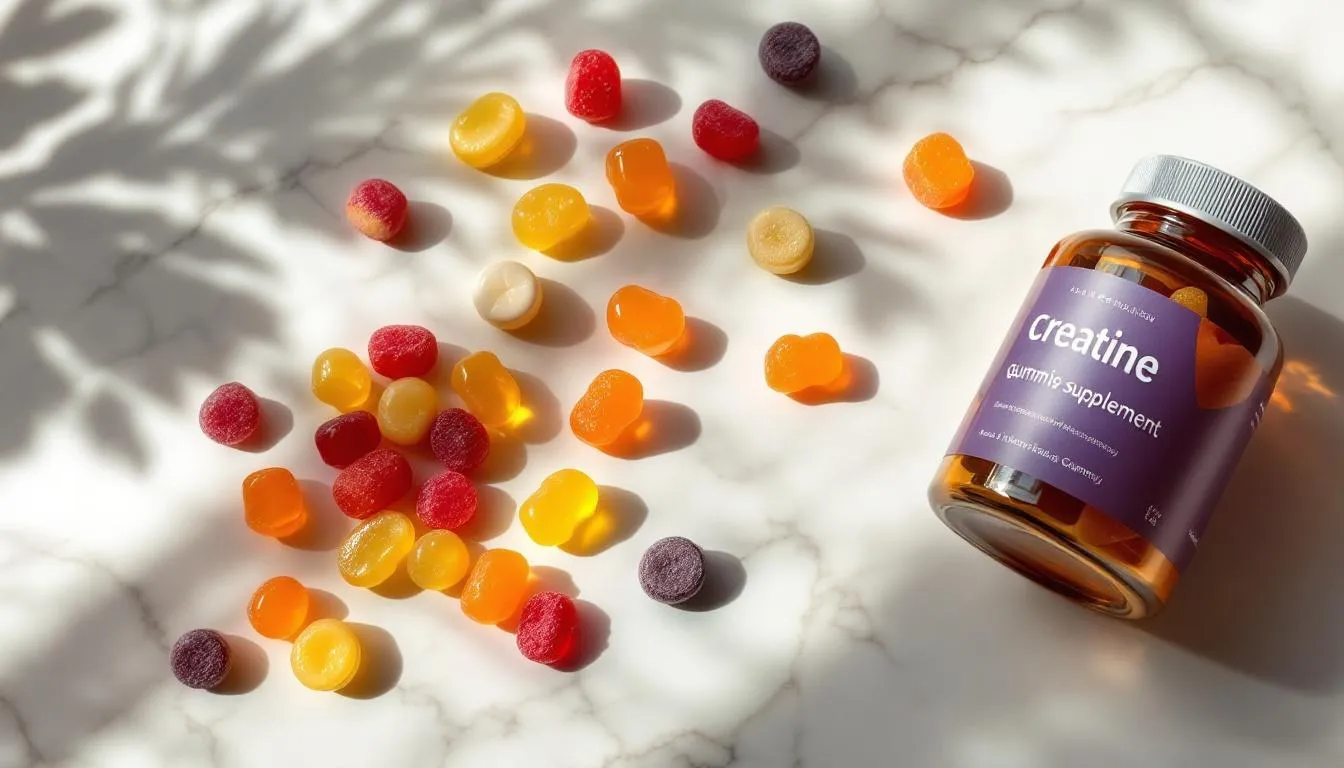
Creatine gummies were supposed to solve everything. No chalky powder. No measuring scoops. No mixing. Just chew five gummies and get your daily 5g of creatine like you're eating candy. Beast Bites was one of the first brands to execute that vision at a premium level, with Creapure sourced from Germany, NSF Certified for Sport status, and packaging that looked like it belonged on a Whole Foods shelf.
People noticed. Search interest in Beast Bites has exploded, and the product is now widely available on Amazon, Walmart, Tiger Fitness, and their own website. The reviews are largely enthusiastic. Five stars, great taste, easy habit to build, no aftertaste.
But in 2024, an independent lab test changed the conversation.
Before you spend $40-plus on a jar of these gummies, there's something you need to know about how creatine behaves inside a gummy, what one major testing program found, and whether Beast Bites is worth it despite those findings. This review covers all of it.

What Beast Bites actually is
Beast Bites Supplements Inc. is a US-based company that makes creatine-infused gummies as their flagship product. The pitch is simple: creatine is one of the most well-researched performance supplements ever studied, and most people just don't enjoy taking it in powder form. Gummies fix that.
Their main product delivers 5g of Creapure creatine monohydrate per serving, which is 5 gummies. At 30 servings per tub, you're getting a full month's supply. They're vegan, kosher, non-GMO, gluten-free, and made without artificial colors or flavors.
On paper, this looks like a serious supplement. Not a gimmick.
The Creapure certification alone sets them apart from most creatine gummies. And NSF Certified for Sport is not easy to get. It's the gold standard for sport supplement certification, used by professional athletes because NSF independently tests for banned substances and verifies label claims. If you're an elite athlete subject to anti-doping testing, NSF certification is genuinely meaningful.
So Beast Bites looked credible. And then the lab results came out.
Why creatine is worth caring about
Before getting into the testing controversy, it's worth anchoring why this matters. Creatine is not a hyped supplement with weak evidence behind it. It's one of the most studied ergogenic aids in sports science, with thousands of clinical trials and decades of data.
Here's how it works. Your muscles store creatine as phosphocreatine. When you do high-intensity activity, your body uses phosphocreatine to rapidly regenerate ATP, your primary energy currency. More phosphocreatine in your muscles means more explosive power output, faster recovery between sets, and more total work done per training session.

A 2003 meta-analysis in Medicine & Science in Sports & Exercise found that creatine supplementation increased lean body mass by 0.36% per week when combined with resistance training. The effect on strength is similarly consistent. Short bouts of high-intensity work, especially repeated sprint efforts and resistance training, improve meaningfully with regular creatine use.
The cognitive benefits are newer but real. A 2018 study in Nutrients found that creatine improved cognitive performance, particularly under conditions of mental fatigue or sleep deprivation. For longevity-focused people, this is interesting because creatine appears to support mitochondrial function, which declines with age.
WinAging covers creatine in depth across several guides, and the consensus is clear: if you're going to take one performance supplement, creatine monohydrate is the one backed by the most robust evidence. The question isn't whether to take creatine. It's whether Beast Bites gummies are a reliable way to get it.
Use the WinAging creatine calculator to figure out your optimal daily dose based on body weight before choosing a product.
What Creapure actually means
Beast Bites markets Creapure heavily, and they should, because it matters. Creapure is the brand name for creatine monohydrate manufactured by Alzchem at their facility in Trostberg, Germany. It's become the purity benchmark for creatine.
Standard creatine monohydrate can contain trace impurities like dihydrotriazine, a byproduct of the manufacturing process. These impurities are generally considered low-risk, but they're present. Creapure's production method eliminates most of them, resulting in 99.9% purity verified by HPLC testing at the source.
For a powder, this matters. You get Creapure creatine, mix it in water, and drink it. The creatine goes into solution briefly, then gets absorbed. Simple.
For a gummy, the story gets complicated. And this is where the Beast Bites situation gets interesting.
The creatine gummy stability problem
Here's something the creatine gummy industry doesn't advertise: creatine monohydrate is stable in powder form, but it's not stable in water. When creatine is dissolved in water, especially in the presence of heat or acid, it slowly converts to creatinine, a metabolic waste product. Creatinine has no ergogenic benefit whatsoever.
Gummies are made with water. They're wet by nature. The gummy base, typically tapioca syrup or corn syrup, holds moisture throughout the product's shelf life. So every day that a creatine gummy sits on a shelf, some percentage of the creatine inside it is converting to creatinine.
The manufacturing process makes this worse. Gummies are produced with heat, which accelerates the conversion. By the time a product reaches you, through manufacturing, shipping, warehouse storage, and retail handling, a meaningful amount of the creatine may already be gone.
This isn't a Beast Bites-specific problem. It's a structural problem with the gummy format for creatine specifically.
Supplement company NOW Foods tested twelve creatine gummy brands using high-performance liquid chromatography (HPLC) in early 2024. The results were alarming. Six out of twelve brands, exactly 46%, failed to meet their label claims. The specific failure mechanism varied, but the primary culprit was creatine degradation to creatinine.
Beast Bites was on the failed list.
What the NOW Foods test found about Beast Bites
NOW Foods' March 2024 testing program was one of the most comprehensive independent assessments ever done on creatine gummies. They purchased products commercially, just like a consumer would, and tested them using HPLC with a creatine reference standard of known concentration.
Beast Bites failed to meet its 5g-per-serving label claim. The specific finding: large amounts of creatinine were detected in the Beast Bites product, which is consistent with significant creatine degradation. The creatine didn't disappear. It converted. And creatinine is useless to you.
This is significant because Beast Bites claims to use Creapure, which starts at 99.9% purity. The failure isn't about what goes into the gummy during manufacturing. It's about what happens to that creatine over time inside the gummy matrix.
There's an additional layer of complexity here. NOW Foods noted that even third-party labs they usually trust had difficulty testing creatine gummies accurately. The gummy matrix complicates standard HPLC procedures. So the testing landscape for gummies is genuinely harder than for powders. Some of the failure rate may reflect testing challenges rather than catastrophic product failure. But that uncertainty cuts both ways: you also can't be confident the label claim is accurate.
SuppCo ran their own testing in 2025 with similar methodology. Four out of six creatine gummies failed identity and potency testing. Some products tested had essentially no detectable creatine, delivering as little as 0.09% of the claimed dose. Beast Bites was among the products showing degradation.
The pattern is clear. Creatine gummies, as a category, have a reliability problem that powder and capsules simply don't have.
The NSF certification paradox
Here's where it gets genuinely confusing. Beast Bites is NSF Certified for Sport. You can verify this on the NSF Sport website. So how does a product pass NSF certification but fail independent creatine potency testing?
NSF Certified for Sport primarily tests for two things: the presence of banned substances and basic label claim verification. Their testing is done at a point in time, usually on product samples submitted by the manufacturer, under controlled conditions. It does not continuously monitor every batch, and it doesn't account for the degradation that happens during retail storage.
In other words, Beast Bites gummies may have contained the labeled amount of creatine when they were first manufactured and submitted to NSF. By the time consumers bought them off Amazon or from a supplement retailer months later, the creatine had partially converted to creatinine.
This is not fraud in the obvious sense. It's a stability failure. And it's a gap in how certification programs handle perishable supplement formats.
The NSF certification is still worth something for what it's designed to test. You're not going to fail a drug test because of Beast Bites. But for the core promise of the product, delivering 5g of active creatine per serving, certification doesn't guarantee what you care about most.
The sugar reality
Beast Bites gummies contain cane sugar and tapioca syrup as the gummy base. Depending on the formulation you buy (they have a few variants), each 5-gummy serving contains around 5-8g of added sugar.
That's not catastrophic. But it's worth knowing if you're managing carbohydrate intake or following a low-sugar diet. Creatine powder has zero sugar. If you're doing five servings per week, that's potentially 25-40g of extra sugar per week from your creatine supplement alone.
The gummies also contain steviol glycosides, a natural sweetener, presumably to enhance the sweetness without adding more sugar. But the base sugar content is non-trivial.
For longevity-focused users who track their sugar intake carefully, this is a consideration. For most people doing moderate training, it's probably not a dealbreaker. But you should know it's there.
What Beast Bites does well
It would be unfair to write this off entirely. Beast Bites does several things right.
Flavor and compliance. People actually take these consistently. That matters more than most people realize. Creatine only works when you take it every day without missing doses. If gummies make that habit stick and powder doesn't, the gummies might net you better results even if the dose is slightly less reliable.
Ingredient sourcing. Creapure from Germany is a legitimate quality ingredient. No artificial colors, no artificial flavors, vegan, kosher. The clean ingredient list is genuinely clean.
Third-party testing framework. NSF Certified for Sport has real value for athletes concerned about contamination and banned substances. For competitive athletes, this matters.
Taste. The reviews consistently praise the flavor. Blue raspberry, watermelon, and other options. If you struggle with the chalky texture of creatine powder, this is a genuine upgrade in experience.

The convenience argument is real. Gummies are portable. You can travel with them without worrying about powder spilling, customs questions about unlabeled powder in baggies, or mixing facilities. For people who travel a lot, this is a meaningful advantage.
Who should consider Beast Bites
Despite the testing concerns, there are people for whom Beast Bites makes sense.
If you've tried creatine powder and simply won't take it consistently, gummies are worth considering. A slightly less reliable dose that you take every day beats a perfect dose you skip because you hate the experience. Creatine saturation is what drives the benefit, and saturation requires consistency above all else.
If you're an athlete in a sanctioned sport who needs NSF certified products to stay compliant with anti-doping rules, the NSF certification has value that transcends the potency question. You're buying peace of mind on the banned substance front.
If you want a portable creatine option for travel and don't want to deal with powder logistics, the trade-off might be worth it to you.
But go in with realistic expectations. You may be getting somewhat less than 5g of creatine per serving. You might consider taking 6-7 gummies instead of the recommended 5 to account for potential degradation. And if you're serious about optimizing performance, you should probably be pairing this with lab tracking anyway.
Check your biological age calculator to get a baseline before starting any new supplement protocol. Creatine affects several biomarkers and it's useful to track changes over time.
Who should skip Beast Bites
If you're purely optimizing for creatine delivery and cost effectiveness, Beast Bites is probably not your best option.
Pure creatine monohydrate powder, even Creapure powder from a reputable supplier, costs significantly less per gram than creatine gummies. You can get 30 servings of Creapure powder for around $15-20, versus $40-plus for the gummies. That's roughly twice the cost for a product with less reliable potency.
If you don't have an issue with powder, there's no rational reason to pay a premium for less reliability.
People with tight sugar budgets will want to note the added sugar content. And if you're following a strict keto or low-carb protocol, the tapioca syrup and cane sugar might conflict with your goals.
For deep dives into the creatine format debate, the creatine gummies vs powder guide breaks down the trade-offs in detail. And if you're deciding between standard and micronized versions, creatine monohydrate vs micronized covers the absorption differences.
The cost breakdown
Let's put actual numbers on this.
Beast Bites typically runs $40-50 for 30 servings (150 gummies). That's $1.33-1.67 per serving, or $40-50 per month.
Creapure powder from a quality supplier runs $15-25 for 30 servings. That's $0.50-0.83 per serving, or $15-25 per month.
You're paying roughly 2-3x more for the gummy format. If the gummies delivered identical creatine per serving with the same reliability, some people would find the premium worth it for convenience. But given the lab testing data showing degradation, you're paying more for potentially less.
This doesn't mean Beast Bites is a scam. The price reflects manufacturing complexity, better packaging, better flavor, and the NSF certification overhead. These aren't nothing. But you should understand what you're paying for.
If budget is a consideration, check the supplement interaction checker to see how creatine stacks with whatever else you're taking. Sometimes you can drop a supplement that's redundant, freeing up budget for higher-quality versions of what actually matters.
What the research says about creatine gummies in general
The creatine gummy industry is young. The format became popular after 2020 when the gummy supplement trend in general exploded. The stability research is still catching up.
What we know from the testing done so far:
Independent lab testing in 2024 and 2025 found roughly 40-50% of creatine gummies on the market contained significantly less creatine than labeled. NOW Foods tested 12 brands and 6 failed. SuppCo tested 6 brands and 4 failed.
The primary failure mechanism is creatine-to-creatinine conversion during manufacturing and storage. This happens because the gummy matrix contains water and the manufacturing process involves heat.
Some brands have started using encapsulated creatine or alternative methods to reduce water contact during gummy production. This may improve stability. But the technology isn't mature yet, and not all manufacturers are transparent about their stability testing.
A few brands did pass the NOW Foods testing: Bear Balance, Bod, Effective Nutra, Iron Labs Nutrition, Peach Perfect, and Zhou. If you want creatine in gummy form specifically, these might be worth investigating. But the broader lesson is to look for brands that publish batch-specific stability testing data, not just point-in-time certifications.
A word on instantized creatine
If you want creatine that mixes easily and goes down smooth, instantized creatine powder is worth knowing about. Instantized creatine is micronized to an extremely fine particle size, then treated to improve dispersibility in water. It mixes completely clear in most beverages, with no clumping, no settling, and no gritty texture.
For people who dislike standard creatine powder because of texture, instantized versions solve that problem without the stability trade-offs of the gummy format. You get a precisely measured dose, zero sugar, lower cost, and the same portability in a small plastic zip bag or travel container.
It's worth knowing the option exists before defaulting to gummies.
Building the right creatine protocol
Whether you use Beast Bites or powder, the fundamentals of creatine dosing are the same.
Daily dose: 3-5g per day is the research-backed range. 5g is the most common recommendation. Larger individuals (over 200 lbs) may benefit from the higher end.
Loading phase: Optional. Some people load with 20g per day for 5-7 days to saturate muscles faster, then drop to maintenance. Others skip loading entirely and reach saturation in 3-4 weeks at 5g daily. Either works.
Timing: Doesn't matter much. Post-workout might have a slight edge in some studies, but the effect is small. Consistency matters far more than timing. Take it whenever you'll remember to take it every day.
Cycling: No evidence that cycling is necessary or beneficial. Take it year-round.
Water intake: Creatine draws water into muscle cells. Drink enough water, especially during the loading phase. Mild cramping or upset stomach from creatine is almost always a hydration issue.
Use the WinAging creatine calculator to get your personalized dosing recommendation based on body weight, training goals, and whether you want to run a loading phase.

Frequently asked questions
Are Beast Bites creatine gummies legitimate?
Beast Bites is a real company with real certifications. They use Creapure, which is high-purity creatine monohydrate from Germany, and they hold NSF Certified for Sport status. The concern is not with the company's legitimacy but with the stability of creatine in gummy form. Independent lab testing found that Beast Bites, like many creatine gummy brands, shows evidence of creatine-to-creatinine conversion during storage.
How many Beast Bites do you take per day?
The recommended dose is 5 gummies per day, which provides 5g of creatine monohydrate per the label claim. Given the degradation concerns from lab testing, some users take 6-7 gummies to try to compensate. Use the creatine calculator to confirm your target dose based on body weight.
Did Beast Bites fail lab testing?
Yes. Beast Bites was included in NOW Foods' March 2024 testing of 12 creatine gummy brands, and was among the 6 out of 12 that failed to meet label claims. The failure was attributed to high levels of creatinine, indicating the creatine had degraded. This doesn't mean the product is unsafe, but it raises questions about potency reliability.
Is Beast Bites NSF certified?
Yes, Beast Bites Creatine Infused Gummies are listed on the NSF Sport certified products database. NSF certification primarily verifies the absence of banned substances and basic label accuracy at the time of testing. It does not continuously monitor potency throughout the product's shelf life.
Are creatine gummies better than powder?
Creatine powder is more reliable. It delivers a precise, stable dose with no degradation concerns, lower cost per serving, and no added sugars. Gummies offer convenience and better taste, which improves compliance for some people. If you genuinely won't take powder consistently, gummies might produce better real-world results despite the format trade-offs. The creatine gummies vs powder guide covers this in depth.
What is Creapure creatine?
Creapure is a branded form of creatine monohydrate made by Alzchem in Germany. It's produced to 99.9% purity, free from common manufacturing byproducts found in generic creatine. Beast Bites uses Creapure as their creatine source. The raw ingredient is high quality. The stability issue with Beast Bites is about what happens to that creatine inside the gummy matrix over time, not about the starting material.
Can I take creatine gummies while on other supplements?
Creatine is generally well-tolerated and has few interactions with common supplements. Run your full stack through the supplement interaction checker to flag anything worth discussing with your doctor, especially if you're taking medications that affect kidney function.
How long does it take for creatine to work?
At 5g daily without a loading phase, most people reach meaningful muscle creatine saturation within 3-4 weeks. Performance improvements in high-intensity exercise are typically noticeable around the 3-4 week mark. With a 20g loading phase for 5-7 days, saturation happens faster, often within 5-7 days.
Want a personalized stack tailored to your goals? Try the AI protocol builder to get a custom longevity protocol in minutes.
Related guides
- Creatine gummies vs powder: which is better?
- Creatine monohydrate vs micronized: what's the difference?
- Instantized creatine: what it is and when to use it
- Supplement interaction checker
- Free longevity tools
Sources
- NOW Foods creatine gummy testing results - Nutraceuticals World
- SuppCo creatine gummy lab testing - SuppCo
- Creapure purity and quality - Creapure.com
Creatine is one of the few supplements where the science is unambiguous. It works. The debate with Beast Bites isn't whether creatine works. It's whether you're reliably getting creatine. Given what independent testing found, that's a legitimate question. If gummies are the only format you'll actually stick to, Beast Bites is among the more credible options in a category with serious quality problems. But if you're open to powder, you'll get more creatine per dollar with better reliability. Start with our free tools to build a protocol that actually makes sense for your goals, not one that sounds good on a label.