NAD pen: does the injection pen actually work?
NAD+ pens deliver near-100% bioavailability at a fraction of IV cost. Here's what the science says about subcutaneous NAD injections, dosing, and whether it beats oral NMN.
import { QuickAnswerBox, TableOfContents, TipBox, WarningBox, InfoBox, StatsGrid, FAQSection, RelatedGuides, DataTable, NumberedSteps } from '@/components/articles'
NAD+ IV drips used to be the only serious option if you wanted to bypass your gut and flood your cells with the molecule. You'd book a clinic, sit for two to four hours while a bag slowly emptied into your vein, and pay anywhere from $300 to $1,000 for the privilege. Some people did it monthly. Some biohackers did it weekly.
Then the NAD pen changed the math.
A NAD pen is a prefilled or compounding-pharmacy-sourced injectable device that lets you give yourself a subcutaneous NAD+ injection at home. Subcutaneous means under the skin, into the fat layer, not into a vein. Think of how a diabetic self-injects insulin. Same general idea. Takes about thirty seconds. Doesn't require a clinic. Doesn't require a nurse. Costs a fraction of what IV therapy runs.
But the question people actually want answered isn't "what is it." It's "does it actually work?" Does subcutaneous delivery get enough NAD+ into your cells to make a difference? How does it compare to oral NMN or NR? Who benefits most? And what does a real dosing protocol look like?
This guide answers all of that. We'll cover the science behind NAD+ decline, how the pen delivers the compound, the honest comparison between delivery methods, dosing protocols used by leading providers, side effects worth knowing about, and how to decide if an NAD pen belongs in your stack.
<QuickAnswerBox title="NAD pen: the short answer" answer="An NAD pen delivers NAD+ via subcutaneous injection for near-100% bioavailability, hitting circulation in 1-2 hours. It achieves roughly 80-90% of IV therapy's effect at 5-10% of the cost. Typical dosing is 100mg injections 2-3x per week after a loading phase. For most people, high-quality oral NMN or NR is still the most practical starting point. The pen makes sense once you've maxed out oral supplementation and want a precision boost." stats={[ { value: "~100%", label: "Subcutaneous bioavailability" }, { value: "1-2 hrs", label: "Time to peak blood NAD+" }, { value: "$50-200", label: "Monthly cost (injections)" }, { value: "50%+", label: "NAD+ decline by middle age" } ]} />
<TableOfContents items={[ { id: "what-is-nad-pen", text: "What an NAD pen actually is" }, { id: "nad-decline-aging", text: "Why NAD+ declines with age" }, { id: "how-it-works", text: "How subcutaneous delivery works" }, { id: "delivery-comparison", text: "NAD pen vs IV vs oral: real comparison" }, { id: "dosing-protocol", text: "Dosing protocol and timing" }, { id: "brands-products", text: "Brands and where to source" }, { id: "side-effects", text: "Side effects and safety" }, { id: "who-should-use", text: "Who should consider it" }, { id: "stacking", text: "Stacking with other compounds" }, { id: "faq", text: "Frequently asked questions" }, ]} />
What an NAD pen actually is {#what-is-nad-pen}
NAD stands for nicotinamide adenine dinucleotide. It's a coenzyme found in every cell in your body. Without it, cells can't produce energy. Without it, DNA repair enzymes can't do their jobs. Without it, the sirtuins that regulate gene expression and protect against cellular aging go silent.
The "pen" format is borrowed from insulin delivery. You get a prefilled injection device or a vial-and-pen combination, loaded with pharmaceutical-grade NAD+ in solution. When you're ready to dose, you pinch a bit of skin on your abdomen or thigh, insert a short thin needle into the subcutaneous fat layer just below the skin, and depress the plunger. Done. The whole thing takes less than thirty seconds.
Some people source these through compounding pharmacies that require a prescription. Others use direct-to-consumer brands operating in jurisdictions where NAD+ is sold as a supplement rather than a drug. The specific setup varies, but the delivery method is the same: subcutaneous fat tissue absorbs the compound, and it enters systemic circulation from there.
What makes this interesting compared to an IV drip isn't the experience. It's the economics and the convenience. An IV session requires a clinic, a practitioner, and a significant block of time. A subcutaneous pen takes under a minute, you can do it at home, and you can dose more frequently at a lower per-session cost. For people who want to maintain elevated NAD+ consistently rather than spiking it once a month, that difference matters.
The NAD+ in these pens is the actual molecule, not a precursor like NMN or NR. This is worth understanding because NAD+ itself can't easily cross cell membranes directly, which raises the legitimate question of whether injecting it actually gets it inside cells or just into circulation. We'll get into that in detail. The short version: the mechanism is more indirect than it appears, and that changes how you should think about the pen versus precursor supplementation.
Why NAD+ declines with age {#nad-decline-aging}
By the time you're 40, you probably have about half the NAD+ you had at 20. By 60, levels can be 40-60% lower than peak. This isn't a slow drift. It's a meaningful decline that affects cellular function across every organ system.
Two main forces drive this decline.
The first is reduced production. The enzyme NAMPT (nicotinamide phosphoribosyltransferase) is the rate-limiting step in the major pathway cells use to recycle and synthesize NAD+. NAMPT activity decreases with age. Less NAMPT means less NAD+ production, regardless of how much precursor substrate is available.
The second is increased consumption. NAD+ gets used up by enzymes that become more active as cellular stress accumulates with age. PARP1 (poly ADP-ribose polymerase 1) consumes massive amounts of NAD+ when it's activated by DNA damage. More DNA damage with age means more PARP1 activity means more NAD+ depleted. CD38, another NAD+-consuming enzyme, becomes more active with age too. Chronic inflammation drives CD38 upregulation, and inflammation tends to increase as we get older.
The result is a double-squeeze. Production falls. Consumption rises. NAD+ levels crash.
This matters because NAD+ depletion has measurable downstream effects. Sirtuins, the family of proteins most associated with longevity research, are NAD+-dependent deacetylases. SIRT1 regulates metabolism, inflammation, and mitochondrial biogenesis. SIRT3 protects mitochondrial function. SIRT6 is involved in DNA repair and telomere maintenance. When NAD+ drops, sirtuin activity falls with it. And when sirtuins go quiet, a cascade of cellular aging processes accelerates.
Mitochondria suffer too. NAD+ is essential for the electron transport chain, the molecular machinery that converts food into ATP. Lower NAD+ means impaired mitochondrial function, reduced energy production, more reactive oxygen species, and a feedback loop that makes everything worse.
The 2023 study published in Science made headlines because it demonstrated that taurine supplementation extended lifespan in rodents. Less noticed was the broader finding: multiple nutrients and coenzymes, NAD+ among them, decline significantly with age across species, and restoring them shows measurable benefit. NAD+-focused research has been accumulating for years. The biological case for maintaining higher NAD+ levels is solid, even if the optimal delivery method is still actively debated.
WinAging's biological age calculator can give you a baseline picture of where you stand, which is worth having before you start optimizing any longevity stack.
How subcutaneous delivery works {#how-it-works}
Subcutaneous injection delivers a compound into the tissue layer just beneath your skin but above your muscle. This fat layer is well-vascularized, meaning it has a good blood supply. Compounds injected here get absorbed into capillaries and lymph vessels, then enter systemic circulation.
The bioavailability of subcutaneous NAD+ injection is effectively near 100%. Nothing is lost to digestion, stomach acid, first-pass liver metabolism, or gut microbiome breakdown. What goes in gets absorbed. Blood NAD+ levels rise within one to two hours. Some people notice an energy or focus shift within hours of their first injection.
Compare this to oral supplementation: direct oral NAD+ has poor bioavailability because NAD+ doesn't survive the gut well. It gets broken down into fragments before meaningful absorption can occur. That's why oral precursors like NMN and NR became the standard approach. NMN and NR are smaller molecules that survive digestion better, enter cells, and get converted to NAD+ intracellularly. Their bioavailability is estimated at 20-40% depending on the form and formulation.
The interesting twist is that subcutaneous NAD+ doesn't necessarily enter cells as intact NAD+ either. NAD+ is a large, charged molecule. Getting through cell membranes is hard for it directly. What likely happens is that some extracellular NAD+ gets converted to NMN or other intermediates by ectoenzymes on cell surfaces, which then enter cells and get rebuilt into NAD+. Some studies suggest extracellular NAD+ may also signal through receptors without entering cells. The cellular machinery that handles it is more complex than a simple "inject, absorb, done" story.
What this means practically: subcutaneous NAD+ injection does raise intracellular NAD+ levels. Multiple clinical measurements confirm this. The mechanism is just less direct than the marketing usually implies. And it's why some researchers argue that oral NMN or NR, which enter cells more directly and convert to NAD+ intracellularly, might actually be more efficient per milligram.
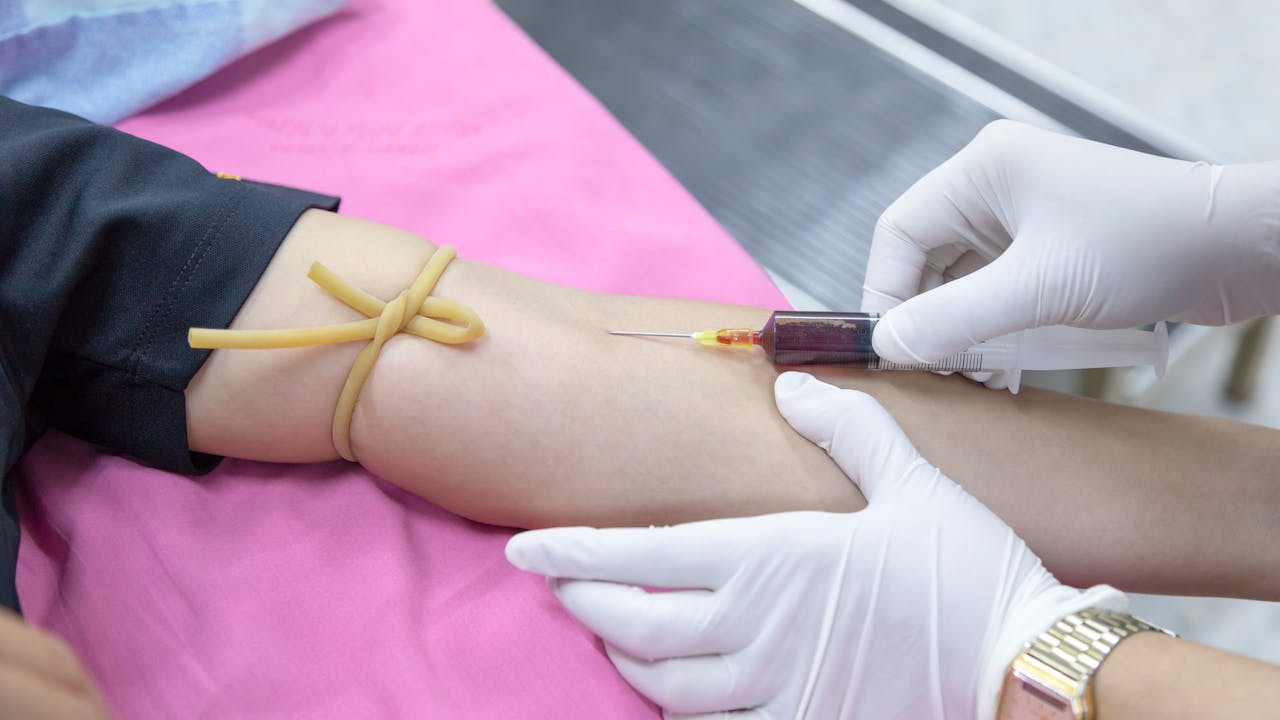
The injection itself is much less intimidating than it sounds. The needles used are short (typically 4-8mm) and fine gauge. Most people rate the sensation as a mild pinch or nothing at all. The abdomen, outer thigh, and back of the upper arm are the most common sites. Rotate sites to avoid localized irritation.
NAD pen vs IV vs oral: real comparison {#delivery-comparison}
This is where the practical decisions get made. Three delivery options exist for elevating NAD+. Each has a distinct profile of bioavailability, cost, convenience, and evidence.
<DataTable headers={["Method", "Bioavailability", "Time to effect", "Cost/month", "Convenience"]} rows={[ ["Oral NMN/NR", "20-40%", "Days to weeks", "$30-80", "Very high"], ["NAD pen (subcut.)", "~100%", "1-2 hours", "$50-200", "High"], ["IV NAD+ therapy", "100%", "During infusion", "$300-2000+", "Low"], ]} />
Oral NMN and NR are still the most-studied, most accessible entry point. They're backed by multiple randomized controlled trials showing they safely and reliably raise NAD+ metabolites in humans. A 2023 study in NPJ Aging found NMN well-tolerated up to 2,000 mg per day in a double-blind trial. The cost is manageable. The dosing is simple. If you're not yet doing any NAD+ supplementation, starting with oral NMN or NR is the rational first move. WinAging's NAD vs NMN guide breaks down the comparison in detail.
Subcutaneous injection (the pen) offers a step up in bioavailability. You bypass the gut entirely and get consistent delivery. The boost in blood NAD+ is faster and more pronounced than oral supplementation. Providers estimate subcutaneous injections achieve 80-90% of what IV therapy delivers at roughly 5-10% of the cost. For people who've plateaued on oral supplementation or who want a more precise approach, this is a meaningful upgrade.
IV NAD+ therapy delivers 100% bioavailability and a rapid, high-amplitude boost. It's also the most studied route in clinical settings. The research on IV NAD+ in addiction medicine, for instance, is substantive. For acute optimization purposes or loading phases before a major performance event, IV therapy has its place. But the cost, time commitment, and need to go to a clinic make it impractical as a regular maintenance strategy for most people. If you're curious about what to expect from a session, this guide on how long NAD IV lasts covers the timeline.
One important counterpoint comes from Dr. Eric Verdin, president of the Buck Institute for Research on Aging. He's noted publicly that when NAD+ is injected, some of it gets broken down to nicotinamide before entering cells, and that oral precursors like NMN or NR, which enter cells more cleanly, may be a better bet per milligram for most people. This isn't a reason to dismiss the pen. It's a reason to not assume that higher bioavailability of NAD+ in blood automatically translates to proportionally higher intracellular NAD+. The conversion step still happens, just in a different location.
For most people doing longevity optimization, the practical hierarchy is: start with oral NMN or NR, get that dialed in, then consider adding subcutaneous injections when you want a more aggressive approach or when you've plateaued on oral supplementation alone.
Dosing protocol and timing {#dosing-protocol}
Dosing for subcutaneous NAD+ injections follows two phases: loading and maintenance. Both are based on protocols from Jinfiniti, Empower Pharmacy, and other compounding providers who have worked with the most patients.
<NumberedSteps steps={[ { title: "Start with a tolerance test", description: "Begin with 0.1 mL (approximately 20 mg) to check your individual response. Some people experience mild nausea or flushing at higher doses when starting. A small test dose lets you assess tolerance before committing to full protocol doses." }, { title: "Loading phase (days 1-10)", description: "Once tolerance is confirmed, do 100-200 mg daily for 7-10 consecutive days. This saturates depleted cellular reserves. Think of it as filling an empty tank. Most people notice the clearest effects during this phase because they're going from significantly depleted to replete quickly." }, { title: "Transition to maintenance", description: "After loading, shift to 50-100 mg injected 2-3 times per week. This maintains elevated NAD+ without continued daily dosing. Most providers land on 100 mg, 2x per week as the standard maintenance protocol for healthy adults." }, { title: "Dose in the morning", description: "NAD+ drives cellular energy production. Morning dosing aligns with your natural circadian rhythm and avoids potential sleep disruption that some people report with afternoon or evening injections. Take it after waking, before or with breakfast." }, { title: "Reassess at 6-8 weeks", description: "If you can get an intracellular NAD+ test (Jinfiniti offers one), measure at baseline and again after 6-8 weeks on the protocol. This gives you objective data on whether your dosing is actually moving the needle. Adjust from there." } ]} />
Body weight affects optimal dosing. Providers typically suggest 1-2 mg/kg as a maintenance dose guideline. Someone weighing 70 kg (154 lbs) might land comfortably at 100 mg per session. A larger person might need 150 mg to see comparable effects.
Injection frequency depends on your goals. People managing cognitive demands or physical performance often dose three times per week. People using it for general longevity maintenance tend to find twice weekly sufficient. Daily dosing after the loading phase is generally unnecessary and adds cost without proportional benefit.
Store your NAD+ solution according to the manufacturer's instructions. Most formulations require refrigeration and should be used within the stated window after opening. NAD+ in solution degrades over time, particularly at room temperature or in light.
Brands and where to source {#brands-products}
The NAD pen market is fragmented between prescription compounding pharmacy sources and direct-to-consumer supplement brands. The distinction matters.
Compounding pharmacies (like Empower Pharmacy or Walnut Creek Aesthetics) produce pharmaceutical-grade NAD+ for injection under regulatory frameworks. These typically require a prescription from a physician, usually a telehealth provider specializing in longevity or functional medicine. The quality standards are higher. The traceability is better. If you're serious about injection therapy, this is the preferred sourcing route.
Direct-to-consumer brands like NAD+ at Home (nadplusathome.com) operate differently, often shipping prefilled pens internationally or into markets where NAD+ isn't classified as a prescription drug. Quality can vary significantly. If you go this route, look for brands that publish third-party purity testing. Anything going under your skin should have verifiable quality standards.
Jinfiniti is worth mentioning separately. They focus heavily on the testing side, offering intracellular NAD+ measurement that most other players don't provide. Their dosing guidance and protocol documentation is among the most detailed available.
Pricing varies by source:
- Compounding pharmacy vials with pen: typically $80-200 per month for maintenance dosing
- Direct-to-consumer pens: often $60-150 per month
- In-clinic subcutaneous sessions (if not self-administering): $50-100 per session
Compare that to IV NAD+ at $300-1,000+ per session, and the economics of the pen format become obvious.
Side effects and safety {#side-effects}
NAD+ has a strong safety profile in published research. A review covering 10 studies with 489 participants showed that NAD+ supplementation across forms was safe to use, with mostly mild and transient adverse effects.
The most commonly reported side effects with subcutaneous injection specifically:
Injection site reactions. Mild redness, minor swelling, or localized tenderness where you inject. This usually resolves within hours. Rotating injection sites and warming the solution to room temperature before injecting both help.
Flushing or warmth. Some people experience a brief sensation of heat or flushing after injection, especially at higher doses or during the loading phase. This typically fades within an hour and usually diminishes after the first few injections as your body adjusts.
Nausea. Reported by a minority of users, particularly at the higher end of dosing or during loading. Starting at the lower tolerance-test dose reduces this significantly. Taking the injection with a small amount of food also helps.
Headache. Occasionally reported, usually in the first few days of loading. Tends to resolve as NAD+ levels stabilize.
Energy disruption. A small number of people report difficulty sleeping if they dose later in the day. Stick to morning injections.
What about longer-term safety? A 2022 review flagged potential concerns about adverse effects on the kidney, liver, pancreas, and stomach at very high doses or in specific populations. At the doses used in NAD pen protocols (50-200 mg, 2-3 times weekly), these concerns aren't well-supported by evidence. But it's a reason to be thoughtful rather than aggressive with dosing, particularly if you have pre-existing conditions in any of those organ systems.
One nuance worth knowing: extremely high NAD+ could theoretically over-activate PARP1, which consumes NAD+ in large amounts when activated by DNA damage signals. Some researchers have speculated this could be a concern at very high supplementation doses. There's no clinical evidence this is a real problem at standard doses, but it's a reason to avoid the "more is always better" mindset.
Check potential interactions with other compounds you're taking using WinAging's supplement interaction checker before adding NAD+ injections to your stack.
Who should consider it {#who-should-use}
An NAD pen is not the right first step for most people. Here's a realistic picture of who it makes sense for.
Strong candidates:
People who've been taking oral NMN or NR consistently (six months or more) and want to see if higher bioavailability delivery produces a noticeably different effect. People with confirmed low intracellular NAD+ from a Jinfiniti or similar test. People doing intensive physical training who want faster recovery and better cellular energy availability. People in their 50s, 60s, and beyond where NAD+ decline is more pronounced and the biological rationale is stronger. People who've tried IV NAD+ therapy, liked the results, but can't justify the cost or time of regular clinic visits.
Less clear candidates:
People under 35 who haven't tried oral precursors. People who aren't consistently doing the foundational longevity basics: sleep, exercise, nutrition, stress management. People looking for a quick fix rather than a sustained protocol. The pen works best as part of a serious, comprehensive approach, not as the first supplement you throw at the problem.
Not recommended:
People with active cancer or a history of cancer should consult an oncologist before any NAD+ supplementation. NAD+ supports DNA repair and cellular proliferation, and the implications for cancer cells specifically require careful evaluation by a knowledgeable physician. Pregnant or breastfeeding women should avoid injectable NAD+ until adequate safety data exists. People with serious kidney disease should get medical guidance before supplementing.

Age matters here in a real way. The biological rationale for NAD+ supplementation gets stronger as you get older, simply because the decline is more substantial and the downstream effects are more pronounced. A 60-year-old with 40% of their youthful NAD+ levels has more to gain from restoration than a 30-year-old who hasn't declined much yet.
If you're not sure where to start building a longevity protocol that actually makes sense for your age, goals, and health status, WinAging's AI protocol builder pulls together a personalized stack based on your specific profile rather than generic recommendations.
Stacking with other compounds {#stacking}
NAD+ doesn't work in isolation. It's part of a broader cellular network, and several compounds interact with it meaningfully.
NMN or NR (oral). Many people combine subcutaneous NAD+ injections with oral NMN or NR. The idea is that injections provide the rapid high-bioavailability dose, while oral precursors provide a sustained background supply between injection days. There's no evidence this combination is harmful. Whether it produces meaningfully better results than injections alone is unclear.
TMG (trimethylglycine). As NAD+ metabolism increases, it can produce more methyl-consuming metabolites. TMG donates methyl groups and helps compensate for this. If you're taking high doses of any NAD+ precursor or supplementing directly, adding 500-1,000 mg TMG per day is a reasonable precaution many practitioners recommend.
Resveratrol and NMN. This is David Sinclair's publicly discussed stack. Resveratrol activates SIRT1, an NAD+-dependent sirtuin. More available NAD+ means more substrate for the sirtuins that resveratrol activates. The combination is synergistic in theory. The clinical evidence in humans is still developing.
Berberine. Berberine activates AMPK and has indirect effects on NAD+ metabolism through its impact on mitochondrial function. It's a common addition to longevity stacks and doesn't appear to interfere with NAD+ supplementation.
Apigenin. Apigenin inhibits CD38, one of the main enzymes that consumes NAD+ and becomes more active with age. By blocking CD38, apigenin helps preserve NAD+ rather than just replacing what's lost. It's a complementary approach to direct supplementation. Some practitioners include it specifically to extend the effectiveness of NAD+ supplementation between doses.
Timing matters when stacking. NAD+ in the morning. TMG can be taken with NAD+ or separately. Resveratrol is typically taken with a fat-containing meal for better absorption. Berberine is best split across 2-3 daily doses with meals. If you're building a complete longevity stack around NAD+ supplementation, use the supplement interaction checker to verify that your specific combination is safe before you start.
Frequently asked questions {#faq}
<FAQSection questions={[ { question: "Is an NAD pen the same as an NAD+ injection?", answer: "Yes. An NAD pen is a delivery format for subcutaneous NAD+ injection. The 'pen' refers to the delivery device, which looks similar to an insulin pen. The compound is the same: NAD+ in an injectable solution. You can get it as a prefilled pen or as a vial-and-syringe combination from a compounding pharmacy." }, { question: "How does an NAD pen compare to taking NMN orally?", answer: "Oral NMN is a precursor that converts to NAD+ inside cells after being absorbed. Subcutaneous NAD+ injection bypasses the gut and delivers NAD+ directly into circulation with near-100% bioavailability. The pen produces faster, more acute increases in blood NAD+ levels. For most people, oral NMN is the better starting point because of cost and simplicity. The pen is a step up for those who want a more aggressive approach. See our full **NAD vs NMN breakdown** for a detailed comparison." }, { question: "Does subcutaneous NAD+ injection hurt?", answer: "Most people describe the injection as a mild pinch or no sensation at all. The needles used are very short and thin. The technique matters: injecting quickly, using a warmed solution, and rotating sites all reduce discomfort. Side effects at the injection site (mild redness or minor swelling) are common initially but usually fade within hours." }, { question: "How quickly will I feel effects from an NAD pen?", answer: "Blood NAD+ levels rise within 1-2 hours of injection. Some people report a noticeable shift in energy, mental clarity, or focus within a few hours of their first injection. More subtle effects like improved sleep quality or sustained energy across the day tend to accumulate over days to weeks of consistent use. Results vary significantly by individual, baseline NAD+ levels, and overall health status." }, { question: "Do I need a prescription for an NAD pen?", answer: "It depends on your country and source. In the US, NAD+ for injection sourced from a compounding pharmacy typically requires a prescription, which is available through telehealth providers specializing in longevity medicine. Some direct-to-consumer brands operate in regulatory spaces where prescriptions aren't required. Always ensure that any injectable product you use has verifiable quality and sterility testing regardless of the regulatory path." }, { question: "Can I combine an NAD pen with oral NMN or NR?", answer: "Yes. Many practitioners combine subcutaneous injections on injection days with oral NMN or NR on off-days for sustained background NAD+ support. There's no evidence this combination is unsafe. Whether it adds measurable benefit over injections alone is unclear, but the rationale is sound. If you combine them, consider adding TMG (500-1,000 mg daily) to support methylation." }, { question: "What's the difference between subcutaneous NAD+ and IV NAD+?", answer: "Route of delivery and cost. Both deliver NAD+ with near-100% bioavailability. IV goes directly into the bloodstream via a vein over 1-4 hours at a clinic. Subcutaneous goes into the fat layer under the skin and absorbs over 1-2 hours at home. IV produces a faster initial peak. Subcutaneous is far cheaper, more convenient, and achieves an estimated 80-90% of IV therapy's effect. For details on the IV experience, see our guide on **how long NAD IV lasts**." }, { question: "How long does it take for NAD injections to work?", answer: "Blood NAD+ levels rise within hours of injection. But cellular NAD+ replenishment and downstream effects like improved mitochondrial function and sirtuin activity build over days to weeks of consistent dosing. Most people doing a proper loading protocol notice meaningful effects within the first 1-2 weeks. For a sustained protocol, expect the most significant benefits to accumulate over 6-8 weeks." } ]} />
Related guides
- NAD vs NMN: which actually works better for aging?
- How long does NAD IV last?
- Taurine injection: what it is and should you get one?
- Supplement interaction checker
- Biological age calculator
Sources
- NAD+ Injection Dosage Chart, Protocol, and Safety - Jinfiniti
- NAD+ Injections vs. Oral NAD Supplements - Jinfiniti
- Targeting NAD Metabolism for Neurodegenerative Diseases - Neuroscience Bulletin
An NAD pen won't replace solid fundamentals. Sleep, resistance training, time-restricted eating, stress management. Those move the needle more than any supplement.
But if you've built a real longevity practice and you're looking for a precision upgrade to your cellular energy systems, the pen is a legitimate tool. The bioavailability is real. The cost advantage over IV therapy is real. And the ability to dose consistently on your own schedule, without booking clinic appointments, is genuinely useful.
Start with oral NMN if you haven't yet. Check your actual intracellular NAD+ levels if you want data. And if you want help building a complete stack around your specific goals and health profile, WinAging's protocol builder does exactly that, taking your age, objectives, and experience level into account.
The science on NAD+ is strong. The delivery method is a detail worth optimizing once you've got the basics right.